
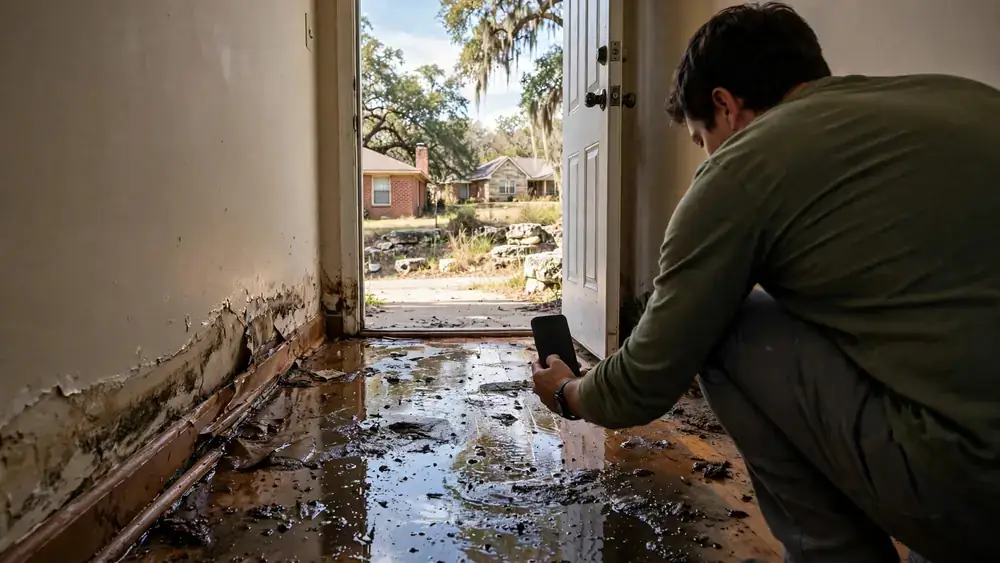
Key facts: First hour after a leak
Minute by minute: what to do
- 1
Check for danger first
If water is near outlets, cords or a panel, stay out. If you smell gas, leave and call from outside. If a ceiling is bulging, keep clear of it.
- 2
Stop the water
Close the valve at the fixture if there is one. Otherwise close the main, often where the line enters the house, in the garage or by a front hose bib.
- 3
Drain the lines
Open a low faucet so remaining water leaves through a drain.
- 4
Cut power to wet rooms
Do this only if you can reach the panel while dry and standing on a dry floor.
- 5
Take photos and video
Capture the source, wide shots of each room and close-ups of damage before moving anything.
- 6
Protect what you can
Lift rugs, furniture and electronics. Put foil or wood blocks under furniture legs.
- 7
Call the right people
A plumber for the source, a restoration contractor for the structure and your insurer soon after.
Why this order matters
People tend to grab towels first. That is a natural reaction, but it is the wrong first move. Every minute with the main open adds water, and any time spent near a wet outlet adds risk. Safety and shut-off first; everything else afterward.
Photos come before cleanup because insurers rarely get to see the first moments. A short video walk-through, with you saying the date and what happened, is worth more than a hundred later pictures. Keep any failed parts, such as a broken connector, and put them in a labeled bag.
After that, speed matters. The EPA points to a 24 to 48 hour window for drying wet materials [1], and Texas insurers expect you to take reasonable steps to protect the property [2]. So even if you plan to compare contractors, get the water out first.
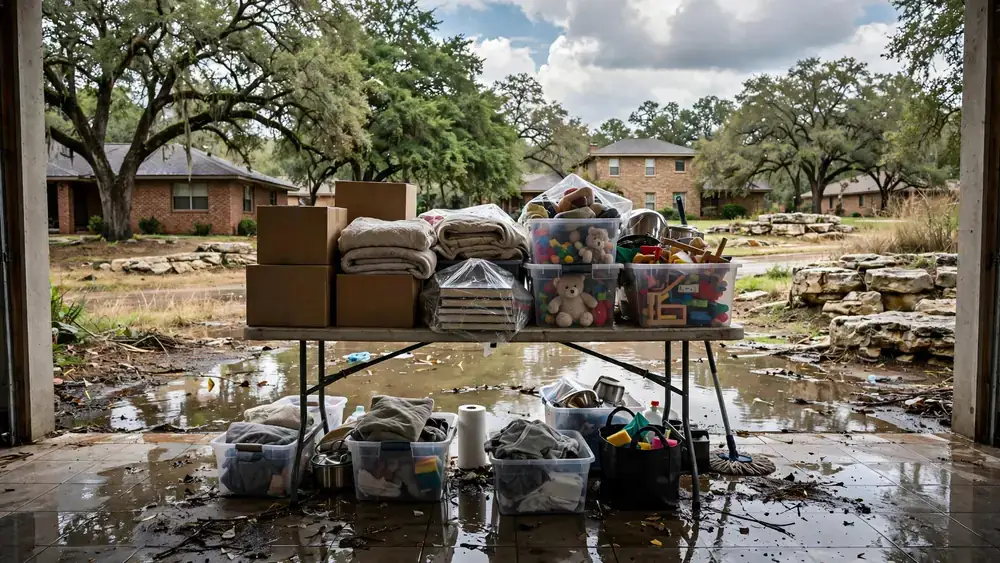
Know which water you have
| Source | Is it safe to mop? | First call |
|---|---|---|
| Clean supply line | Usually, if there is no electrical risk | Plumber, then restoration |
| Washer or dishwasher discharge | With gloves | Restoration if it spread |
| Toilet or sewer backup | No, unless a small spill on hard floor | City line or plumber, then cleanup |
| Storm water through a door | Treat as contaminated | Restoration, then insurer |
| Leak in the street | Not your line | City at 972-744-4111 |
If the leak is not yours
Water coming from an alley, a neighbor's yard or the street may start on the public side. Richardson's 24/7 Response Center takes reports of water leaks and sewer problems at 972-744-4111 [3]. In an apartment or condo, tell the manager first, since they usually control shut-offs and know who is affected.
What not to do in the first hour
- Do not use a household vacuum on standing water
- Do not turn on ceiling fans or lights in a wet ceiling
- Do not walk barefoot through water near power
- Do not start tearing out walls until the damage has been recorded
- Do not sign anything on your doorstep in a hurry
- Do not leave sewage for later
Once the water is off
Now take a breath and write down the time you found the leak and what you did. Move perishable food if the power to the fridge is off. Look in the rooms next door and below. Then read our drying guide so that you know what the coming days will look like. Keep a single folder, on paper or on your phone, for every photo, receipt and name. You will be glad of it when the insurer asks.
If you cannot find your main shut-off, this is the moment to learn where it is. In a real panic, a neighbor who has the same house plan may be able to show you. When things are back to normal, walk through the house with everyone who lives there and show them the valve. Mark it with a tag so that a house sitter or teenager can find it, too.
If you are not at home when it happens
Sometimes the first hour starts with a call from a neighbor, or an alert from a water sensor. If that is you, ask someone you trust to go in and close the main, if they can do so safely. Tell them where it is, and warn them about electrics. If nobody can get there, a plumber may be able to help, as long as you can arrange access.
Ask whoever goes in to take a short video before they do anything else. It will help with your insurer and it will let you see what is needed. When you do get back, walk through the rooms slowly, starting from the doorway. Look up at the ceilings before you step under them. Then begin at the top of this guide, as if the leak had only just started.
Talking to children and older relatives
A leak can be frightening for those who do not know what is going on. Give everyone one simple job, like holding a flashlight, moving their own things or looking after the dog. Keep small children out of the area, particularly if there is any question about the water. If an older relative lives with you, think about access to the bathroom, about medication that may be stored in the affected room and about oxygen or other powered medical equipment.
If you need to leave, gather medicines, chargers, documents, glasses and pet supplies. Tell the contractor if somebody in the house has asthma or a health condition, as this may change how the job is run.
A simple script for your first calls
When you speak to a plumber or a contractor, you do not need the right words. Give your ZIP code, what failed, when it started, whether it has stopped and which rooms are wet. Say if the house has one floor or two, and about how old it is. That is usually enough for a useful first conversation.
When you speak to your insurer, give the date, the cause as far as you know it and what you have done to protect the house. Write down the claim number and the name of the person you spoke to. Avoid guessing about the cause or how long it was going on. If you do not know, say so. It is fine to wait for the plumber's report before giving details.
Before you go to bed that night
Take one more look around. Check the rooms next to the wet area, the ceiling below if you have two floors and the closet on the far side of any wet wall. Make sure the water is still off, or that the repair is holding. Charge your phone. Move anything valuable away from the area, and leave lights off in any room where wiring got wet. If drying equipment is running, leave it alone, and keep doors as you were told. It may be noisy, but this is what progress sounds like.
FAQ
First hour questions
Should I call insurance before a plumber?
Stop the water and call the plumber first. Contact your insurer soon after, but do not wait to protect the house.
Is it safe to stay in the room?
Not if water is near power, the ceiling is sagging or sewage is present.
Do I shut off power to the whole house?
Only if you can reach the panel safely. If you cannot stay dry, leave it and call an electrician.