Key facts: J.J. Pearce
The J.J. Pearce name, and the homes behind it
Listing services file homes here under J J Pearce Sec 01, 02 and 03, and one listing calls the area among the most established in Richardson. The same listings show a clear split. A renovated home on Chesterton Drive dates to about 1978, while a 2026 listing on Grassmere Drive is a new build. Others are remodeled older houses, and a Huntington Drive listing sits in the same group. Redfin shows few recent sales, so its numbers tell you little, and the individual house records tell you more.
What ties this page together is the time period of the older stock. A house from the late 1970s is young compared with a 1950s ranch, but it arrives at a point in plumbing history when materials were changing. Copper was still common, and new plastic systems were coming into use. So one of the best questions an owner here can ask is simple: what is actually in my walls?
Polybutylene questions for J.J. Pearce owners
Polybutylene was a gray plastic supply pipe installed in many American homes from about 1978 into the mid-1990s. It later became the subject of a large class action, because some systems failed early, and failures often happened at the fittings or from within the pipe wall. Nothing found for this page says that any J.J. Pearce home has it. Copper is just as plausible for a home of this age. But the build dates here sit right at the start of that window, so it is worth ruling out.
Finding out is usually easy. Look at the pipes coming out of the wall under sinks, at the shutoff behind a toilet and at the top of the water heater. Note that a short stub of copper can hide plastic behind it, as installers sometimes used copper at the visible ends. If you see gray flexible pipe, marked PB, have a plumber look over the system. An attic inspection may settle the question if your lines run overhead.
A failed plastic line fails much as any other pressurized line does, with water running until someone stops it. Some insurers ask about polybutylene when writing a policy on an older home. If you have it and plan to repipe, keep the paperwork, and ask your agent if the change affects your coverage.
Comparing J.J. Pearce home types
| Home type | Watch for | Worth asking |
|---|---|---|
| Late-1970s home on Chesterton | Original supply pipe and connectors | What is the pipe material? |
| Renovated J.J. Pearce two-story | Upstairs bath over new finishes | Were the drains updated too? |
| New build on Grassmere | Early fitting leaks, attic equipment | What does the builder warranty cover? |
| Rental home near Huntington | Slow leaks nobody reports | Who gets the first call? |
| Home with a pool and irrigation | Wet soil against the slab | Do the yard lines have their own valve? |
Second floors and ceilings in J.J. Pearce houses
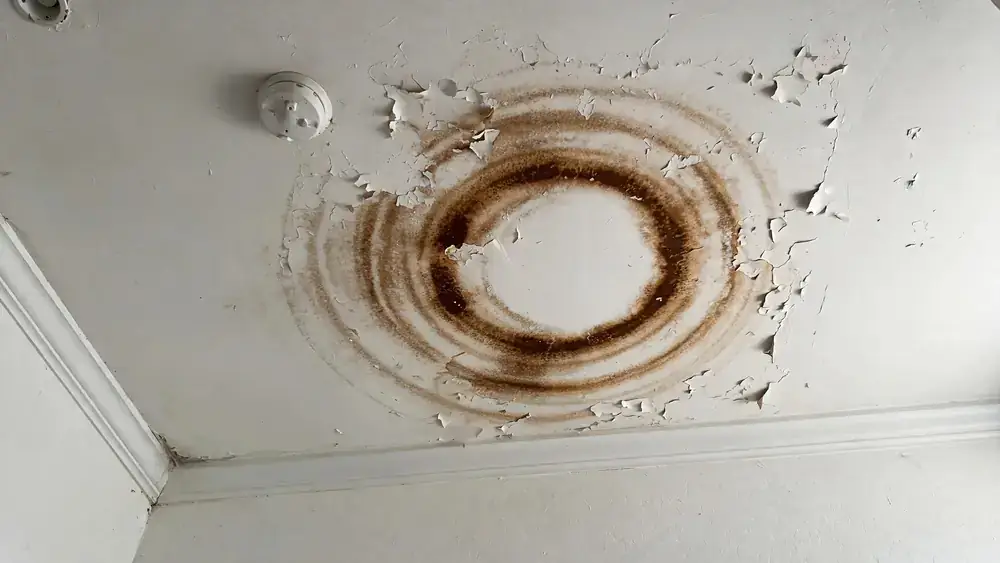
Bigger houses and rebuilds bring upstairs bathrooms, and a leak above a finished ceiling behaves differently from a leak on a slab. Water spreads across the top of the drywall and through the joist bays, then appears some distance from its source. So the stain may not sit under the leak. A contractor will trace it using a moisture meter, and may need to open a small section of ceiling.
Keep clear of any sagging area, and shut the water off. A tub overflow, a failed shower pan and a loose toilet seal can all produce a similar ring below. Noting when the stain gets worse, such as after showers, is a helpful clue.
- Note when the stain grows
- Stay out from under sags
- Save ceiling photos with dates
Attic air handlers in new J.J. Pearce builds
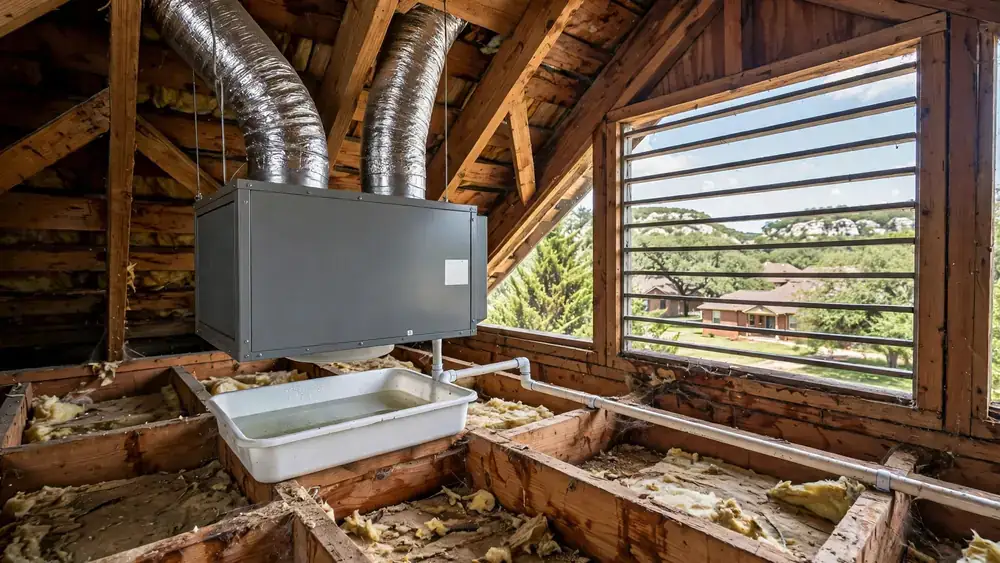
A large new home commonly has more than one air conditioning system, and at least one is often in the attic. That places a machine producing water each summer day directly above bedrooms and fine finishes. Each should have a primary drain, a secondary route or pan, and ideally a shutoff switch that stops the system if the pan fills. If you own a newer home, go up with your HVAC technician once and have them show you these parts.
An AC leak is easy to confuse with a roof leak. Roof leaks follow rain. Condensate leaks follow hot days. If a stain grows on a dry August afternoon, look at the air conditioner first. Turn the unit off at the thermostat, and call for service. Insulation under the pan may be wet, even if the drywall still looks fine, so ask for a moisture reading before you close the matter.
Builder warranties on J.J. Pearce rebuilds
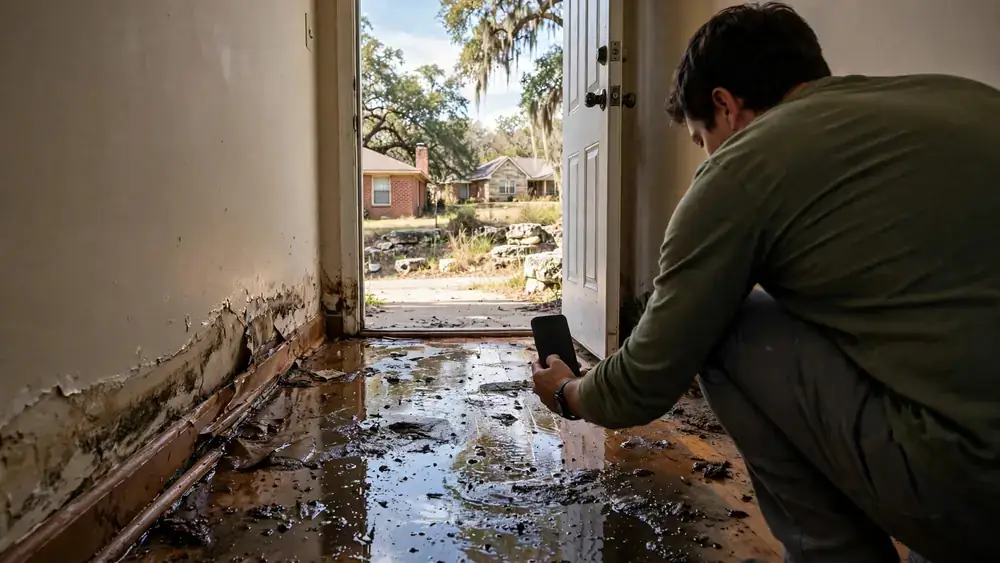
When a new house has a leak, the first thing to look at is your paperwork. Builder warranties often cover plumbing for a set period, and they may require notice in writing and a chance to inspect. Take photographs and stop the water, of course, but talk to the builder before major tear-out. If you need to dry things out at once to prevent further damage, go ahead, and keep a clear log of what was removed and why.
Common new-house leaks tend to come from workmanship, not age. A nail through a pipe in a wall may not leak for months. A fitting that was not fully seated can slowly weep. A shower pan that was not tested properly may let water through onto the ceiling below. These can surface within the first few years, so keep records of anything odd, even if it seems minor at the time.
Teardowns beside older J.J. Pearce homes
New construction next to an older house can change how the older one drains. A larger footprint, new grading, a fresh driveway or a new fence footing may send water toward a lot line that stayed dry for forty-odd years. If your side yard starts to hold water after work next door, photograph it during rain, and compare with earlier pictures if you have them.
Heavy equipment can also disturb older buried lines at a shared boundary. If your water meter begins to move with nothing running, or a yard area turns soft after construction, ask a plumber to check. Speak with your neighbor or the builder first, in a calm way. Building Inspection at 972-744-4180 can explain what applies to grading and permits.
Finding out what is in your J.J. Pearce walls
None of these steps requires opening a wall.
- 1
Check the year
Find your J.J. Pearce home's build year and any remodel dates.
- 2
Look under sinks
Note the color and any markings on the pipe coming from the wall.
- 3
Check the heater
Look at the pipes at the top of the water heater.
- 4
Peek into the attic
From the hatch, see whether lines cross the joists. Stay off the insulation.
- 5
Book a plumber
Ask for a written note on pipe type, and keep it with your house papers.
Slab plumbing under J.J. Pearce remodels
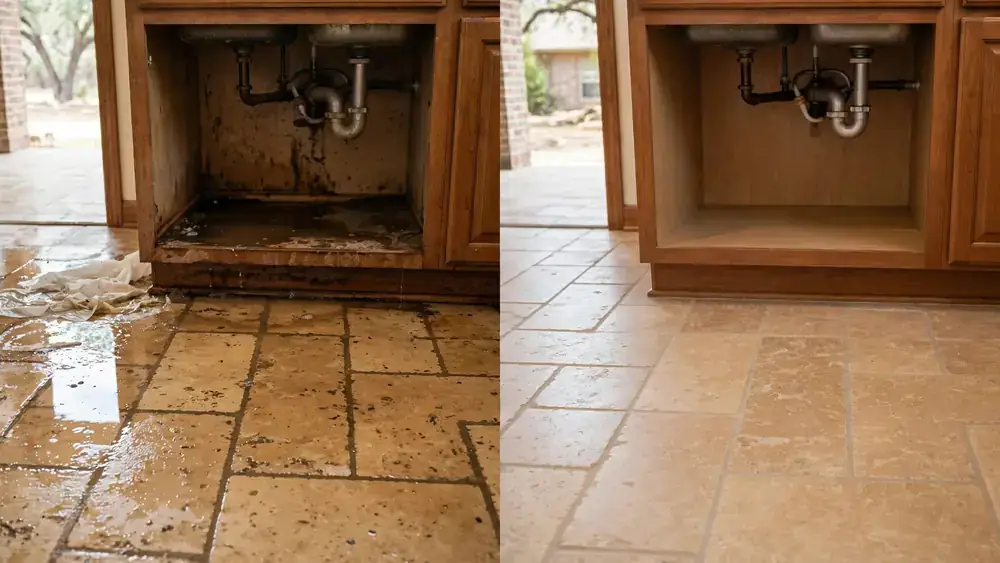
Renovated homes often show new tile, stone or wood across the ground floor. Under it, the slab and any buried lines may be original, now close to fifty years old. If a pressurized hot line leaks below, you may notice a warm spot on the floor, the sound of running water or a higher bill. Newer floors can hide those signs for a while, particularly thick stone over a mortar bed.
Before cutting anything, ask for proper leak location, then ask about rerouting the line overhead. For fine finishes, that can leave the floor undisturbed. The slab leak page describes the options. If drains are involved and not supply lines, a camera scope will show the problem, and a repair there may require a different plan.
Older J.J. Pearce drains and the sewer line
A home from the late 1970s may have plastic drains, or cast iron, depending on the builder. Ask a plumber, or look at any exposed pipe in the garage. Plastic drain lines can sag when the soil moves, creating low spots that catch waste. Cast iron may scale and rust. Both can produce the same symptom of a slow main drain, so a camera remains the most useful tool here.
Richardson maintains the main sewer, and the stretch from a city-installed cleanout to the house is the owner's. If several fixtures are affected, stop using water and call a plumber. Keep the family away from any overflow. The sewer guide sets out who does what. If you see sewage or water surfacing in the street, the city takes reports at 972-744-4111.
Storms, roofs and J.J. Pearce trees
Established streets mean established trees, and a remodeled house can still have roof details from earlier decades. Dormers, skylights and new second-story additions all create joints. Hail can damage vents and flashing without leaving much visible on the shingles. After a storm, inspect from the ground and check your ceilings over the next few days. Take photos of the date, the outside and any damage.
If rain comes in, place containers and move what you can. A roofer can apply a temporary cover. Your insurer may want photos first, so take them before anyone repairs anything. Check the FEMA Flood Map Service Center for the mapped status of your address. This page does not claim that any flooding has occurred here. If storm water reaches your floors, see the storm cleanup page.
Insurance questions for J.J. Pearce owners
The Texas Department of Insurance explains that policies vary, and that coverage generally depends on whether water damage was sudden and accidental. Long-term leaks and mold may be limited. For an owner of a home here, the things to check are your water damage endorsement, any limits on mold and whether sewer backup is included. A high-value remodel can also outgrow a policy written years ago, so review the coverage amount after major work.
Report damage promptly, and keep a log of calls. Ask what documents the adjuster needs. If you have changed the plumbing, have the receipts ready. A straightforward file of invoices and photos makes the process go more smoothly. The insurance guide has more general background.
Protecting high-end finishes in J.J. Pearce homes
When a renovated kitchen or bath gets wet, the first instinct can be to rip everything out. Slow down long enough to think about what can be saved. Cabinets can sometimes be lifted, and toe-kicks removed, so air reaches the wall behind. Wood floors may respond to mat systems. Stone needs care, because some stone stains if wet materials sit against it. A contractor should explain why each item stays or goes.
Upgrades deserve protection too. A smart leak detector with an automatic shutoff valve can stop a line failure quickly, which is valuable in a home where nobody is around in the day. Sensors under sinks, by the washer and near the water heater are simple to add to a remodel. Ask your plumber what fits your main line.
For drying, the extraction and drying page outlines the equipment. Mold can follow if the work drags on, so try to begin within a day or two. The mold rules guide explains how Texas treats larger jobs.
Schools, rentals and J.J. Pearce neighbors
A listing for a Section 2 home names Mohawk Elementary and Pearce High School in Richardson ISD, though zoning can shift and is worth confirming with the district. The name of the area and its well-known high school tend to draw families, and Redfin shows some rental homes nearby as well. If you rent here, tell your landlord about a leak in writing on the day you notice it, and contact your renters insurer about your own things.
Whether you rent or own, a brief talk with neighbors after a storm can be surprisingly useful. If several homes on a block have the same symptom, such as low pressure or backing drains, the cause may be outside your own property. In that case, a quick call to the city can get the right people looking, and may spare you from hiring anyone at all.
Buying into the J.J. Pearce additions
Buyers here choose between three quite different products under one subdivision name: a largely original late-1970s house, a renovated one, or a new build. Each calls for different questions. With the original, you want the pipe material, the age of the water heater and roof, and a camera run through the main drain. With the renovation, you want to know what stopped at the surface. Fresh paint, tile and cabinets say nothing about the lines behind them, so ask which trades pulled permits and whether plumbing work was included. Building Inspection at 972-744-4180 can explain how to ask about that history.
With the new build, ask for the warranty terms in writing, any plumbing test records and the location of every shutoff, pan and cleanout. Sellers in Texas commonly complete a disclosure, and an inspector can only report on what can be seen. Stains that were recently painted, a dehumidifier running in a closet or new baseboard on just one wall are all reasonable prompts for a follow-up question. None of these proves a problem, and a good seller will usually be glad to explain what was done, when and by whom, particularly if receipts exist.
After closing, spend an afternoon walking the house with your inspection report in hand. Mark the main valve, the breaker panel and the cleanout. Add the serial plate photo from the water heater to your phone. Those few details are hard to find during a crisis, and easy to find on a calm Saturday. If you bought a late-1970s home, also ask the plumber who checks your supply lines to note the material on the invoice, because that one line of paperwork answers the polybutylene question for your insurer and for whoever owns the house after you. Ask for the same note on any drain work, so the file shows both the supply and the drain sides of the home's plumbing history.
Water heaters and freezes in late-1970s J.J. Pearce homes
Houses from this period often placed the water heater in the garage, or in a closet near the hall, and a good many have been moved to the attic in later remodels to free up floor space. An attic tank is the riskiest of those options, because a failure sends fifty gallons or so down through a finished ceiling. If yours is up there, confirm that it sits in a pan with a drain that actually leads outside, and find out when the tank was installed. Consider a tankless unit only after a plumber has checked your gas line and venting.
Hard freezes are rare but serious. Lines in exterior walls and attics are the most exposed, and bigger houses with vaulted ceilings or bonus rooms may have runs that were never well insulated. Before a forecast freeze, disconnect hoses, open sink cabinets on outside walls and know how to reach your main valve. If you will be away, shut off the water and ask your plumber how to protect the heater. When a pipe splits, the leak often begins as the line thaws, so check the house again once the temperature climbs above freezing.
FAQ
Questions from J.J. Pearce homeowners
Does my J.J. Pearce home have polybutylene pipe?
Nobody can say without looking. Build dates near 1978 make it worth a check, especially gray pipe marked PB.
Is the J.J. Pearce neighborhood in 75080 or 75081?
Listings for the additions show 75080, while J J Pearce Drive addresses show 75081. Use your own address.
My new Grassmere build has a leak. Who do I call first?
Stop the water, take photos and contact your builder in writing. Check your warranty notice terms.
Why is a J.J. Pearce ceiling stain far from the bathroom?
Water can travel along joists and drywall before it shows. A moisture meter helps trace it.
Will a new house next door change drainage at my J.J. Pearce lot?
It can. Photograph water during rain, talk with the builder and ask Building Inspection at 972-744-4180.
Sources and citations
- [1]Aaron Layman: 1109 Grassmere Drive, J J Pearce Sec 1
- [2]Century 21: 1107 Chesterton Drive
- [3]Dustin Pitts: 1117 Grassmere Drive
- [4]Redfin: J J Pearce neighborhood
- [5]Dustin Pitts: 1313 Huntington Drive
- [6]City of Richardson: 24/7 Response Center
- [7]Texas Department of Insurance: water damage and mold coverage
- [8]City of Richardson: Residential permit types