
Key facts: AC Leak and Ceiling Damage
- The EPA advises fixing leaks and drying wet materials within 24 to 48 hours [1].
- EPA advice puts good indoor humidity under 60 percent, with 30 to 50 percent as the ideal [1].
- Texas policies generally exclude damage from gradual leaks [2].
- DFW gets about 37 inches of rain in a normal year, so roof leaks are the other common ceiling cause [3].
How an air conditioner makes water
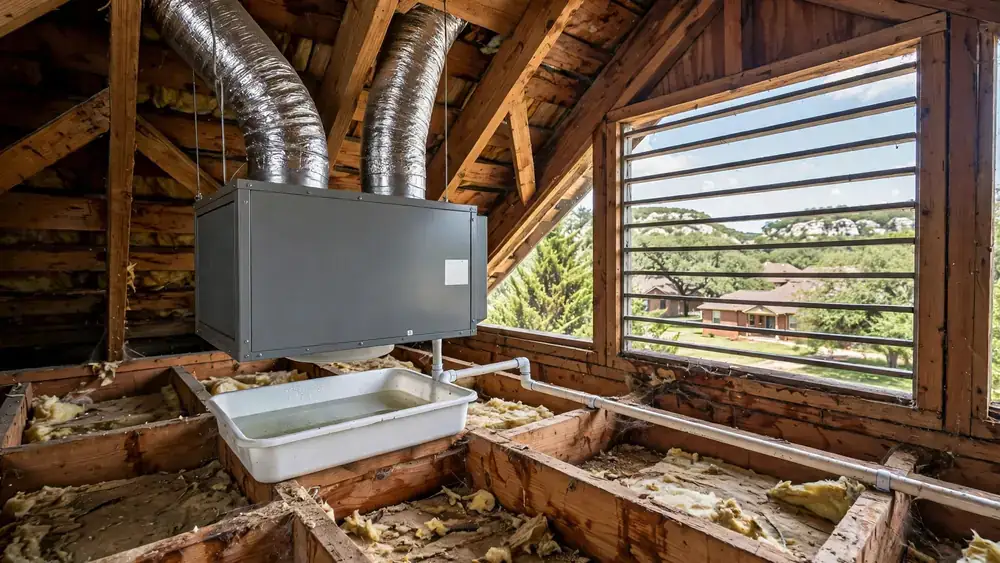
Air conditioning works partly by dehumidifying. As warm house air crosses the cold evaporator coil, moisture condenses on it and drips into a drain pan. In a Texas summer, a system can produce many gallons a day. All of that water depends on a small drain line, usually PVC, that carries it outside or to a drain.
When the air handler is in the attic, gravity is working against you. Algae and sludge build up in the line over a season until it slows or blocks. Then the pan fills. Many systems have a secondary pan or a float switch to catch this, but those fail too, or a pan may have rusted through. Water then goes through the attic insulation and ceiling drywall below.
Why ceiling stains are the last sign
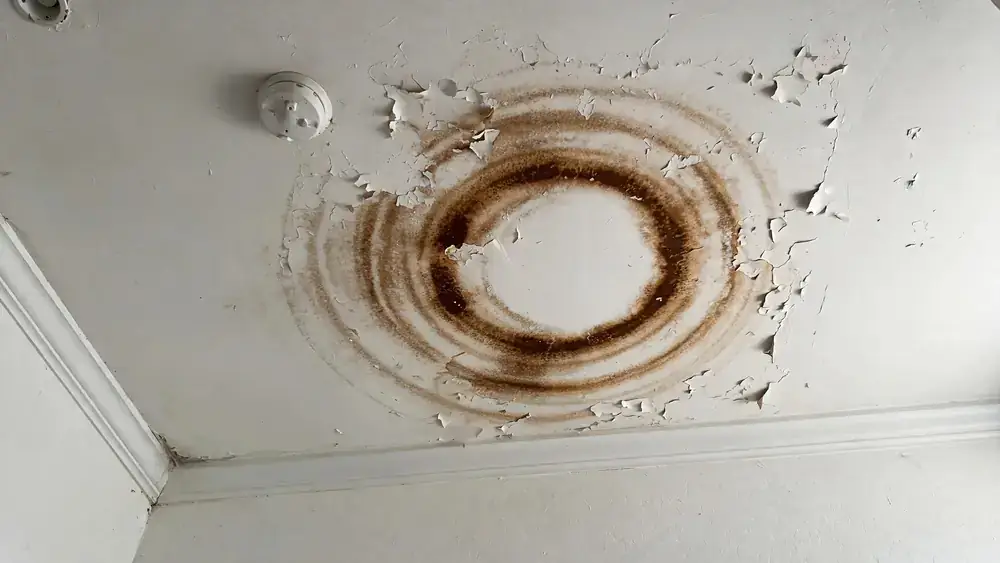
A stain shows up only after the insulation above has absorbed all it can and water has passed into the drywall. So the visible ring is an end point. There can be wet insulation over an area wider than the stain, and the paper of the drywall can be feeding mold while the painted face looks fine.
Rings with darker edges often mean repeated wetting and drying. That points to a problem that comes and goes, as with a line that clogs in summer or a roof leak that shows only in certain storms. A new, soft, damp patch is more likely active. Either way, the question to ask is where the water came from, not just how to paint over it.
Is it the AC, the roof or a pipe?
Timing is your best clue.
Appears in hot weather with the AC running
Points to condensate. Check the secondary drain outlet for dripping.
Appears after rain
Points to the roof, flashing or a vent. It may stay dry in light showers.
Appears whatever the weather
A plumbing line or bathroom above is more likely.
Grows when a shower runs
Look at a drain, tub overflow or shower pan above.
What to do when a ceiling starts dripping
- 1
Turn off the AC
Switch the system off at the thermostat. That stops more condensate forming.
- 2
Move what you can
Shift furniture and electronics out of the drip zone and put a bucket down.
- 3
Look at the ceiling
If it is bulging or sagging, keep everyone out of the room and away from it.
- 4
Consider the power
Water around a light fixture is a reason to switch off that circuit at the breaker, if you can reach it dry.
- 5
Take photos
Record the stain, the area around it and anything in the attic you can safely see.
- 6
Call
An HVAC technician clears the line; a restoration contractor checks and dries the structure.
Why a sagging ceiling needs caution
Drywall loses strength when wet, and a soaked ceiling can hold a surprising weight of water and insulation. It can come down suddenly. Do not stand under it and do not press on it. Poking a hole to let water out is sometimes done to control where it goes, but it should be a considered move, done by someone who has thought about the wiring above, not a first reaction.
In older Richardson homes, textured ceilings may also contain materials that should be tested before being disturbed. If you have a popcorn ceiling from before the 1980s, say so on the call.
What usually happens to each ceiling material
| Material | Usual outcome | Why |
|---|---|---|
| Blown insulation | Removed in the wet area | Holds water and packs down |
| Batt insulation | Often removed | Slow to dry; can hold contamination |
| Drywall, small clean stain | May be dried and sealed | If firm and dried quickly |
| Drywall, sagging | Section replaced | Strength is lost |
| Textured ceiling, older home | Test before disturbing | May contain asbestos |
Attic checks
What a restoration contractor should look at above the ceiling
A proper inspection goes up as well as down. Expect a look at the insulation, joists, the drain pan and the path of the water. Moisture meters and thermal imaging help to outline the wet area without pulling down more ceiling than needed.
Attics are hot in summer and hard to dry, because air there is exchanged with the outdoors. Damp insulation is usually removed so that drying equipment can do its work on what remains.

Keeping the condensate line clear
Ask your HVAC technician to include the condensate line in seasonal service. Many systems have an access tee near the air handler, and the line can be flushed from there. A float switch that turns the system off when the pan fills is a sensible safeguard, though it means your house warms up instead of getting wet; if the AC stops in July and the pan is full, that is the switch doing its job.
Look for the secondary drain outlet, often a small pipe above a window or at the eaves. If it drips, your main line is probably blocked, even though nothing inside looks wrong. Do not ignore this: it is an early warning that most people never notice.
Simple summer checks for attic systems
- Change filters on scheduleA clogged filter can freeze the coil, and melting ice overwhelms the pan.
- Look in the panStanding water or rust in the secondary pan means something needs attention.
- Check the outletKnow where the secondary drain ends, and glance at it through summer.
- Keep the attic hatch clearA technician needs a safe path to the unit.
- Watch for humidityIndoors, aim for 30 to 50 percent if you can, which the EPA suggests [1].
Frozen coils and sudden summer leaks
When airflow is poor or refrigerant is low, the coil can ice over. Once the system cycles off, the ice melts in one go, and the pan may not cope. If you see ice on lines or the AC is blowing warm air, switch the cooling off and run the fan alone for a while, then call an HVAC technician.
In heat waves, systems run for long periods, and any weakness in the drain appears then. Leaks tend to show up in the first hot weeks of the year, when a line that has sat dry all winter is put back to work, and in the hottest stretch of August.
Roof leaks: the other ceiling story
If the stain arrives with rain, the source is more likely to be the roof. Wind-driven rain and hail are regular features of North Texas storms, and a leak may show up far from the actual opening as water runs along a rafter. A roofer should deal with the opening; temporary covering may be needed before drying is worthwhile.
For a sudden storm opening, your insurer will want photos and quick protection of the property. For water that has been coming in slowly, the Texas Department of Insurance notes gradual damage is usually not covered [2]. Dated photos of the first sighting can help.
Mold and repeat ceiling leaks
A stain that keeps coming back can grow mold on the back of the drywall and in insulation, where it is out of sight. If you smell mustiness in a room with an old stain, ask for that area to be opened and checked. Painting a stain with stain-blocker before the source is fixed hides the evidence and may seal in moisture.
For small areas, cleanup may be straightforward. In Texas, jobs of 25 contiguous square feet or more trigger licensing and notification rules [4], covered in the mold guide.
Repairing the ceiling the right way
Once readings show the area is dry, the ceiling is repaired in order: replace wet insulation, patch or replace drywall, seal stains, match the texture and paint. Paint the full ceiling if the patch would otherwise show. Matching an old texture is a skill, so ask to see an example if the room matters to you.
Fix the cause first. An HVAC or roofing record of the repair is a useful thing to keep with your restoration paperwork, and it may help if you ever sell the house.
The first hot week of the year
Every spring there comes a day when Richardson households switch from heat to cooling. For months, the drain line has sat dry, and whatever grew in it has hardened. Now the coil starts making water again, and within a few days the line may slow or stop. That is why the first hot week tends to bring so many ceiling calls. It is a good moment to have the line flushed, and it is a sensible habit to take a quick look at the pan.
August is the second peak. Systems run almost without pause, and the coil sheds a great deal of water. Any weak spot that survived the spring shows up now. If you are about to go away in summer, ask someone to check the house, as a small overflow left for a week can bring down a section of ceiling.
Closet and hallway units
Not every air handler sits in an attic. Older ranches and some apartments have them in a hall closet, and there the drain may run under the floor or through a wall to a nearby pipe. A blockage here does not stain a ceiling. Instead, it soaks the closet floor, then the carpet in the hallway and perhaps the bedroom next door. People often notice a damp smell before they see any water.
The rules are the same, but the materials are different. Carpet pad may be wet well beyond what you can see. The bottom of the closet walls may need checking and drying. If the closet has an old return-air platform built from wood or drywall, it may have been soaking up moisture for some time. Ask the contractor to look at this, as it can harbor mold out of sight.
Ductwork and what happens after a leak
Water near the air handler can reach duct insulation and the return plenum. Wet ducts may need drying, cleaning or replacement. If the system runs while parts of it are wet, it can carry musty air around the house. So tell your HVAC technician and your restoration contractor about each other, and make sure that someone is responsible for checking this.
Flexible ducts lying on wet insulation can also sag or tear. Ask for the attic to be checked after any big overflow. A short look now can spare you a mysterious smell in the first heat of next year. If you do notice a damp odor when the system starts, turn it off and ask for an inspection instead of adding a scented filter.
Bathroom leaks that look like AC leaks
A ceiling stain in a two-story house is not always the AC. Upstairs bathrooms are often directly over kitchens and living rooms. Toilet wax rings, tub drains, shower pans and failed grout all release small amounts of water, and they do it only when someone uses them. This is where the timing test comes in again. Try running the shower alone for ten minutes, with someone watching the stain. Then try the tub, and then the sink.
A shower pan leak often appears as a stain near the middle of the ceiling below, or on a nearby wall. It tends to be slow, and insurers may see it as gradual. If you think you have one, get it inspected early and take a dated photo of the stain. The sooner it is found, the smaller the repair, and the less room there is for a dispute about how long it had been going on.
Light fixtures, fans and electrical safety
Water and ceiling wiring need respect. A light fixture that drips, flickers or buzzes is a reason to turn off that circuit at the breaker and leave it off until an electrician has looked at it. Do not take fixtures apart while they are wet. Ceiling fans can add weight to a damaged section of drywall, so keep clear beneath them if the ceiling is soft.
Smoke alarms in wet ceilings may also misbehave. If one has been affected, replace it once the area is dry, and meanwhile make sure that the house still has working alarms elsewhere. Small details such as these do not appear on any estimate, but they are part of leaving a home truly safe after a leak.
Living with a damaged ceiling for a few days
Between the leak and the repair, you may have an opening in the ceiling, plastic sheeting or equipment in the room. Keep the area clear and close the door if possible, because attic insulation dust is unpleasant. Ask how the opening will be protected. Plastic containment may be used if there is any concern about dust or mold, and the crew should remove it tidily when the time comes.
If the room is a bedroom, consider using another for a few nights. If it is the kitchen, ask how long the area needs to stay clear, and whether food preparation can continue. Most of the time this is a matter of a few days of inconvenience rather than anything more serious. Being clear about it up front makes the whole thing easier to live with.
Reading a ceiling stain like a contractor
Look at the color first. Pale yellow suggests a small, recent wetting, while dark brown with hard edges usually means water has come and gone many times. Then look at the shape. A round ring below the air handler pan tends to point at condensate, whereas a long streak may follow a joist or a pipe. Press nothing, but look along the ceiling with a flashlight held flat against it: shadows reveal bulges that are invisible from straight below.
Next, trace upward. Note what sits above that spot, whether it is the air handler, a bathroom, a vent pipe or a roof valley. Then check the same spot during the conditions you suspect, such as after a hot afternoon or during rain. Two or three dated photos taken this way are worth more than any guess. They show whether the mark is growing, and they give a technician a real head start.
What to expect from the repair visit
A typical ceiling job begins with the source being confirmed as fixed. The contractor then protects the floor below, cuts out any failed drywall, removes wet insulation and checks the framing with a meter. Once the readings are at target, new insulation and drywall go in. Finishing takes a few visits, since joint compound needs to dry between coats and texture needs to blend with the old ceiling.
Ask about dust control, and about whether furniture needs to come out of the room. It also helps to ask how the crew will match your paint. Older ceilings have often yellowed, so a small patch of fresh white can stand out. Painting the whole ceiling, wall to wall, is usually what makes the repair disappear.
FAQ
AC and ceiling leak questions in Richardson
Why is my AC leaking through the ceiling?
Most often the condensate drain line has clogged, the pan has overflowed or rusted, or the coil has frozen and then melted.
Is a ceiling stain an emergency?
A dry old stain can wait a short while. A soft, growing or sagging area should be seen quickly, and you should keep clear of it.
Can I just paint over a water stain?
Not until the source has been fixed and the area is dry. Otherwise the stain tends to return, and moisture stays trapped.
Who do I call first, HVAC or restoration?
Turn the system off, then call both. HVAC fixes the cause and restoration deals with the wet building.
Should the AC stay off while the ceiling dries?
Ask. In a hot spell the house still needs cooling, and once the drain is cleared the AC may help lower humidity.
Will insulation need replacing?
Usually the wet part will. Soaked insulation holds water against the ceiling and works poorly afterward.
How can I tell a roof leak from an AC leak?
Timing. Rain points to the roof, hot days to the AC, and all the time to plumbing.
What is the small pipe dripping above my window?
Often the secondary condensate drain. Dripping there usually means the main drain is blocked, so have it checked.