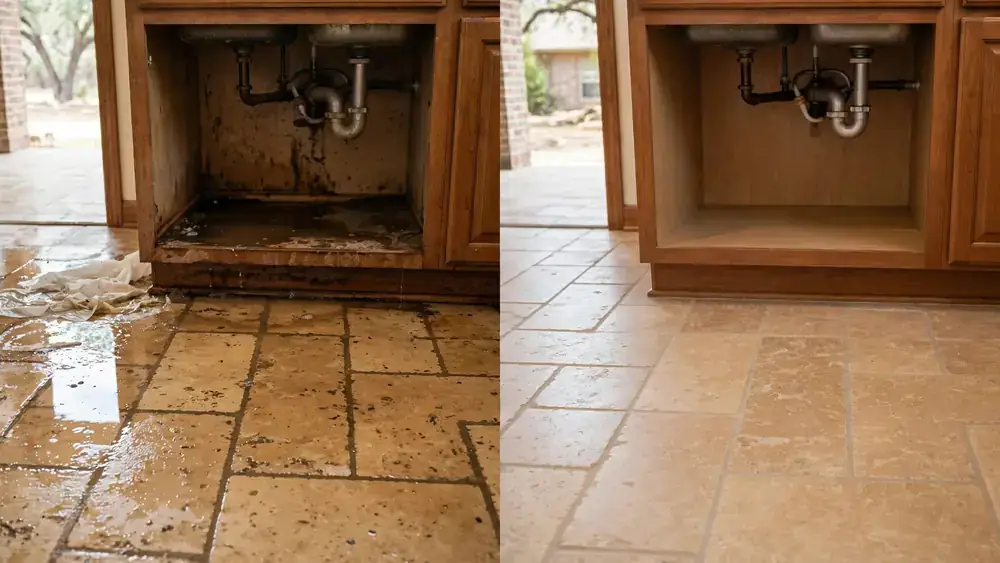
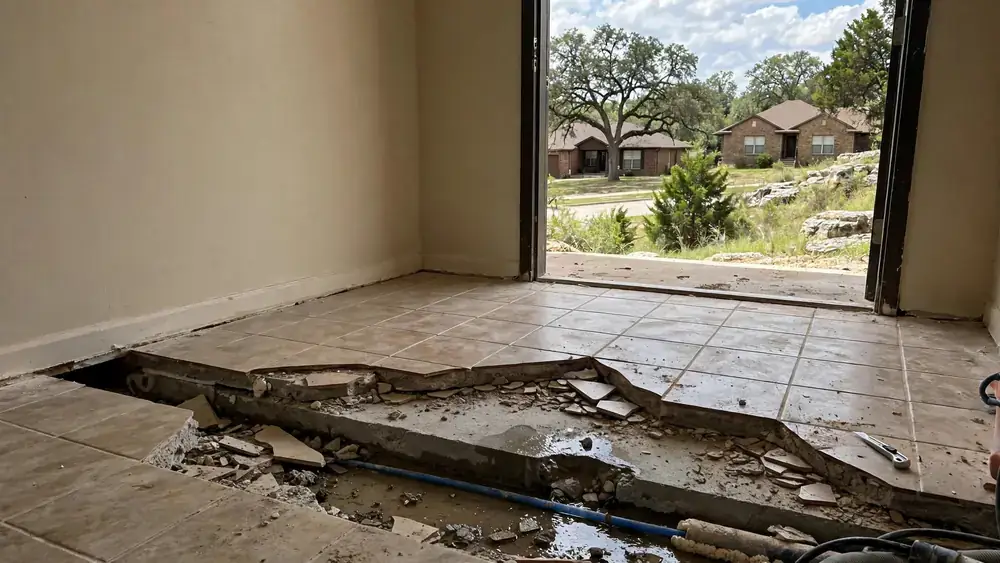
Key facts: Richland Park
Meter test for a suspected Richland Park slab leak
This takes about half an hour and needs no tools beyond a phone camera.
- 1
Stop all water use
Turn off the ice maker, irrigation and pool autofill, and make sure no fixture is running.
- 2
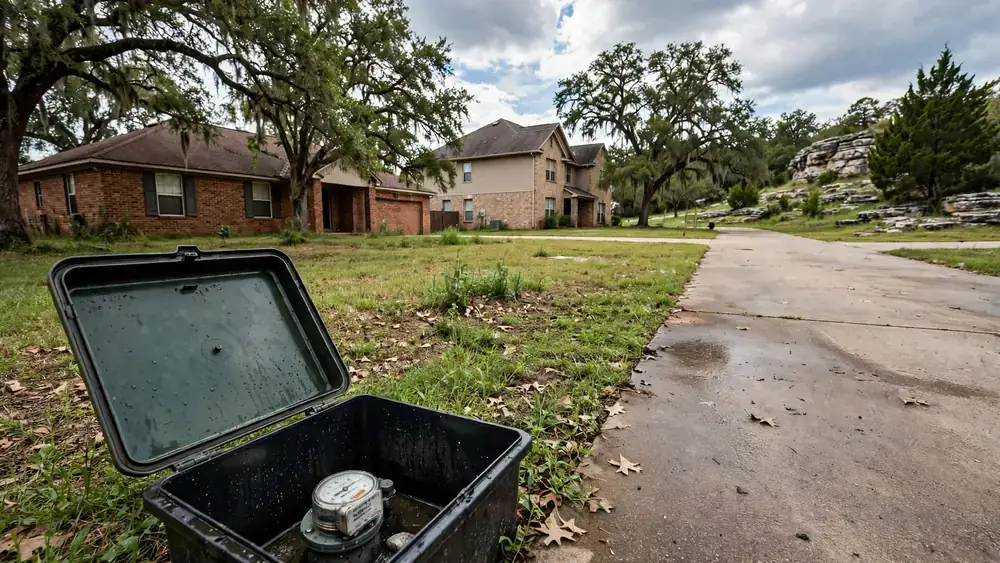
Find the meter box
Lift the lid with care and look at the dial and any small leak indicator.
- 3
Photograph the reading
Take a clear picture so you have an exact starting number.
- 4
Wait 20 to 30 minutes
Keep every tap off, including toilets, and let nobody use the washer.
- 5
Compare the numbers
Any movement suggests a leak somewhere. Next, close the house shut-off and repeat to separate yard from house.
Wide Richland Park lawns and long irrigation runs
Listings often mention big, well-kept lawns and backyards here, and lot sizes near 9,000 square feet come up repeatedly. That is a real pleasure, but it also means more buried irrigation pipe, more valves and more zones running beside the house. An irrigation leak can look alarmingly like a slab leak on the water bill. The meter test above helps tell them apart, because closing the shut-off to the house will not stop a leak on a yard line that branches off before it.
A broken sprinkler zone can also send water to the wrong place. A head that was bumped by a mower may spray brick for 20 minutes a day, and the wall may soak up more than you think. Older homes may have weep gaps at the base of the brick that sit close to soil or mulch, especially where beds have been built up over the years. Keep the soil level below the brick line and look at the inside baseboard on any wall that stays wet outside.
- Walk each zone while it runs
- Keep beds below the brick line
- Note soggy strips in dry weather
Backyard pools behind Richland Park homes
Pools turn up in listings for this neighborhood, and they add a set of risks that a plain lawn does not have. A pool's plumbing runs underground between the shell and the equipment pad. An autofill valve may quietly top up a leaking pool, so the loss goes unnoticed until the bill arrives or the ground stays soft. Water that escapes near the house can settle against the foundation, and expansive clay reacts to that extra moisture on one side of the house while the other side stays dry.
There is also the matter of draining. If you need to lower a pool after a heavy storm or for a repair, take care where that water goes, because a large volume released toward the house can reach the patio door. Look at how your patio slopes. Many 1970s patios were poured as simple slabs and may have settled toward the house over time, sending rain and pool splash back to the sliding door track. If carpet near a back door is damp after a storm, the patio slope is one of the first things to check.
Slab leak or yard water at a Richland Park home
| Sign | Points toward | Next move |
|---|---|---|
| Warm tile or a warm carpet patch | Hot line under the Richland Park slab | Call a plumber for pressure testing |
| Meter moves with the house valve closed | Service or irrigation line outdoors | Walk the lawn for soft spots |
| Damp along an outer wall after sprinklers | Overspray on brick or high soil | Adjust heads, lower the bed |
| Wet carpet at the patio door after storms | Settled patio or blocked track weep holes | Check slope and clear the track |
| Pool level dropping with autofill off | Shell or pool plumbing leak | Ask a pool leak specialist |
Renovated Richland Park interiors and what they hide
Many listings here advertise updates, and that matters when water gets in. A new floating floor laid over older tile can trap water between the layers. If a moisture meter reads dry at the surface, it may be missing a wet layer underneath. Wood-look vinyl plank is common in remodels, and it resists water on top but can hold it beneath. Some flooring has to come up simply so the slab can dry, even if the planks seem fine. Ask your contractor to explain why before anything is removed, and ask to keep a sample for your claim.
Older materials can sit below newer ones too. In a 1970s home, an original vinyl tile or its adhesive may contain asbestos. It is often buried under later floors, and it may be disturbed for the first time during a tear-out. A sample before demolition can add a short delay but prevents a much worse situation, because spreading fibers through a house is far more serious than waiting for a lab result. The same care applies to textured ceilings and old pipe wrap in a home of this age. Paint from before 1978 may contain lead as well.
How Richland Park clay and 1970s foundations move
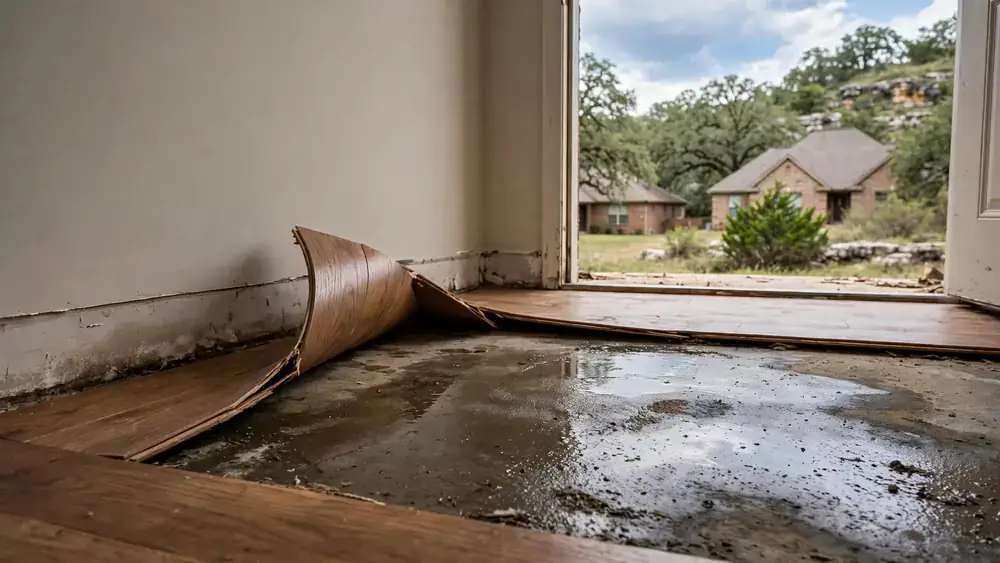
Richardson sits on expansive clay that swells when wet and shrinks when it dries out. A house from the 1970s has been through five decades of that cycle, and a broad lawn with mature trees can pull moisture unevenly. Movement in the slab can add stress to rigid pipe connections beneath it. It works both ways: a leak under the house can itself change the soil moisture and push part of the foundation upward, which may lead to door and drywall cracks in rooms near the leak.
So if you see a new crack and a higher water bill at about the same time, do not treat them as separate stories. Have the plumbing checked before you book foundation work, since a repair that lifts the slab may stress lines that are already weak, and a plumbing test afterward is common for that reason. During drought, keep watering consistent around the perimeter. A soaker hose set a little way from the foundation is a typical suggestion, though it should never run so long that it creates its own wet zone.
Sewer lines under Richland Park's mature yards
A slab leak is a supply-side problem, but drains from this era are worth watching as well. Depending on the home, the drains under the slab may be cast iron, which can scale and crack with age, and large trees may send roots into any gap in an outdoor section. Early signs tend to be gurgling toilets, slow tubs and a smell near a floor drain. When a backup does happen, the lowest fixture in the house is usually where it shows up first, often a shower or a hall bath.
Treat that water as contaminated. Keep children and pets out, stop running water in the house, and do not try to clean it yourself with household products. Who pays attention to what depends on where the blockage sits. The city maintains the main sewer, and a stoppage between a city-installed cleanout and the house is the owner's. Finding your cleanout on a calm day will speed everything up. See the sewage backup cleanup page and the guide to sewer stoppages for the details.
Getting around a Richland Park job
A real estate guide places Richland Park near South Greenville Avenue, Walnut Street and Centennial Boulevard, and reaching it by way of Greenville and then Walnut is a common route. For your contractor, the helpful details are more specific: your street, the side of the house where the water is, and whether equipment can reach the area easily. A wide lot often helps with drying, since hoses and cords have room to run, and the driveway is usually long enough for a truck. If there is a locked side gate or a dog in the yard, say so when you call.
Slab work also creates a dusty, disruptive few days, and you should plan for it. If a floor must be opened, it helps to clear the room and take any fragile items elsewhere. Ask how dust will be contained, because a sawcut in a slab produces fine grit that travels through return vents. Ask too who will finish the concrete and who replaces the flooring, since that may be a separate contractor. Getting those answers early helps you avoid gaps between the plumbing repair, the drying and the rebuild.
Richland Park insurance and permit notes
Texas policies differ, and coverage often turns on how long a leak has been running and what is being repaired. Some policies cover access to a leak, such as breaking out tile and concrete, but not the pipe itself. Others have limits for mold. Before you agree to anything, read the policy and call your insurer. The Texas Department of Insurance explains the general picture, and the insurance guide adds detail. Keep water bills from the months before the leak, since they help show when it started.
Plumbing and structural repairs may need a city permit. Residents can ask Building Inspection at 972-744-4180 what applies, and Richardson's contractor registration rules are covered in the guide to choosing a company. Finally, remember that if you see water surfacing at a meter or in the street, the city's 24/7 line at 972-744-4111 handles those reports, and it makes sense to call before assuming the problem is on your property.
Water heaters and hot lines in Richland Park homes
Hot lines tend to fail before cold ones in many slabs, since they expand and contract each time hot water flows. That is why a warm floor is such a useful clue. The warm patch often lies along the path from the water heater to a bathroom or the kitchen, so a floor near one of those rooms is a good place to walk barefoot. A pet that keeps lying down on one spot in winter can be a surprisingly good detector as well.
The water heater itself is a separate risk. In a 1970s house it may sit in a hall closet or in the garage, and it has probably been replaced several times. If you have to turn it off because you suspect a hot line leak, do it properly: switch off the gas or the breaker, then close the cold inlet valve. A plumber can then isolate the hot side and test it. Shutting off only the hot side at the tank may slow the leak while you wait, which limits how much water spreads below the floor.
Repair choices for an aging Richland Park water line
Once a leak has been found, you usually face three options. A spot repair opens the slab at the leak and fixes that section of pipe. A reroute abandons the buried line and runs a new one above, through walls or the attic. A full repipe replaces the supply system in one project. No one choice suits every house. A spot repair can be sensible for a single fault in otherwise sound pipe, but if the line is failing in several places, another leak may turn up not far away.
Ask the plumber what the pipe looks like at the point of the repair, and if possible get a photo. Ask how a reroute would run through your house and which walls would need opening. In a renovated Richland Park home, keeping a good floor intact may matter more to you than it would in a house due for new flooring anyway, so tell the plumber what you value. Get the written cause of the leak either way, because your insurer will want it, and the next buyer of your house may ask for it as well.
Drying under flooring after a Richland Park slab leak
Fixing the pipe stops the water, but it does not dry the house. Slab concrete holds moisture for a long time, and carpet or wood over it can keep that moisture trapped. Depending on how long the leak ran, a contractor may lift carpet and pad, take up part of a floor, and set dehumidifiers and air movers in the room. Walls next to the wet slab may need checking at the bottom plate, because the wood there can wick moisture upward without any stain showing on the paint.
Keep track of what you are told. Ask for a simple moisture map at the start and daily readings after that. A slab may read wet for days even when the room feels fine, and replacing floors too early can trap that water and ruin the new material. Good timing is the point of the readings. The drying guide on this site goes into why concrete is slow to release water. If the leak ran for weeks, mention any musty smell, because that can change the scope of the job.
Richland Park lots, mature trees and shade
A mature yard is one of the best parts of living here, but tree roots look for water, and they find it at leaking joints. That applies both to irrigation and to the sewer line. Big trees also shade one side of the house, which keeps that wall and its soil damp longer after a rain. If there is a green film on the brick or a soft, dark strip of mulch along a wall, check that gutters and sprinklers are not adding to it.
Roofs under large trees also collect leaves and small branches in valleys and behind chimneys. Trimming branches back from the roof reduces both debris and the chance of damage in a storm, and it lets the shingles dry faster. Many of these roofs have been replaced over the years, so keep your records of the work. If a limb does come down in a storm and opens the roof, cover the area if a roofer can do it safely, and photograph everything for your insurer before the limb is cut up and hauled away.
Telling the Richland Park plats apart
Listings split this neighborhood into plats such as Richland Park and Richland Park Sec 03, and a related name, Richland Park East, also appears. Stillmeadow and Goodwin addresses are filed under Sec 03, while Sheffield appears under the main name. The label can help when you look for old permits or compare build years with a neighbor. Use the exact plat name from your deed when you speak with a contractor or insurer, because homes a short walk apart may have been built in different years.
A yearly check for a Richland Park property
- Run a meter test each spring
- Compare this month's water bill with the same month last year
- Check for warm spots in rooms near the water heater
- Clear sliding door track weep holes
- Inspect the pool autofill and equipment pad
- Keep your cleanout visible and easy to reach
FAQ
Richland Park homeowner questions
How do I know if my Richland Park home has a slab leak?
Warm floor spots, a rising bill, and a meter that moves with everything off are the usual clues. A plumber can confirm it with pressure testing.
Does a remodeled Richland Park house still have old pipes?
Often, yes. Kitchen and floor updates rarely replace lines buried in the slab, so ask what was done or look for repipe records.
Can a Richland Park pool cause problems for my foundation?
A leaking pool or pool line can add moisture to the clay on one side of a house. Check the level with the autofill off.
Will a slab repair ruin my Richland Park floors?
Opening the slab usually affects the flooring above that spot. Accurate leak location limits the area, and rerouting a line may avoid cutting at all.
When should Richland Park flooring be tested for asbestos?
If old tile or adhesive from the 1970s may be disturbed, ask for a sample before tear-out starts.
Who handles a sewer backup on a Richland Park street?
The city maintains the main. A stoppage between a city-installed cleanout and your house is yours, so start by checking the cleanout.
Sources and citations
- [1]Richardson TX Real Estate: Richland Park
- [2]Listing: 516 Stillmeadow Drive, Richland Park Sec 03
- [3]City of Richardson: 24/7 Response Center
- [4]City of Richardson: Water utility operations FAQ
- [5]City of Richardson: Residential permit types
- [6]Texas Department of Insurance: Water damage and mold coverage
- [7]Home inspection guide for Richardson