Key facts: University Estates North
Aging roofs and rear garages in University Estates North
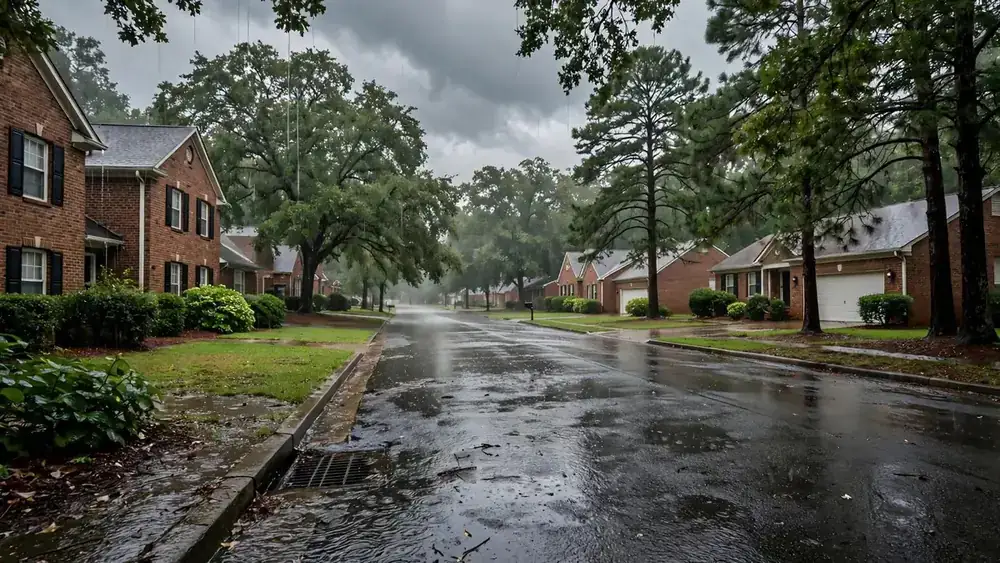
A 2015 local blog gives the clearest picture of this neighborhood. It describes Traditional, Ranch and Contemporary homes, mostly 2,000 to 3,300 square feet, built between 1978 and 1986, with mature trees, rear garages and fenced yards. A listing on University Drive adds a 2,132 square foot home from 1972 and suggests that some are a bit older. Walk Score calls the area car-dependent, and one listing site calls it notably smaller than many other Richardson neighborhoods.
Those homes have reached an interesting age. Forty-odd years is long enough for original plumbing fixtures, drain pans, flashing and siding details to wear out, but they are often in better cosmetic shape than a 1950s ranch, so problems may go unnoticed. Larger homes also have more of everything: more roof area, more bathrooms and longer pipe runs. A contemporary with a complicated roof has more valleys and joints to keep sealed than a simple ranch does.
The rear garage is the other strong feature here. With parking at the back, owners often use the rear entrance every day and rarely look at the front of the house. Leaks and drainage problems at that front wall may go unseen for weeks.
Rear driveways and water near University Estates North garages
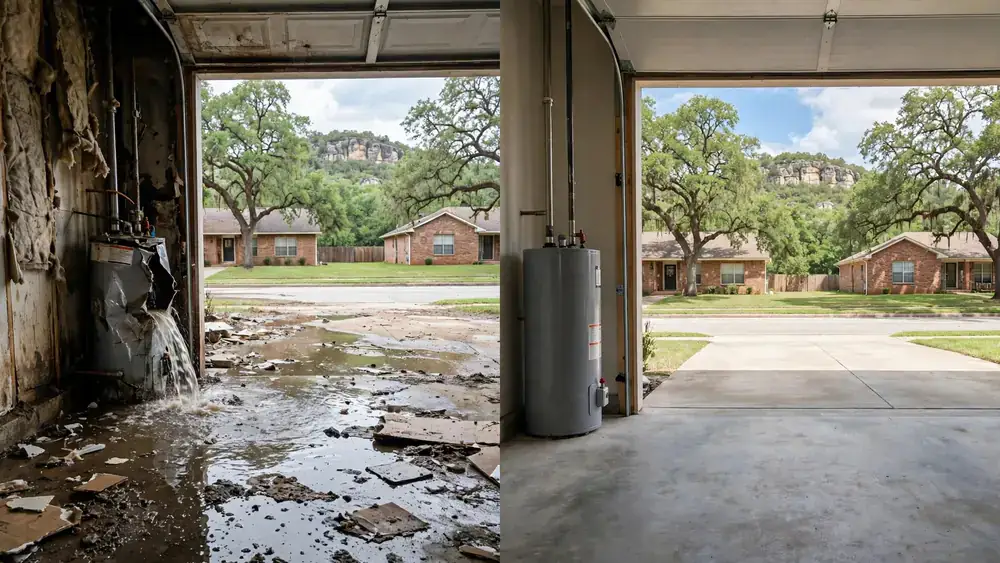
A rear-entry garage usually means a driveway or alley apron running behind the house, and concrete like that sends rain somewhere. If the slope falls toward the garage, water can gather at the overhead door and slip beneath it during a downpour. Storage on the garage floor then gets wet, and water can follow the wall into a room next to it. Worn door seals and settled concrete are common culprits at this age.
Check after a real rain. Look for sediment lines along the base of the door and any dark staining on the bottom of the wall. A new door seal or a small threshold can solve a lot. If a section of the slab has sunk, a concrete contractor can advise. Where an alley is involved, drainage may be a public matter, and the city can tell you who is responsible for it.
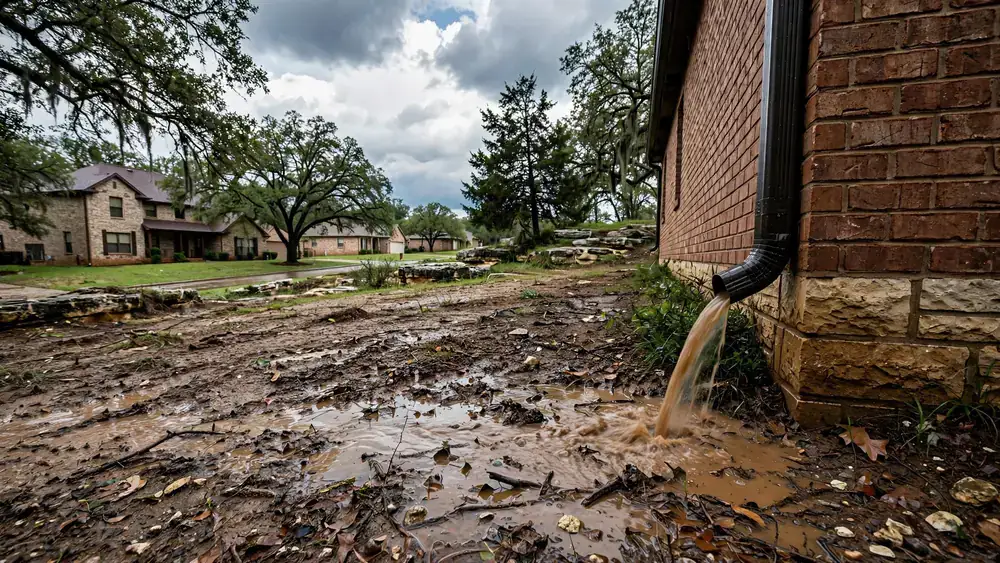
Rear yards can also trap water between the garage, the house and a privacy fence. Fences that sit tight to the ground stop water from leaving. A gap at the bottom, or a shallow drain, can make a difference. Take a look in a storm and follow the water.
University Estates North styles and their water risks
| Home style | Typical weak point | Check this |
|---|---|---|
| Contemporary with a complex roof | Valleys, clerestory windows | Ceilings under roof changes |
| University Estates North two-story | Upstairs tub or toilet | Dining room and kitchen ceilings |
| Single-story ranch from 1972 | Slab lines, older drains | Floors along the plumbing wall |
| Home overlooking Sherrill Park | Yard slope and irrigation | Wall nearest the course |
| Rear-garage home on Cornell | Driveway runoff | Base of the garage door |
Upstairs bathrooms in University Estates North
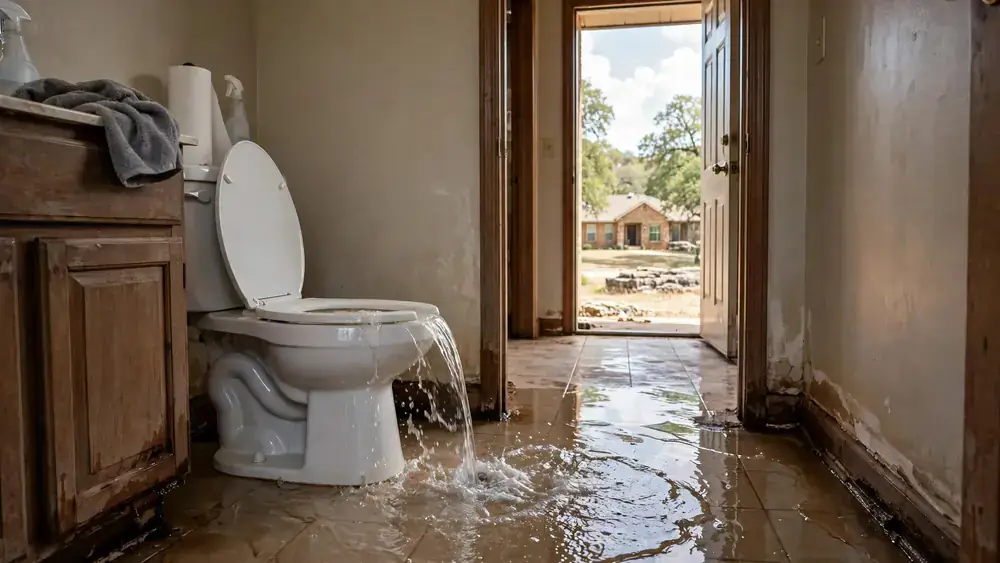
With up to five bedrooms in some homes, many houses here carry plumbing on two levels. Bathrooms from around 1980 have often reached the point where tub drains, shower pans and tile grout need attention. A shower pan that failed slowly can keep the floor framing damp for a long time before you see the ceiling stain below. Loose toilets can also leak at the wax ring, and a soft floor around one is a warning.
If a stain grows after someone showers, try a simple test. Stop using that bath for a few days and see if it dries. Then run only the tub, and later only the shower, with a plumber's advice. This helps show if the problem is the drain, the valve or the pan.
- Soft floor by the toilet
- Stain that follows showers
- Cracked grout at the pan
University Estates North pipes from the transition years
Homes from 1978 to 1986 were built when copper and early plastic systems were both in use. Yours could have either. If you see gray flexible pipe, ask a plumber whether it is polybutylene, since that type has a history of early failures. Copper from this era can be sound, although pinholes do occur. Nothing here says that a given home has either one, so have yours checked and write the answer down.
Long pipe runs in a bigger house can also mean a longer wait for hot water, and homeowners sometimes add recirculating pumps. Those add fittings and keep hot water moving through the pipe, so they should be installed carefully. If a home's water bill rises and nothing is obviously leaking, a meter test will show whether water is going anywhere it should not. A burst pipe is dramatic, but a slow leak can do just as much harm.
Air conditioning in larger University Estates North homes
Bigger homes commonly run two systems, one for each level. An attic unit above bedrooms needs a pan, a working drain and preferably an overflow switch. A primary drain can clog with algae, and in a forty-year-old house the pan itself may have rusted if it has never been replaced. The first symptom is typically a soft ceiling or a brown ring in an upstairs room or hallway.
Turn the unit off when you see it, and have it serviced. Ask the technician to check the pan, the drain and the insulation below. See the AC leak page for what usually happens next. Have the ceiling checked for moisture, as wet insulation can hold on to water long after the visible stain has dried out.
Life next to Sherrill Park in University Estates North
The blog notes that some homes overlook Sherrill Park Golf Course, which gives those lots a green view. Land like that is managed for turf, so it has its own drainage and irrigation patterns. Without knowing the details of any specific lot, it is fair to say that a home beside open ground should check how the land slopes. Look at how water moves at the rear fence during a storm, and whether any swale along the property line is staying clear.
Check your own FEMA map result as well. Open space near a home may carry drainage channels, and your address might sit close to one. This page does not say that any home here has flooded. If yard water comes up to the wall, keep the area around the slab graded away. The storm and flood page explains what to do if it gets in.
A yearly check for a University Estates North home
One Saturday in spring covers most of it.
- 1
Walk the roof line
From the ground, look at the valleys and flashing of your University Estates North home.
- 2
Test the garage door seal
Look for daylight or sediment under the door.
- 3
Flush the AC drain
Have your technician clean the line and test the float switch.
- 4
Inspect both floors
Check under sinks, around toilets and at tub edges.
- 5
Exercise the shutoffs
Turn the main and fixture valves, and replace any that stick.
Mature trees across University Estates North
Mature trees are one of the things that the blog highlights, and forty-plus years is long enough for roots and canopies to become a factor. Roots may have found their way into older sewer laterals, and limbs now reach over roofs that were bare when the houses were built. Falling leaves pile up in gutters and valleys. If a valley holds wet leaves against the shingles, the roofing wears out more quickly there.
Slow drains in more than one room may point to roots. Ask a plumber to scope the line. The city states that it maintains the main, and that the piece from a city-installed cleanout to the house is the owner's. The sewer guide has further detail. Report anything surfacing in a street or alley at 972-744-4111.
Slabs and clay under University Estates North
Clay soil shifts with the seasons, and a large footprint can feel that more than a small one, as the two ends of the slab may sit on soil with very different moisture. A long house with a garage at the back may develop cracks at the joint between sections. Interior signs include doors that stick and cracks at the corners of openings. By themselves, those signs do not prove a leak, but they do mean that a plumbing test is worthwhile.
Hot spots on the floor, a meter that moves when all fixtures are off and damp carpet along one wall all suggest that a slab leak may be involved. Ask for accurate location before cutting, and consider rerouting. A larger home may have longer runs through the slab, so a reroute can be a practical way to retire a whole section of old line.
Windows and siding on University Estates North contemporaries
Contemporary designs from around 1980 often used tall windows, wood trim and siding sections mixed with brick. Those details need paint and caulk to keep water out. Wind-driven rain can enter around a tall window, and it may run down inside the wall before showing at the baseboard. If you see peeling paint below a window sill or soft trim, push gently with a screwdriver. If the wood gives way, the seal may have been failing for some time.
Skylights and clerestory windows are worth checking as well. Original units from this era may be near the end of their life. Fixing them when a roof is replaced is usually the easiest approach. Have the roofer replace the flashing at the same time, instead of reusing it. Ask for photos of the work, and keep them with your records.
Picking help after a University Estates North leak
A larger home usually means a bigger drying job, and a few questions early on can help a great deal. Ask how the contractor will check both floors and what the drying goal is. Ask for daily moisture logs and photographs. If a contractor proposes removing large sections of material on the first visit, ask why, and ask what the readings show. The choosing a company guide lists more questions.
This site connects callers with independent contractors, so you should still check licensing and read any agreement before you sign. If you are dealing with insurance, ask your adjuster about the claim process first, and do not sign anything that assigns your rights without understanding it. The Texas Department of Insurance has useful consumer guidance.
Mold in closed rooms of University Estates North
Bigger houses often have rooms that nobody uses every day: a guest bedroom, a formal dining room or an upstairs bonus room. Leaks in these spaces can go unnoticed. Take a walk through every room once a month. Look at the ceilings and the corners, and open closets on outer walls. A musty smell in a room that has been closed for weeks can be the first and only clue.
The EPA recommends fixing the moisture and drying materials within 24 to 48 hours. For visible growth, do not scrub or fan it, and read the mold rules guide before you decide what to do. Empty-nest owners who close off a level to reduce cooling should be careful, as a warm and humid closed level is more prone to mold. Keep the air moving, and keep the air conditioning running at a sensible level.
Selling a home in University Estates North after water damage
Buyers looking at homes of this age tend to ask detailed questions, and the area's schools, listed as Yale or Dartmouth Elementary and Berkner High depending on the source, draw families who plan to stay. If you had a leak and had it repaired, a tidy file is your best asset. Include the plumber's invoice, moisture logs, any mold clearance and your insurer's letters. It shows that the job was done properly.
If you are the buyer, ask for that same file. Have the inspector look at attic pans, shower pans and the drainage around the rear garage. A sewer scope is reasonable for a house of this age. Asking early can stop a small repair from becoming a dispute at closing, and it leaves you with a clearer picture of the house you are buying.
Freezes and long pipe runs in University Estates North
A rear garage changes where the plumbing runs. In many larger homes, hot and cold lines travel the length of the house to reach a far bath or a laundry room near the garage, and some of that distance may pass through an attic or along an outside wall. In a hard freeze, those long exposed stretches are the most vulnerable, especially above a garage that is not heated. A room over the garage has cold air beneath it as well as above, so any pipe in that floor deserves particular attention.
When a freeze is forecast, keep the garage door closed, disconnect hoses from the outdoor faucets and open sink cabinets along exterior walls. If you are traveling, shut off the main valve and ask your plumber about the water heater. After the thaw, go through both floors slowly, listening for running water and checking the ceilings under any upstairs plumbing. A split line often stays quiet until the ice inside it melts, so the leak may begin hours after the coldest part of the night has passed. Make sure that everyone in the house knows the shutoff location, since the person at home when it happens may not be the person who usually handles repairs.
Chimneys and wet bars in University Estates North homes
Homes built around 1980 at this size often came with extras that smaller houses never had, and each is a possible entry point. A masonry or framed chimney needs a sound cap and good flashing where it meets the roof. When the crown cracks or the flashing lifts, rain can run down inside the chase and show up as a stain on the ceiling or wall beside the fireplace. Because that stain can appear well away from any plumbing, it often gets blamed on the wrong thing. If it grows only during wind-driven rain, ask a roofer or chimney professional to take a look.
Wet bars, second sinks and ice makers bring supply lines into rooms that have no other plumbing, sometimes through long runs behind built-in cabinets. These fixtures may sit unused for months. A rubber seal that dries out, or a refrigerator line behind a bar, can fail with nobody around to notice. If you rarely use one, run it now and then and look underneath, or have the plumber close the supply to it. The same advice applies to a guest bath that is seldom used, where a dry trap can also let sewer odors into the room.
Fenced yards bring one last detail. Sprinkler lines and gates are often installed after the fact, and a line that crosses under a rear drive may be hard to reach. If a section of concrete stays damp when the weather has been dry, have the irrigation system tested. Turning the controller off and watching the meter is a quick first check, and it tells you whether to call an irrigation technician or a plumber about the wet concrete behind your garage.
FAQ
Questions from University Estates North homeowners
Is University Estates North in 75081 or 75082?
Recent listings show 75081, while one older blog says 75082. Use the ZIP on your own address.
Why does my University Estates North garage take on water?
A sloped drive, worn door seal or settled concrete are common causes. Check after a heavy rain.
Is my stain from the upstairs bath or the roof at University Estates North?
Watch when it grows. After showers suggests the bath, and after storms suggests the roof.
Does living by Sherrill Park affect my University Estates North yard?
It can change drainage around your lot. Watch the rear fence in a storm and check the FEMA map.
Do I need a sewer scope for my University Estates North home?
For homes of this age with mature trees, it is a reasonable step, especially before buying.
Sources and citations
- [1]Richardson Neighborhoods: University Estates North
- [2]Team Hodnett: 1618 University Drive
- [3]City of Richardson: 24/7 Response Center
- [4]Walk Score: University Estates North
- [5]Niche: University Estates North
- [6]City of Richardson: Water utility operations FAQ
- [7]Texas Department of Insurance: water damage and mold coverage
- [8]EPA: A brief guide to mold, moisture and your home