Key facts: Highland Terrace
A mixed neighborhood: why Highland Terrace is different
Most Richardson neighborhoods are one thing: a set of houses, or an apartment community. Highland Terrace is several things at once. Homes.com describes it as home to DFW Chinatown, while listings show single-family homes on Summit Drive, Terrace Drive and Hillcrest Avenue, plus rental pages for addresses on Apollo Road. Walk Score ranks it the second most walkable neighborhood in the city, with a score of 60. One data source estimates about 5,439 residents and 1,445 jobs.
That mix shapes water damage. A homeowner on Summit has a slab, a yard and a personal insurance policy. A tenant on Apollo has a landlord. A restaurant owner near Chinatown has a commercial lease, a kitchen that produces grease and a landlord's roof overhead, along with staff and customers. Each of them needs a different first phone call. This page tries to help all three, and to be plain about which advice applies to whom.
Public records on individual homes are the best guide to age, as the sources found for this page do not give a clear build period for the whole neighborhood. Check your own deed or appraisal record, and mention the year built when you call.
Restaurant and shop leaks around Highland Terrace
Commercial kitchens are hard on plumbing. Grease cools and hardens in drains, floor drains can back up when a line narrows, and dish machines produce steady hot water. If a Chinatown-area restaurant or a shop near it has water on the floor, the first steps are to protect people and to stop the source. Turn off the fixture, put up wet floor signs and keep staff away from electrical equipment. Then call your landlord or property manager, as a lease often says who handles the drains, the roof and the common lines.
Food safety rules add a further layer. Water that may be contaminated can spoil stock and affect surfaces where food is prepared. Check with your local health inspector or the city about what is needed before reopening. Ask about what can be cleaned and what must be discarded. Keep a dated list of everything you throw away, with photographs. Business insurance may treat stock and lost income differently from building damage, so call your agent early.
Neighboring shops in a strip can also share walls and ceiling spaces. A leak at one tenant may show up in the next. Tell your neighbors, and ask the manager to check the units on either side.
Who to call first in Highland Terrace
| Situation | First call | Keep a record of |
|---|---|---|
| Homeowner on Summit Drive with a burst line | Plumber, then your insurer | Photos of the source and rooms |
| Renter on Apollo Road with a ceiling drip | Landlord or maintenance | Dated written report |
| Restaurant floor drain backing up near Chinatown | Property manager and plumber | Stock thrown away, hours closed |
| Water bubbling up on Hillcrest Avenue | City line, 972-744-4111 | Time and exact location |
| Shop ceiling leak during rain | Landlord or roofer | Damaged stock list |
Renters on Apollo and nearby Highland Terrace streets
Rental listings appear for addresses on Apollo Road and Hillcrest Avenue. If you rent, report a leak to your landlord at once, by phone and in writing. Your landlord usually handles the building and its repairs. Your belongings are generally yours to insure. If you do not have a renters policy, take photographs anyway, since they will help with any discussion about your deposit or the state of the unit.
Language can be a real obstacle in a neighborhood with a strong immigrant business community. If English is not your first language, ask a friend or family member to help with messages to a landlord or insurer. Many insurers offer interpreters on request. Keep every message. Do not sign a form that you do not understand, and take the time to get it translated first.
Landlords should give tenants a clear contact for after-hours trouble, and should show them the main shutoff. It is much easier to walk someone through that at move-in than over the telephone at midnight.
Sewer backups near Highland Terrace businesses
Grease from any kitchen can narrow a private line, and a heavy rain can make an existing weakness obvious. The city's guidance says it maintains the main, and that a stoppage from a city-installed cleanout to the building is on the owner's side. Commercial properties frequently have more complicated private lines, and several tenants may share one. Regular grease trap cleaning is both a rule in many places and a practical protection.
If sewage reaches a home or shop, treat it as a serious health hazard. Keep people away and call a plumber. Porous items it touched usually have to be thrown out. The sewage backup page and the sewer responsibility guide cover the details.
- Keep cleanouts clear
- Log grease trap service
- Report street overflows
Highland Terrace houses: slabs, drains and yards
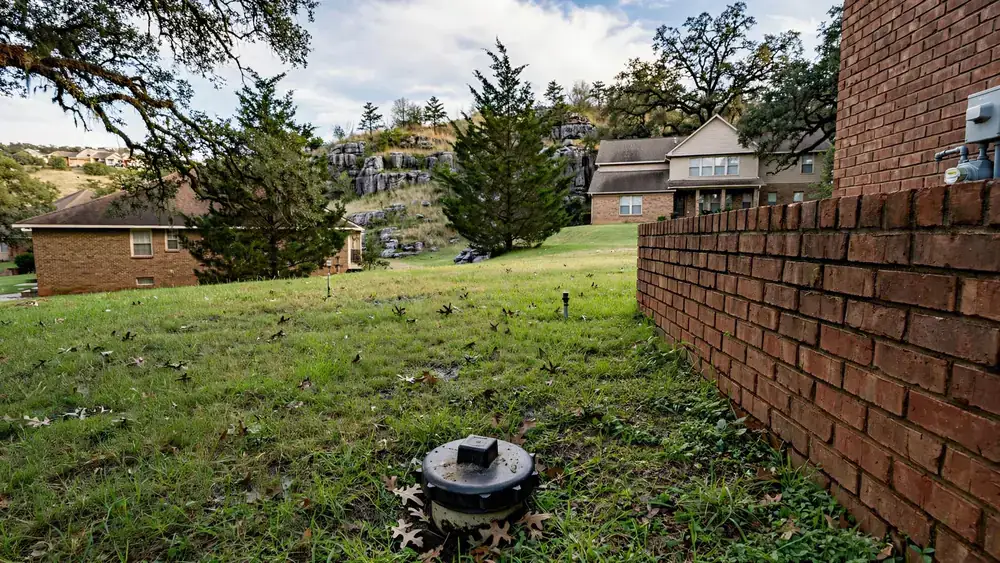
Another site describes Highland Terrace as an established area with traditional homes and a suburban street layout. Established homes in this part of Richardson are usually on slabs, in clay soil that shrinks and swells. That combination can strain older drain and supply lines. A damp carpet edge with no visible source, a warm tile or a rising water bill all deserve a look. So does a hairline crack that keeps returning.
If a plumber confirms a leak under the slab, you will have choices. A direct repair through the floor is one, and rerouting the line through walls or the attic is another. The slab leak page compares them in general terms. Either way, dry the surrounding materials properly, or you may end up treating a smell for months.
The same soil moves around the yard. Keep gutters running clear, send downspouts away from the slab and avoid planting thirsty trees very close to the wall. Small steps taken in dry weather prevent a lot of wet-weather surprises.
A Highland Terrace shop owner's first hour
For a small business when water shows up during trading hours.
- 1
Protect people
Keep customers and staff away from wet floors and electrical gear.
- 2
Stop the flow
Close the fixture valve or the building shutoff in your Highland Terrace unit.
- 3
Call the manager
Report to your landlord, and ask who handles the source.
- 4
Record the loss
Photograph stock, equipment and the wet areas before cleanup.
- 5
Check on neighbors
Warn the units next door about shared walls.
- 6
Ring your agent
Ask about stock, equipment and lost income.
Pavement, the rail corridor and Highland Terrace runoff
Listing sites point out that Arapaho rail service is close by, and the neighborhood's walkability reflects shops, parking and busy roads nearby. All of that pavement means rain runs off quickly. Parking lots drain toward inlets, and a clogged inlet can send water toward a storefront door. Shop owners can keep an eye on nearby inlets, tell the landlord when they fill with litter and store stock on shelves, off the floor.
For a home, the concern is more about the curb and gutter on your street. In a heavy rain, watch how close water comes to your driveway, and clear leaves away if it is safe to do so. For flood zone information, use the FEMA Flood Map Service Center. This page makes no claim that any part of Highland Terrace has flooded. The storm and flood page explains how to handle outside water if it does come indoors.

Flat roofs over Highland Terrace storefronts
Many small commercial buildings have low-slope roofs with drains or scuppers. Those are fine while they are kept clear, but ponding water finds any weak seam. Rooftop air conditioning units add penetrations, and their condensate lines can drip onto the membrane. Inside, water may sit on top of a suspended ceiling, then drop a tile suddenly. A stained tile is a warning, so do not simply swap it out without finding the cause.
A tenant is seldom allowed on the roof, so tell the landlord. A dated photo of each stain builds a clear record. If tiles above your register or kitchen are wet, switch off anything electrical below them that you can safely reach, and move stock aside. Commercial roof repairs may be subject to the lease terms, and the ceiling leak page gives a useful overview of stains overhead.
Terrace Park and Highland Terrace streets in a storm
Terrace Park, on the east side of the neighborhood, has tennis and basketball courts, according to listing sites. Open spaces like parks can absorb a fair amount of rain, though hard courts do not. If you live near one, take note of where the water goes in a good storm. Fallen branches can block a gutter inlet quickly. City crews handle public drains, and residents can report problems through the city's response center.
Trees along the older streets also drop limbs onto roofs and lines. Have large limbs near your home checked now and then. If a storm opens up your roof, photograph it, arrange a temporary cover and move your belongings away from the wet area. Your homeowners policy usually treats a storm-created opening differently from wear, and the insurance guide explains the general distinction.
Older equipment in Highland Terrace buildings
Small rental buildings and shops often run water heaters and air conditioners longer than a homeowner might. Rust around the bottom of a tank is a warning sign, and so is a damp closet floor. Tenants can help by reporting anything unusual. Owners can help by keeping a simple log of what was installed, and when. A heater that fails in a shared building may affect several units, and a single working shutoff can limit the spread.
For property owners, this is largely a planning matter. Replace connectors at turnover, label the shutoffs and make sure that every tenant has a working number. Check your building's cleanouts and keep them accessible, particularly where parking has been repaved over the years. Asphalt may have buried them, and finding one in the rain is nobody's idea of a good evening.
Drying a Highland Terrace home or shop
Drying works on the same principles in a house and a shop, but the logistics differ. A home can often tolerate equipment for several days. A business may need to keep running, so a contractor may have to section off the wet zone with plastic and work after closing. Ask how the work will affect customers, and ask whether any food preparation has to stop. Commercial kitchen walls often have sealed panels which trap moisture behind them.
Whichever you are, ask for daily moisture readings and keep the report. The EPA's advice to dry within 24 to 48 hours applies to all buildings, and leaving a job half done invites mold. The drying guide explains what affects the timeline, and the mold guide covers Texas rules for larger jobs. Ask to see licensing where it applies, and read any agreement closely before you sign it.
Insurance across Highland Terrace property types
A homeowner's policy, a renter's policy and a commercial package are three very different documents. A homeowner generally looks to the Texas guidance on sudden and accidental discharge. A renter has contents and liability coverage only. A business owner may hold property, stock and business income coverage, and often has a sewer backup endorsement, which is well worth checking. If you run a shop, ask your agent how a closure would be treated, including any waiting period.
In a mixed strip, the landlord's policy and the tenant's policy may both be in play, so report to both. Keep your lease nearby, as it may say who insures what. A short written timeline of what happened can prevent confusion. Keep your statements factual, and let the insurers work out who owes what.
Coolers and market floors around Highland Terrace
Grocers and restaurants rely on refrigeration, and refrigeration produces water. Walk-in coolers, display cases and ice machines all have drain lines, and these clog in much the same way as a home air conditioner does. A blocked line may leak behind a case for weeks, soaking the base of a wall or lifting floor tile while the sales floor looks normal. Ice machines also have a thin supply line that can split without warning, often overnight when nobody is in the store.
If you run a market or a restaurant, pull the access panels during routine cleaning and look along the base of each unit with a flashlight. A musty smell near a cooler, tiles that rock underfoot or a black line along a baseboard are worth following up on. Ask your refrigeration technician to check the drains at each service visit, and keep the record. Before any long closure, such as a holiday, turn off the supply to the ice machine and to any other equipment that you can safely shut down. A closed shop is the setting in which a small line does the most harm, since no one is there to hear it.
Wet floors in a food business are also a slip risk. Mark them clearly and dry them right away, even when the source seems minor. If water keeps coming back in the same spot, it almost always has a source you have not yet found, and mopping only hides it. Shared storage rooms behind a strip of shops deserve the same attention, because cartons stacked on the floor against a damp wall can hide a slow leak from a cooler, a mop sink or the unit next door for a long time.
Learning the history of a Highland Terrace house
Because no single build era stands out for Highland Terrace in the sources found, owners and buyers here need to do a little homework on each address. Start with the appraisal district record for the year built. Then look for clues in the house itself: the date stamped on the back of a toilet tank lid, the label on the water heater and the type of pipe at the sink. Permit questions can go to Building Inspection at 972-744-4180. Longtime neighbors on Summit or Terrace Drive may remember past additions and repairs, too.
That history tells you what to watch for. A house from the 1960s points toward drains and supply lines, while something from the 1980s may raise different questions about pipe material and roof details. A rental that has changed owners several times may have undocumented repairs behind the walls. When you call for help after a leak, offering the year built and any known plumbing changes helps a contractor plan what to check, including any testing of older floor or wall materials before they are disturbed. If you do not know these things, say so plainly. A careful contractor will simply look before assuming anything.
Keep what you learn in a folder or a note on your phone. Include the location of the main valve, the sewer cleanout and the electrical panel, along with the names of the trades you have used. In a neighborhood where people move for jobs, schools and the rail line, that record is also a useful thing to hand to the next owner or tenant, and it spares them from starting over on the worst possible day, with water already on the floor.
FAQ
Questions from Highland Terrace residents and owners
Is Highland Terrace in 75080 or 75081?
Listings for its streets consistently show 75081, so this page uses that ZIP code.
A shop next to mine in Highland Terrace is leaking through the shared wall. What now?
Tell the manager and your neighbor at once, photograph it and move your stock.
Can my Highland Terrace restaurant reopen after a floor drain backup?
Check with your local health inspector first, and clean thoroughly. Keep a record of all discarded food.
Who clears a sewer line for a Highland Terrace strip center?
Usually the owner or manager, depending on the lease. The city maintains the main.
My Apollo Road landlord has not answered about a leak. What can I do?
Follow up in writing and keep records. Tenant advice services can explain your Texas options.
Sources and citations
- [1]Trulia: 434 Summit Dr, Richardson 75081
- [2]Homes.com: Highland Terrace local guide
- [3]Walk Score: Highland Terrace
- [4]RentHop: 428 Apollo Road
- [5]City of Richardson: Water utility operations FAQ
- [6]City of Richardson: 24/7 Response Center
- [7]Texas Department of Insurance: water damage and mold coverage
- [8]EPA: A brief guide to mold, moisture and your home