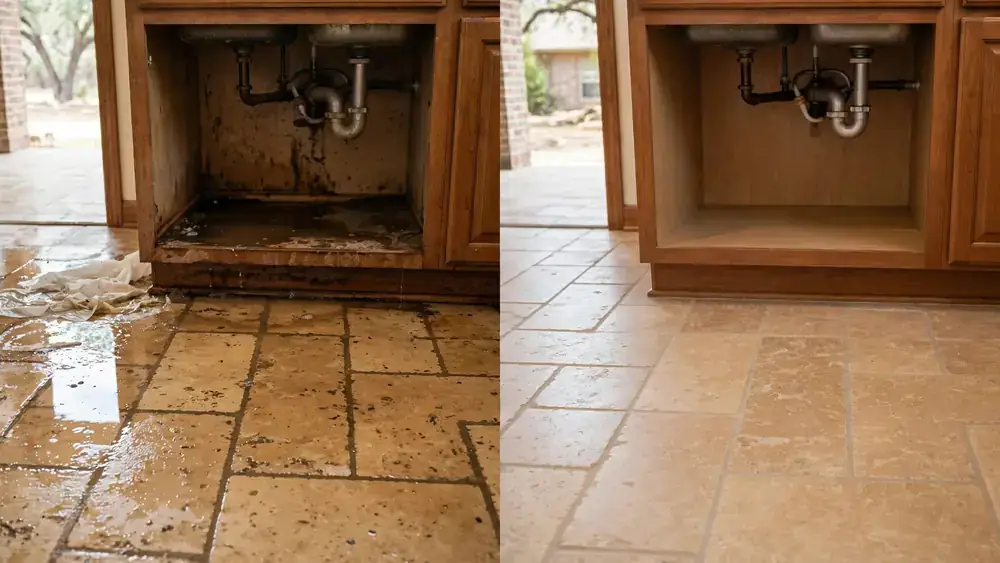
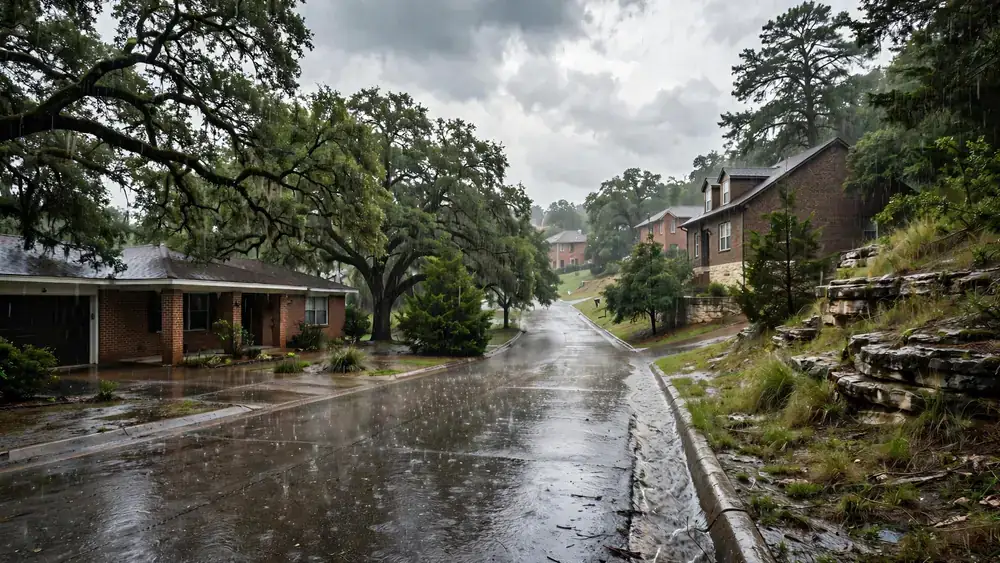
Key facts: Berkner Park
What makes Berkner Park different
Berkner Park is in ZIP 75081, in southeast Richardson. A real estate guide describes it as mostly single detached homes with some townhouses, built largely between 1960 and 1980, and individual listings from 1973 fit that picture. Treat those dates as a rough guide and check your own home.
That age matters. Homes from these years may have original water heaters replaced several times over, yet still have their first supply lines and drains. Mention the year built when you call, and note which rooms have been remodeled.
Ranch houses east of Central
The typical post-war ranch here is a single-story brick-veneer house on a slab. It is a simple and durable design, but the plumbing is often buried, and that is why leaks tend to show up through floors. Later additions, such as enclosed garages, patio rooms and extended kitchens, often have their own slabs, with a joint between old and new where water can travel.
Windows and doors at grade level also mean storm runoff can get in with very little depth. Many owners have put in new floors over the decades, which can hide what is beneath. If a floor has been raised with layers of tile or wood, a moisture reading at the surface may tell only part of the story.
How water behaves in common Berkner Park buildings
| Building | Usual cause | Things to check |
|---|---|---|
| 1950s to 1970s ranch | Aged lines, slab leaks, cast-iron drains | Under flooring, bottom plates, closets |
| Ranch with a later addition | Slab joint, roof tie-in | Where old meets new |
| Small commercial building | Flat roof drains, restrooms | Above dropped ceilings, shared walls |
| Apartment community | Water heaters, supply lines | Units below and beside |
Alleys, meters and who owns what
Many older Richardson streets have rear alleys, and utilities may run behind the lot. This matters when something goes wrong. The cleanout may be at the back fence and hidden under years of plants. The city says it maintains the main sewer line and that a stoppage between a city-installed cleanout and the house falls to the owner.
Find the cleanout and the water meter on a calm day. Cut back shrubs and keep access open. In a backup, seconds count less than knowing where to send the plumber or the city crew. If you see water surfacing in an alley or a street, use the 24/7 line at 972-744-4111.
Trees, clay and cast iron in southeast Richardson
Older neighborhoods have big trees, and large trees draw water from clay soil, especially in drought. That can make soil shrink near the foundation on one side of a house while the other stays stable. Add 60 or more years of ground movement and you have a good recipe for stress on plumbing. Cast-iron drains may be scaling inside and cracking outside, while roots work into any gap.
That does not mean every old house has a problem. It means a camera inspection of the drain and a yearly meter test are worth doing before the problem finds you. Find out what you have, then decide with a plumber what to do about it.
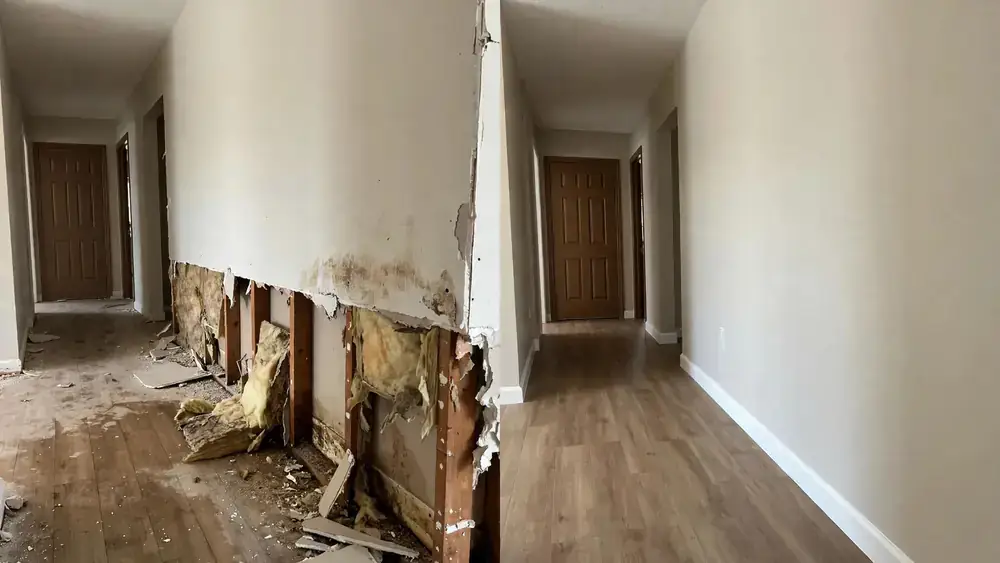
Asbestos, lead and older materials
Older buildings may contain asbestos in floor tile, adhesive, ceilings and pipe insulation, and lead in old paint. A restoration crew working in this kind of house should bring this up. Materials may need sampling before demolition, and that could affect the schedule. It is better to accept a short delay for testing than to spread fibers through a house during an emergency tear-out.
If mold appears, Texas rules matter as well. Companies working on 25 contiguous square feet or more need to be licensed and follow notification rules. Read the mold guide for what that means for a homeowner.
Storm drainage in southeast Richardson
Streets here were built long before today's storm patterns and many have grown more paved over the decades. In heavy rain, inlets can be overwhelmed, and water may sit against low driveways. Fallen leaves from older trees can block inlets too. Check your address on FEMA's map service, then look at how water moved on your block in the last major storm.
Keep gutters clear in the autumn. Tall trees drop leaves into valleys that overflow in the first big storm, and the overflow lands against the slab edge. Extended downspouts are easy to fit and keep this water away from the wall.
Permits and contractors in southeast Richardson
Richardson requires contractors to be registered with the city, and permits must be approved and posted before work begins. Building Inspection is at 2360 Campbell Creek Blvd., Suite 550, open Monday to Friday, and its general line is 972-744-4180. Because older buildings can raise questions about what can be rebuilt as it was, check before work starts, particularly if you are changing a kitchen or bathroom layout during repairs.
Five checks for a Berkner Park home
- Find the cleanout and keep it clear
- Ask a plumber what kind of pipe you have
- Check the joint between any addition and the main house
- Clear gutters after the leaves drop
- Keep records of past leaks with your house papers
Galvanized lines and what they do to water
If your water pressure has been slowly falling for years, or the first water out of a tap runs brown, you may have galvanized pipe. It corrodes from the inside, and that rust narrows the pipe over time, leaving reduced flow long before any leak. When it finally fails, it tends to do so at a threaded joint. Disturbing old galvanized lines during a repair can also shake rust loose and clog fixtures.
A plumber can usually tell what you have by looking at the point where the water line enters the house and scratching gently at the pipe. A magnet sticks to galvanized steel but not to copper. This is a simple test that anyone can do on an exposed section. Once you know, you can plan ahead, and you will not be making this decision in the middle of a flooded kitchen.
Enclosed garages and converted rooms
Older ranches are often extended by closing in a garage or roofing over a patio. The result may be a useful room with a lower floor level, a separate slab and wall framing that sits directly on the old driveway surface. These rooms take on water easily. Storm runoff can pass under an old garage door line, and a water heater that was left in a closet nearby is an added risk.
If you have a room like this, look at the base of the walls after any big storm. Damp carpet at the outer edge is a frequent early sign. Be aware that the room may not have been built under a permit, which can raise questions when repairs are being planned. Ask Building Inspection about what applies if you are not sure, and tell your contractor what you know.
Getting ready, the Berkner Park way
The best thing about an older neighborhood is that its problems tend to be known. Talk to neighbors who have lived on the block for decades. They will remember which corner flooded, which street had sewer work and which plumber knows the houses. Keep a simple file for your home, with the type of pipe, the location of the main shut-off and cleanout, the age of the water heater and the dates of past leaks.
If you are renovating anyway, that is the least disruptive moment to deal with old lines. While walls are open, ask your plumber to look at what is exposed. A little planning at that point can spare you a flooded floor later, and you will have the pleasure of knowing what is inside your own walls. It is a small piece of knowledge that very few homeowners have.
Who to call in Berkner Park, in order
The order in Berkner Park is the same as anywhere, but the details matter more in older streets. For any water in an alley or the road, ring the city first. For a backup, check the rear cleanout, then decide between the city and a plumber. For a leak inside, shut the main. In an apartment, tell management. In a shop, tell your landlord and the insurer. Keep those contacts in your phone, and share them with staff or family.
Write down where your shut-off is, and test it. Old gate valves often seize, and turning one for the first time in decades can make it leak. If yours is stiff, ask a plumber to replace it with a ball valve on a calm day, because that way a single quarter turn will stop the water when it really matters.
Keeping records for an older central home
Houses in this neighborhood often have decades of undocumented changes. Start with what you can see. Take photos of the exposed pipes, the panel, the water heater label and the cleanout. If walls are opened during a repair, take photos of what is inside before they are closed. A photo of the plumbing behind a bathroom wall is valuable the next time anything goes wrong in that wall.
If you own a small commercial building, keep a simple site plan with shut-offs and roof drains marked, and share it with tenants. New tenants arrive without knowing any of this, and in a leak the minutes spent looking for a valve can decide how many suites get wet.
Gutters on tree-lined streets
Tall trees and older gutters do not mix well. Clear them after the leaves drop and again in spring, because a blocked valley sends water over the edge and straight down against the slab in the first heavy storm, then run a hose to confirm that the downspouts flow freely and discharge well away from the slab.
Water heaters and laundry closets in older ranches
Many southeast Richardson ranches keep the water heater and the laundry in a closet inside the house, often near bedrooms or the kitchen. When that tank fails, or a hose lets go, carpet and walls on several sides can be wet within the hour. Look at the base of the tank and the walls around it every few months. If you see rust or dampness, have a plumber look at it. Older closets often lack a drain pan, and adding one during a replacement is a sensible request.
If the closet shares a wall with a bedroom, check that wall at the floor line too. Staining at the baseboard can show that a small leak has been running for some time, and catching it there keeps the job small.
FAQ
Questions from Berkner Park homeowners
Why does my older ranch keep leaking?
Original lines tend to fail in more than one place as they age, and clay movement adds stress. A plumber can assess the condition of the whole system.
Where is my sewer cleanout?
Often near the property line or alley. It may be hidden under plants, so look near the back fence.
Does my old floor tile need testing?
If it dates from before the 1980s, ask about asbestos testing before anybody disturbs it.
Is southeast Richardson at flood risk?
Check the FEMA map, and remember that heavy rain can flood outside mapped zones.