Key facts: Arapaho East
Arapaho East leaks often start overhead
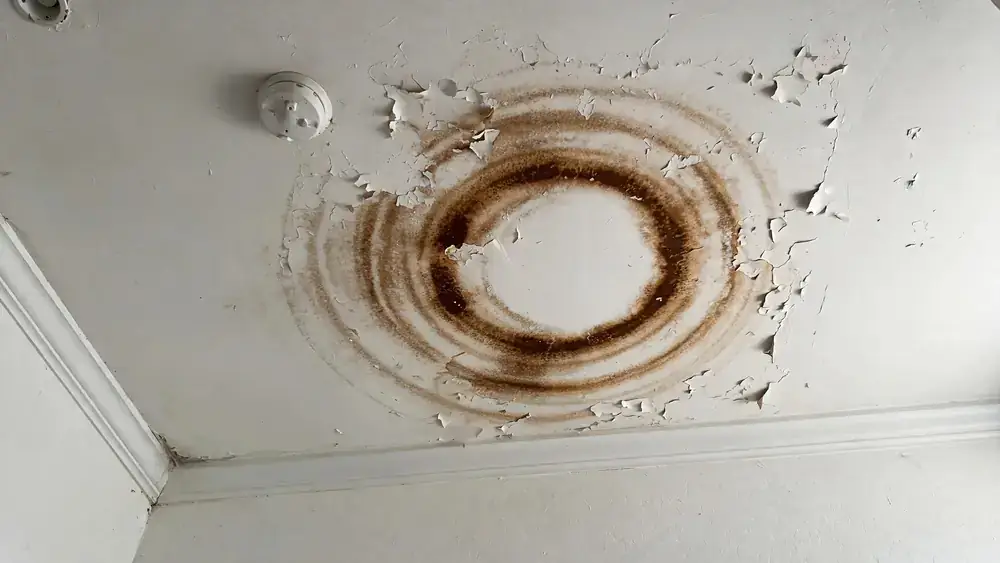
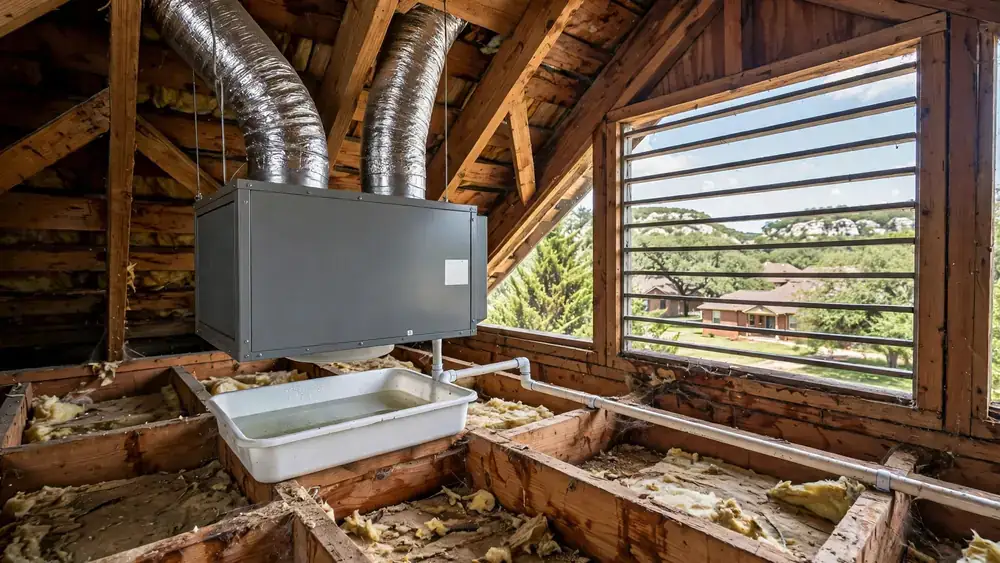
In an Arapaho East home, the first sign of a water problem is often a stain on a hallway ceiling. That is a simple result of how many houses of this era were built. A single-story plan leaves the attic as the natural place for the air handler, the ductwork and sometimes the water heater, all sitting above finished rooms. When a condensate line blocks in August, the water has only one way to go. The stain that shows up may be yards from the cause, because water runs along drywall and framing before it finds a way down.
This page starts with the attic for that reason, not because other problems never occur here. Slab leaks, drain trouble and storm runoff happen in this part of Richardson as well, and they are covered further down. Still, if you own one of these homes and have never been up to see what is above your hallway, that is the most useful half hour you can spend. Take a flashlight, stay on the framing and look at the pan under the unit.
What listings say about Arapaho East homes
One neighborhood profile dates the community to 1971 and notes that it kept growing afterward. Individual listings fit that closely: Wheaton Drive at 1973, Aurora Drive at 1975, a ranch on North Yale at 1977 and Barclay Drive at 1978. Most are described as single-story brick homes. Subdivision names in property records often carry section numbers, such as Arapaho East Sec 02, a sign that it was built out in stages. Two neighbors may therefore have homes several years apart, so check your own appraisal record for the year built.
A home from those years falls in a useful middle ground. It generally avoids the galvanized supply pipe common in earlier houses, because copper had largely taken over by then, although that is a general pattern and only your plumber can confirm what you have. It also predates many modern water protections, such as drain pans with float switches, code-required expansion tanks and braided connectors. At the same time, fifty years is long enough for any original component to have been replaced, or to be overdue for it.
Air handlers and condensate lines in Arapaho East attics
Every air conditioner pulls water out of indoor air. On a humid North Texas day a home unit can produce gallons, and that water leaves through a thin drain line. Algae and dust build up inside until the line slows down or stops. A secondary pan under the unit is meant to catch the overflow, but older pans can rust through, and a line from that pan may end somewhere nobody ever looks. Traditionally it ends above a window so an owner sees drips, and many people never connect those drips to a warning.
Check the pan at the start of summer. If it holds water or rust, call an HVAC technician. Ask about a float switch that shuts the system off when the water rises. Replacement units in older attics are also sometimes taller or heavier than what they replaced, and the platform may have been altered to fit, so see that the pan is still level. Should a stain appear, turn the system off, then read about AC leaks and ceiling damage before you touch the drywall.
Sagging ceilings in Arapaho East rooms
A wet ceiling is more serious than a wet wall, since it is heavy and overhead. Attic insulation soaks up water and sits on the drywall like a sponge. If a ceiling starts to bulge, keep people out of the room and move what you can from beneath it. Do not poke the bulge from directly underneath. Shut off the air conditioner or the water source, then shut power to that area at the panel if there are light fixtures or fans nearby and you can do it safely.
Textured ceilings add one more point to raise. Homes from the 1970s may have acoustic or sprayed texture, and some materials of that period contained asbestos. Testing is the only way of knowing. A careful contractor will bring this up before cutting anything out, and that pause is a good sign. Wet insulation generally has to come out because it stays damp for a long time and no longer does its job. Ask to see moisture readings of the framing, so you can be sure the attic is dry before new material goes in.
Common Arapaho East leaks and where they surface
| Source | Where you notice it | First move |
|---|---|---|
| Blocked condensate line | Hall ceiling near the return | Turn the AC off at the thermostat |
| Attic water heater | Bedroom or closet ceiling | Close the cold valve above the tank |
| Washer supply hose | Carpet beside the laundry closet | Close both washer valves |
| Hot line under slab | Warm floor, meter that keeps spinning | Close the main and call a plumber |
| Rear door at patio slab | Damp carpet edge after storms | Check patio slope and gutters |
Single-story floor plans and how water spreads in Arapaho East
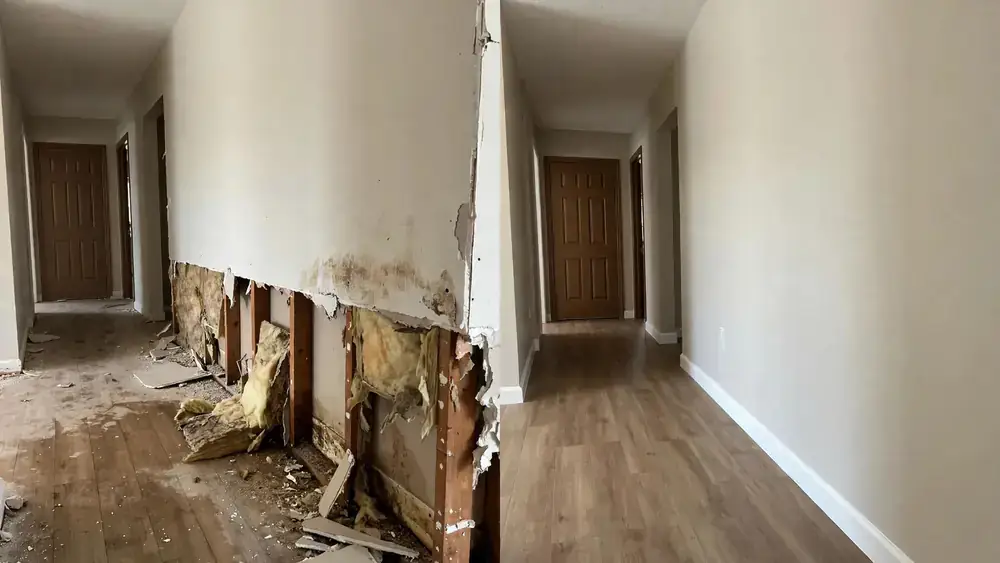
A one-level home has no upstairs neighbor to blame, but it does have a very large, continuous slab. Bedrooms, a hallway, a laundry closet and the living room are often all on the same plane, so a leak in one spot can reach several rooms under baseboards and through the tack strip. Carpet hides this well. The pad can be saturated well past the point where the surface feels damp, which is one reason contractors use meters rather than hands to mark the edge.
Interior walls matter too. The bottom plate of a wall sits on the slab, and drywall wicks water up from it. Closets are the last to be checked and the slowest to dry, since air barely moves in them. If water reached a closet, empty it and leave the door open. Move anything stacked against walls. The drying timeline guide explains why a house that feels fine after a day may need several more days of equipment.
Laundry closets and water heaters in Arapaho East
Many homes of this period tuck the washer and dryer into a hallway closet or just off the kitchen, without a floor drain. A washer hose under constant pressure is one of the most common sources of a sudden indoor flood. Rubber hoses harden and split with age. Swap them for reinforced ones and turn the valves off before a long trip. Pull the machine forward once a year and look at the wall behind it, since slow drips from a valve or a box can run down inside the wall for a long time.
Water heaters in this area may be in a garage, a closet or the attic, depending on the plan. Whatever the location, read the date on the label. Tanks do not last forever, and a home from the 1970s has probably gone through a few. An attic tank needs a working pan with a drain line that leads somewhere sensible, because a failure overhead will come straight through the ceiling. Replacement is a good time to ask a licensed plumber about pans, expansion control and an accessible shut-off.
Slabs and buried lines under Arapaho East homes
Attic trouble gets the attention, but houses in this area are on slabs and their plumbing runs beneath. Clay soil across Richardson swells when wet and shrinks when dry, and that movement stresses anything rigid. A hot water line under a slab is the classic case. You may feel a warm patch on a tile floor, hear water when everything is off or see a sudden jump in a bill. Those signs do not prove a leak, but they justify a look. The slab leak page describes how a plumber confirms one.
The simple test is the meter. Turn off all fixtures and appliances, then look at the leak indicator on your meter. If it keeps moving, water is going somewhere. Then close the house shut-off. If the meter stops, the leak is inside. If it keeps moving, the leak may be on the yard side. Either way a licensed plumber should take it from there. In Texas, drying and rebuilding are separate jobs from the plumbing repair, and the order matters, because there is no reason to dry a floor over a line that is still leaking.
Yale Park, alleys and storm runoff in Arapaho East
Listings often mention how close these streets are to Yale Elementary and Yale Park, and to Huffhines Park further on. Many blocks in this part of town also have the rear driveways and alleys common in Richardson's subdivisions of the period. An alley-loaded home has its garage at the back, and that detail matters in a storm. Water that sheets down a concrete alley may meet the garage door or a rear patio before it meets a street inlet. Check that the garage threshold is higher than the alley apron and that no grass or debris is holding water against the door.
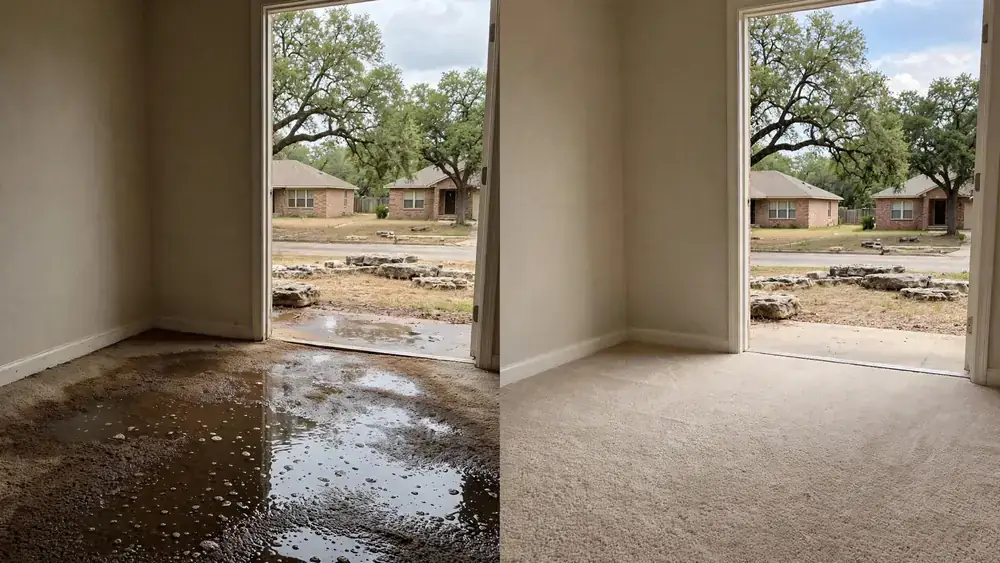
Patios are the other weak point at the back. A patio slab poured decades ago can settle and tip gently toward the house, carrying rain to a sliding door. Keep gutters clear above it, and extend downspouts away from the slab. Check your address on FEMA's map service, and remember that a map cannot predict every intense storm. If you see water surfacing in an alley or street on a dry day, that may be a broken main or service line, so use the city's 24/7 line at 972-744-4111.
First moves for a ceiling leak in Arapaho East
- 1
Stop the source
Turn off the AC at the thermostat, or close the water heater valve or the main, depending on where the water came from.
- 2
Protect the room
Move furniture out from under the stain and put down a bucket and plastic sheeting.
- 3
Watch the electrics
If water is near a light or fan, switch that circuit off at the panel if you can reach it safely.
- 4
Record what you see
Photograph the ceiling, the attic pan and the unit label before anything gets moved.
- 5
Get it checked
Ask an HVAC technician or plumber to fix the cause, then have the wet materials measured and dried.
Mold in closed-up Arapaho East attics and walls
A slow overhead leak can feed mold for a while before anyone sees a mark. Attic decking, the paper face of drywall and damp insulation all hold moisture, and summer heat adds to it. The EPA's guidance is direct: stop the water, dry things quickly and clean or remove what cannot be dried. Musty air at the return, or dark spotting around a ceiling vent, is worth following up. Duct leaks can also make it hard to tell where a smell starts, so ask for a look at the air handler compartment as well.
Texas has its own rules once an area grows. Work on 25 contiguous square feet or more of visible mold generally involves licensed mold professionals and notification steps, with some exceptions set out by TDLR. The Texas mold guide walks through what that means for an owner. Small areas are often manageable, but do not paint over the stain or spray bleach on drywall and call it finished. If moisture is still there, the problem will come back.
Permits and ownership lines for Arapaho East repairs
Richardson expects contractors to be registered, and many trade jobs need a permit before work begins. A water heater swap, a new air handler or moving a plumbing line can all fall into this category. If you are unsure, Building Inspection is at 972-744-4180. It is worth asking, since unpermitted work can complicate a claim or a future sale. Homes of this age have often been through several owners, so older changes may also be undocumented and you should tell your contractor whatever you know.
On sewer lines, the city maintains the main, and a stoppage between a city-installed cleanout and the house is the owner's. If a toilet or tub backs up, stop running water, and find the cleanout, which may be close to the alley or property line. The sewer stoppage guide sets out who to call. Sewage needs a different kind of cleanup from clean water, so tell any contractor exactly what came up and where.
An Arapaho East home's fifty-year checkup
A house reaching fifty deserves a calm review. Start at the top: look at the roof, the attic deck and the air handler pan. Move down to the supply lines under each sink, the toilet connectors and the ice maker line. Finish outside with the gutters, the patio slope and the cleanout. Note the age of each item in one file, and keep it somewhere you can find it. Older shut-off valves may not close fully, and replacing a stiff gate valve with a ball valve is a modest job that pays off the day something fails.
If you rent your Arapaho East home out, or rent one yourself, settle who does what before anything goes wrong. A tenant should know where the main valve is and which number to call. An owner should know the age of the water heater and the roof. Rental houses tend to have long stretches when no one is checking the attic or walking the yard, so a yearly look is worthwhile. Keep receipts and dates, because they can be useful when you speak with an insurer or a plumber.
Kitchens and bathrooms in an Arapaho East ranch
Under-sink cabinets are where small leaks live for months. Particle board swells, a musty smell builds up and the first anyone knows of it is when the cabinet floor gives way. Empty each sink cabinet once a year and run your hand along the supply lines and the trap. Dishwashers and ice makers deserve the same look, since their lines run along the floor behind cabinets and the leak shows only as a soft spot in the vinyl or a dark line at the toe kick.
Bathrooms built in the 1970s often have tile tub surrounds that were set over materials less forgiving than modern backer board. If a grout line has opened, shower water can soak the wall behind it for years. Press gently on the tile near the bottom course. Any movement is a warning. A remodel that left an older mixing valve or a tile-in tub can hide a problem until the room below the wall line starts to show it, so ask for the wall to be checked when you do any work there.
Summer strain on Arapaho East air conditioning
A unit that runs all day through a Texas August moves more water than at any other time of year, and that is when small faults show up. Frozen coils are one example. If a filter is clogged or the refrigerant is low, ice may form on the coil, and when the system cycles off all of it melts at once. The pan can overflow even though the drain itself is clear. Change filters on schedule and look at the unit if the house stops cooling well, because that is often the moment a leak is about to begin.
Heat in the attic is hard on materials as well. Flexible duct connections can sag and sweat, dripping onto drywall in humid weather. A stain that appears only in summer and that sits under a duct run may be condensation and not a plumbing leak. Mention the timing when you call. That detail helps tell an insulation problem from a failed drain line.
FAQ
Questions from Arapaho East homeowners
Why is my Arapaho East hall ceiling wet when it has not rained?
An attic air handler or water heater is a likely suspect in a single-story home. Turn off the AC and check the pan.
Is my 1970s Arapaho East home likely to have copper pipe?
Many homes of that period do, but it varies. A plumber can confirm it, and earlier repairs may have changed some sections.
Does an Arapaho East home need a pan under the air handler?
Attic units normally need secondary protection against overflow. Ask an HVAC technician to check what you have and whether a float switch would help.
Should I test my textured ceiling in Arapaho East before repairs?
If it dates from the 1970s, ask about testing before anyone cuts or scrapes it.
Who handles water running down my Arapaho East alley?
If it looks like a leak, report it on the city's 24/7 line at 972-744-4111.
Sources and citations
- [1]Neighborhoods.com: Arapaho East
- [2]JPAR listing: 1614 Aurora Drive, Richardson 75081
- [3]City of Richardson: 24/7 Response Center
- [4]Zillow: 2127 Wheaton Drive, Richardson 75081
- [5]Listing record: 1302 N Yale Blvd, Richardson 75081
- [6]City of Richardson: Water utility operations FAQ
- [7]City of Richardson: Residential permit types
- [8]EPA: A brief guide to mold, moisture and your home
- [9]TDLR: Mold assessors and remediators FAQ