Key facts: Storm and Flood Cleanup
- Home policies do not cover floods; Texas officials say most flood policies have a 30-day waiting period [1].
- NFIP policies require a claim within 60 days, per the Texas Department of Insurance [2].
- Richardson's zoning code warns that a floodplain designation does not guarantee land is free from local flooding [3].
- FEMA's Flood Map Service Center shows mapped flood zones by address [4].
How storm water gets into Richardson houses
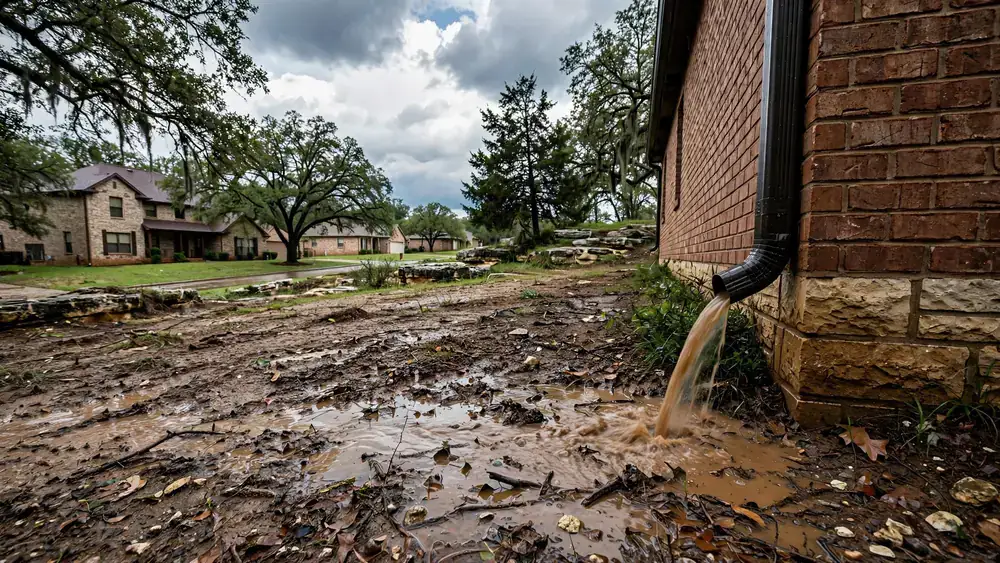
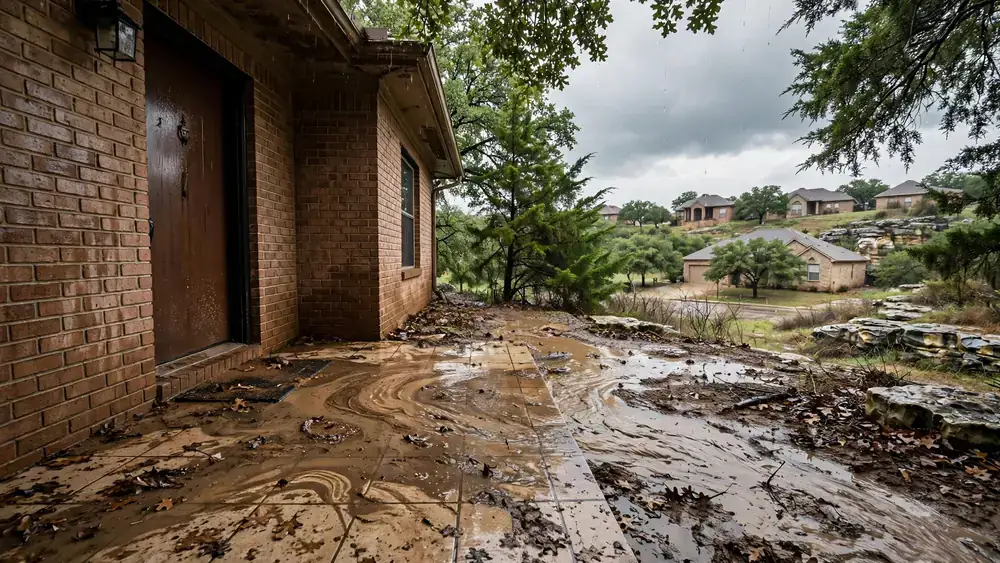
Hard rain on clay soil runs off faster than it soaks in. In a heavy storm, water follows streets, alleys and driveways, then looks for the lowest entry point. A slab-level patio door, a garage with a flat threshold or a window well is often enough. Blocked storm drains and gutters overflowing beside the wall can do the same.
Richardson also has creeks running through its neighborhoods, including Spring Creek, Cottonwood Creek and Prairie Creek. Most homes are not at the water's edge, but low streets near these channels see faster water. Neighboring lots matter too. A new fence, a raised bed or a slab addition next door can change how water crosses your yard.
Then there is wind. Driven rain gets in around window frames, under flashing and through hail-damaged roofs, and this is not the same thing as rising water. The difference is important for your claim.
Rising water, wind-driven rain and what they usually mean
These are common patterns, not decisions about your policy. Your adjuster and policy wording settle that.
| What happened | Likely water category | Insurance question |
|---|---|---|
| Rain through a storm-damaged roof | Often 1 or 2 at first | Usually a home policy question |
| Wind-driven rain through a window | Often 1 or 2 | Depends on the opening and policy |
| Surface runoff through a door | Category 3 | Usually a flood policy question |
| Creek water in the house | Category 3 | Flood policy |
| Backup through drains during a storm | Category 3 | Check for a backup endorsement |
Why floodwater changes the job
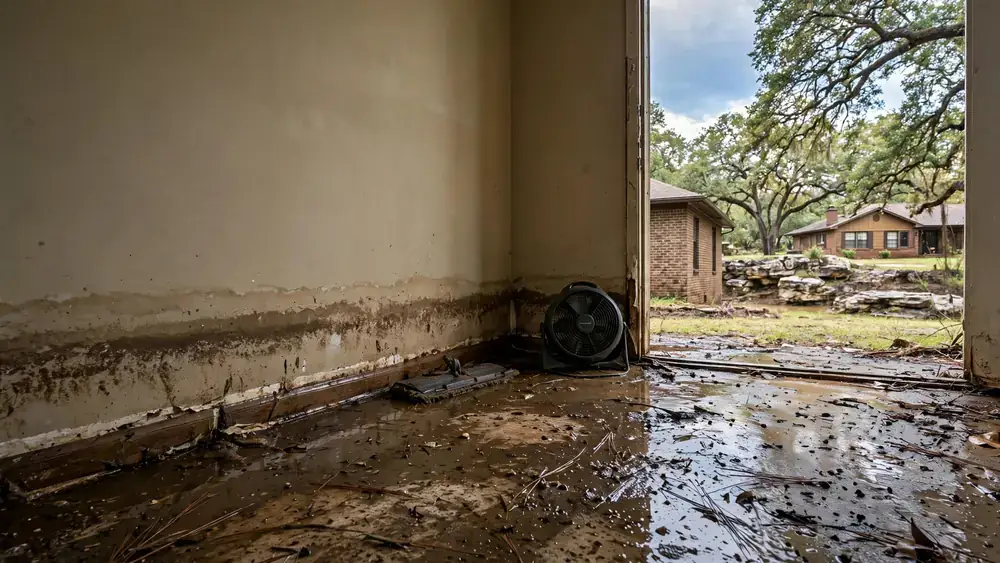
Under the IICRC S500 framework, floodwater is Category 3: assume it carries sewage, chemicals and bacteria [6]. What that means in practice is more removal and less drying in place. Carpet and pad that took on floodwater are usually discarded. Drywall and insulation are cut out above the wet line. Hard surfaces are cleaned and sanitized before drying.
Silt is its own problem. It finds its way into wall bottoms and under cabinets, and it is much easier to remove while still wet. Once dried, it becomes dust you do not want to breathe. Crews generally shovel and rinse first, then extract, then disinfect. Do not use a household vacuum.
Staying safe when you come back to a flooded house
- 1
Wait for the water
Never walk or drive through moving water. Wait for it to go down.
- 2
Check the outside
Look for shifted walls or cracks, and stay out if the structure seems unsafe.
- 3
Think electricity and gas
Do not touch the panel if you are wet or standing in water. If you smell gas, leave and call the gas company from a distance.
- 4
Dress for it
Wear boots, gloves and a mask. Avoid skin contact with the water.
- 5
Photograph before cleaning
Get the high-water line, rooms and damaged items on camera.
- 6
Open up if safe
Let fresh air in once the weather and humidity allow.
Checking your flood risk in Richardson
Start with FEMA's Flood Map Service Center and enter your address [4]. Zones starting with A are high-risk, and zones marked X are lower-risk, but lower is not none. The City of Richardson's own floodplain zoning article cautions that a designation does not guarantee land is free from local flooding [3]. Many flood losses happen outside mapped high-risk zones, because intense rain overwhelms local drainage.
Past experience on your street is often the best evidence. Ask neighbors how water behaved in the last big storms, and look at where the debris lines formed on the grass. Then look at your own grading: soil should fall away from the slab, and downspouts should discharge well clear of the wall.
Insurance
Flood and home policies work separately
The Texas Department of Insurance says home policies do not cover flood damage, and a separate flood policy is needed. Most of those have a 30-day waiting period [1], so buying one as a storm approaches will not help. For NFIP policies, TDI says that you need to file within 60 days [2].
Tell your insurer quickly, and keep receipts for anything you do to protect the property. Do not throw out damaged items until they have been photographed or the adjuster agrees. List them by room as you go.
What can be saved after flood water
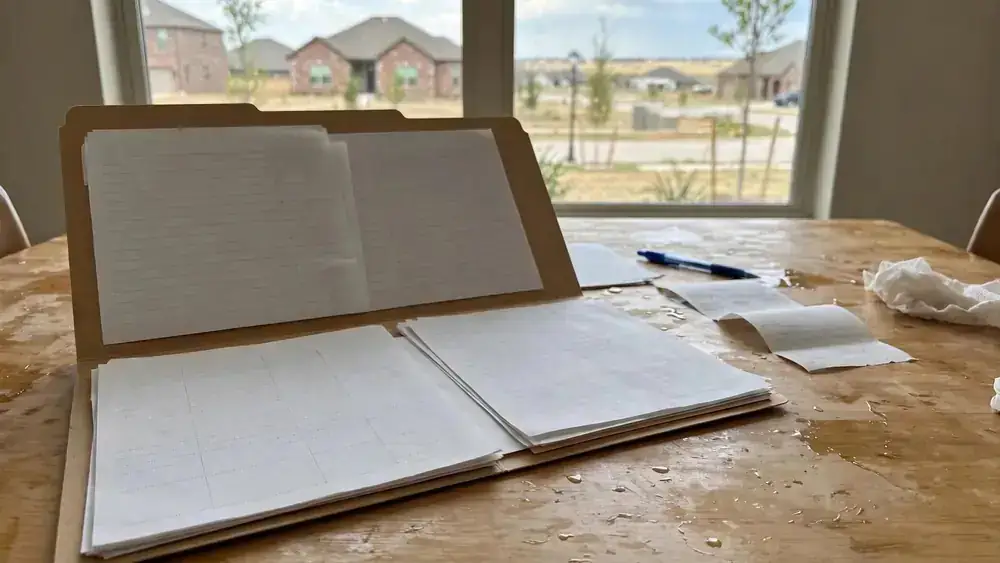
Porous items that took on floodwater are the hardest to keep: mattresses, upholstered furniture, stuffed toys, particleboard and carpet are usually discarded. Solid wood furniture may be cleaned and slowly dried away from direct sun. Important papers and photographs can be frozen to buy time before specialist drying.
Food, cosmetics and medicines that touched floodwater should go, and that includes sealed items with crimped caps. Canned food may be saved only if undamaged and properly sanitized, and when in doubt throw it out. Ask the contractor about contents handling before anything leaves the house, and write down what is removed.
What a storm cleanup crew should be doing
Use this as a checklist while you talk to the contractor.
- Wearing protective gearGloves, boots and respirators for contaminated water.
- Removing silt earlyBefore it dries into the structure.
- Cutting above the wet lineRemoving wet drywall and insulation in straight, deliberate lines.
- Sanitizing before dryingCleaning first, so contamination is not simply dried in place.
- Recording moistureTaking readings and logging them until they reach the target.
Storm-chasing contractors and Texas common sense
After a major storm, out-of-area crews sometimes knock on doors. Some are fine; others are not. Be cautious about pressure to sign on the spot, claims about what your insurer has already agreed to or anyone who asks you to sign over your claim. Ask for a local address, proof of insurance, references and details of who actually does the work.
Richardson requires contractors to be registered with the city, and permits to be approved and posted before work starts. It takes one phone call to Building Inspection at 972-744-4180 to check. Our hiring guide lists further questions.
Garages, patios and additions
Attached garages tend to flood first. They may sit lower than the house, with a thin threshold between. Water heaters, stored chemicals and pool supplies raise the contamination concerns. Take care with any spilled fuels or fertilizers, and tell the crew about them.
Enclosed patios and add-on rooms are common on older Richardson houses and are often a step lower than the main floor. They may not have been built to the same standard, so the slab joint between addition and house is a frequent entry point. Look there first after a storm, even if the room seems dry.
After the water: reducing the next loss
Clean gutters before storm season, extend downspouts, and regrade soil that has fallen against the slab. Check that door thresholds and weep holes are not blocked by mulch. Keep storm drains near your property clear of leaves if it is safe to do so, as a blocked inlet can back up an entire street.
If your home has flooded once, think about a flood policy before the next spring, and store important items up off the floor. Sandbags and flood barriers help in specific cases, and your own experience of how water moved will tell you where to place them.
Mold after a storm
With flood losses, mold can take hold on materials that were left in place. The EPA's window of 24 to 48 hours applies [7], and in the wake of a large storm when crews are stretched, it may be hard to meet. Do what you can to pull out wet carpet and open up the house if conditions allow, wearing protection. Larger growth takes you into the Texas mold rules.
Hail, wind and the openings they leave
North Texas storms are often about more than rain. Hail can crack shingles, punch through skylights, damage roof vents and break windows, and strong wind can lift flashing or bring down limbs. Each of these leaves a gap, and the next rainfall finds it. If a tree has fallen onto a roof, keep people away from that part of the house and be alert for downed lines outside.
Temporary protection comes first. Tarps and boards keep water out while the permanent repair is arranged. Take photos before any cover goes on, and keep the receipt. Many insurers treat reasonable temporary repairs as part of protecting the property, although your policy decides this. Do not climb on a wet or damaged roof yourself. A fall is much worse than a leak.
Power outages and wet houses
Storms and power cuts come together. With no power, sump pumps, fans and dehumidifiers stop, and houses warm up and grow humid fast. If you run a generator, keep it outdoors, well away from doors and windows, because carbon monoxide kills. Never connect it directly to house wiring unless an electrician has installed the proper equipment. Food in a fridge without power has a limited safe life, so throw out what has been warm for too long.
When power returns, be careful. If water reached outlets or the panel, ask an electrician to check them before you switch circuits back on. Appliances that were standing in water should not be used until a qualified person has checked them. Restoration equipment needs power too, so ask your contractor how they will handle a house with limited circuits.
The garage after a storm
Garages are where the mess gathers. Paint, fertilizer, pool chemicals and fuel may have been at floor level, and they can mix with runoff. Lift anything that is leaking, keep it apart from other things and ask how your city wants hazardous waste handled. Do not wash chemical spills into the storm drain. If a water heater or furnace in the garage got wet, have it checked before relighting it.
Cars parked in rising water raise their own questions. Do not start one if water reached the interior or the engine bay, and call your auto insurer. Stored boxes on the floor will usually have soaked up water from the bottom, so sort them promptly. Cardboard falls apart quickly, and a stack of wet boxes against a wall is a quick route to mold.
Yards, fences and foundations
After a heavy storm, walk the outside of the house. Look for soil washed away from the slab, standing water beside the foundation, downspouts that have come loose and fences that are holding water back. Sudden changes in soil moisture matter on clay. Water ponding at the slab is a problem in itself, and hard drying afterward can bring on the movement that causes cracks.
Do not rebuild an eroded area without thinking about where the water wants to go. Fill that slopes away from the house is usually the aim, keeping the soil below weep holes and the top of the slab edge visible. If water is being directed onto your lot by something that is not on your land, take photos during the next storm. Evidence collected in the rain is much more useful than a description later on.
When a whole street is affected
If a storm has flooded several homes, contractors and supplies will be stretched. Neighbors can help each other by sharing what they know and looking after those who need extra support. Look in on older residents. Keep curbside debris piles away from storm drains, and follow any city instructions on debris collection. If you are told to separate certain materials, do so, since it speeds up collection.
Disaster declarations can open up additional help, but that varies with the event. Watch official city and county notices rather than social media rumors. Keep your documentation the same as you would for any other claim. If government assistance does become available, you will need the same photos, lists and receipts.
The first dry day after a storm
Once the rain has stopped, use the first dry day well. Start outdoors, walking the house with a phone and taking pictures of roof debris, fences, gutters and any water lines on walls. Check that gas and power are safe. Then move inside, room by room, looking at ceilings first, then walls and finally floors. Pull wet rugs out, prop up cushions, and open cupboard doors so that air can move.
Make your calls early, as crews fill up quickly. Tell your insurer first, then arrange for any roof cover, and then speak with a restoration contractor. Keep a list of everyone you have spoken to. If you have to throw things away for safety reasons, photograph them first and keep a small sample of carpet or other materials if your insurer asks for it.
Why storm damage can appear weeks later
Not everything shows on day one. A roof that lost some granules may start leaking at the next rainfall. Water that entered a wall cavity can take a while to appear as bubbled paint. Flooring that looked fine may cup once the moisture rises through it. Musty smells may develop during warm spells. So check the rooms that took on water again a week later and a month later, and take a dated photo of anything new.
Report anything new to your insurer quickly, rather than waiting. If you have already closed a claim, ask how to add to it. Keep your storm folder together for at least a year, as some problems only show during the next season, when the house is tested again by heat or heavy rain.
Protecting a home that sits empty after a storm
If you have to leave for a few days, secure the house first. Lock it, close off the water if it is safe to do so and leave a contact number with a neighbor. Remove valuables and documents. Check on the property regularly, as a wet and empty house deteriorates quickly. Tell your insurer about any long absence, since vacancy can affect cover, and ask the contractor how they will get access and report progress to you.
Keeping children and pets safe outdoors
After a storm, yards can hold contaminated puddles, broken glass and exposed nails. Keep children and pets indoors or on clean, dry ground until the area has been checked and rinsed, and wash boots at the door so that silt and grime stay safely outside the house and away from clean rooms.
What to ask a contractor after a storm
Ask whether they treat this water as Category 3, and how that changes their plan. Ask how they will remove silt, what they will do about wet insulation and how they will sanitize the wall cavities before drying. Ask how they prioritize when many homes call at once, and what you can do while you wait.
Ask also how they will record the high-water line and what evidence they will leave you with. A flood adjuster will want measurements, and a clear photo of a tape measure against the wall takes only a moment. Any contractor who has worked floods before will know this, and will probably mention it before you do. If they do not, ask.
FAQ
Storm and flood questions in Richardson
Does homeowners insurance cover flood damage in Texas?
No. Flood damage needs a separate policy. Damage from wind-driven rain through a storm opening is a separate question, handled under your home policy.
How do I find my flood zone in Richardson?
Use FEMA's Flood Map Service Center and enter your address. Lower-risk zones can still flood in heavy storms.
Can I clean up floodwater myself?
Small amounts of runoff may be manageable with protection, but treat it as contaminated. Soaked walls, carpet and insulation usually need professional removal.
What about the mud in my house?
Remove it while it is wet, with boots and gloves. Dry silt turns into dust that spreads.
How long do I have to file a flood claim?
For NFIP policies, TDI says 60 days. Other policies have their own deadlines, so file as soon as you can.
Can carpet be saved after a flood?
Usually not. Category 3 water means carpet and pad are normally discarded.
My neighbor's drainage flooded me. What now?
Take photos and speak to your insurer. The city can tell you who to contact about drainage concerns.
Who do I call about a blocked storm drain?
Report street drainage problems to the city. The 24/7 line is 972-744-4111.
Sources and citations
- [1]Texas Department of Insurance: Water damage and mold coverage
- [2]Texas Department of Insurance: Flood claim tips
- [3]City of Richardson: Floodplain zoning article
- [4]FEMA Flood Map Service Center
- [5]NWS Fort Worth: 1991-2020 normals for DFW
- [6]IICRC: S500 water damage restoration standard
- [7]US EPA: A brief guide to mold, moisture and your home