Key facts: Cottonwood Creek
Water from above in Cottonwood Creek homes
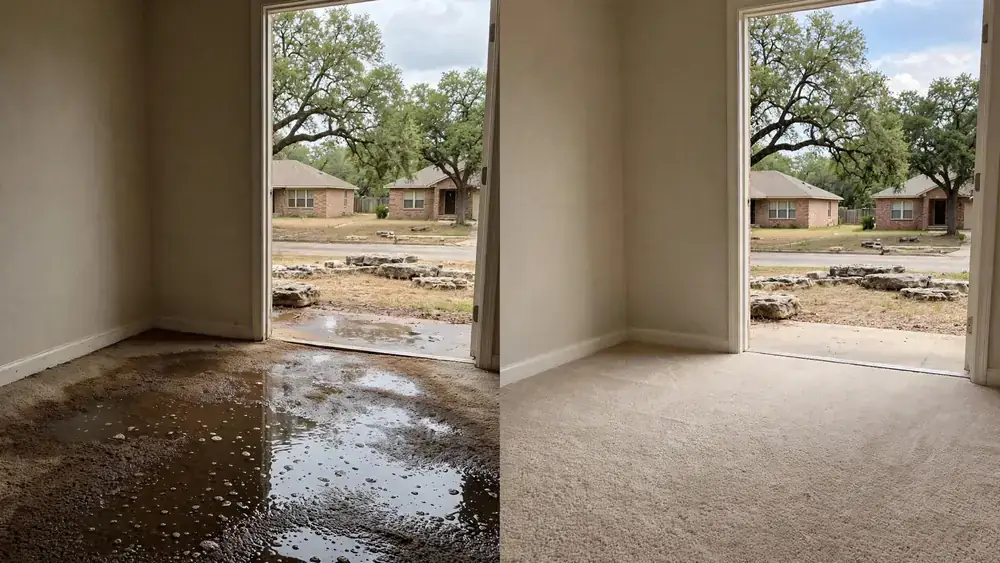
Most Richardson homes from the 1950s and 1960s are spread out on one floor. Cottonwood Creek Estates came later and looks different. Listing data describe masonry homes with vaulted or high ceilings, a median size above 2,700 square feet and layouts such as first-floor primary suites and two-up, two-down plans. In a house like that, gravity becomes the main issue. A washer hose, a tub overflow or a toilet connector upstairs will reach the ceiling below and may run down a wall into a third room.
That is why this page leads with upstairs plumbing, not with the buried pipes and alley cleanouts that matter more in older streets. A two-story loss often gives you two sets of wet materials to deal with: the floor where the leak began and the ceiling and walls beneath it. If you see a drip in a downstairs room, go directly up to whatever sits above it. Shut off that fixture or the main, and then look at the floor upstairs. The path may not be a straight line.
When Cottonwood Creek Estates was built
Dates vary a little by source. One agent's review of sales shows build years from 1973 to 1981, while a listing guide says most homes went up from the late 1970s through the 1990s. Both may be true of different sections. Addresses such as Bunker Hill, Vicksburg Lane, Lundys Lane and Lawnmeadow Drive appear in records for the area. Whatever the exact year of your house, it is younger than much of Richardson and older than modern plumbing rules, so the materials can be a mix that deserves a look.
A guide also notes generous lots of about 0.2 acres, traditional brick exteriors and pitched roofs. Redfin's summary lists flood risk as minor, which is helpful as a general note but says nothing specific about your own lot. Some records mention nominal association dues, so ask whether there is any active group for your section, and what it covers. As with everything drawn from listing sites, treat these details as a sketch, and check your own records for the year built and the plan.
Upstairs laundry rooms in Cottonwood Creek
A washer on an upper floor is convenient and risky. Water supply hoses hold full pressure all day, and if one lets go while the house is empty, the flow can continue for hours. Later homes in this neighborhood may have a laundry placed near bedrooms, while earlier homes often have it downstairs. Find out which you have. An upstairs washer should sit in a drain pan with a line leading somewhere safe, and braided hoses and a single-lever shut-off make it easy to close the water before you leave.
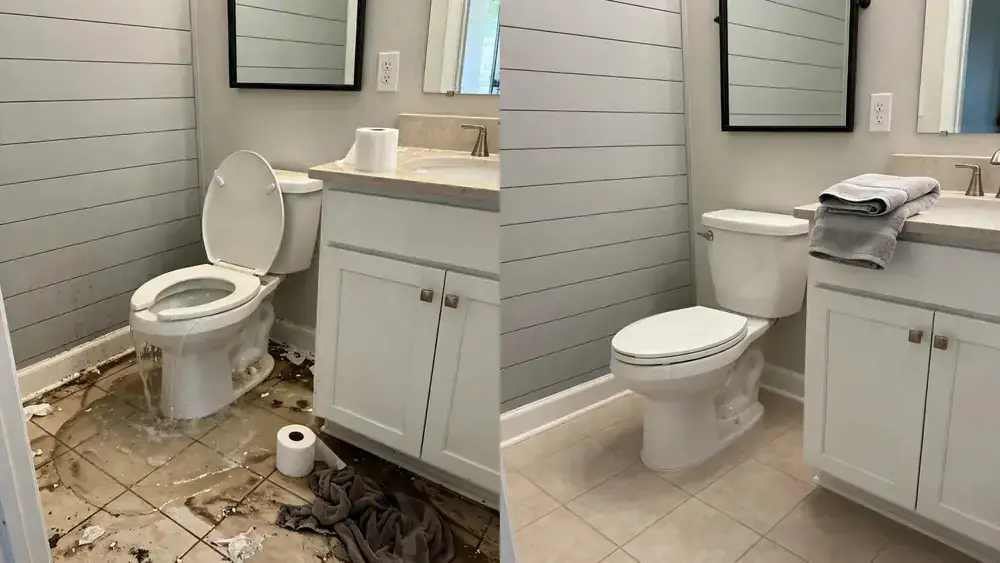
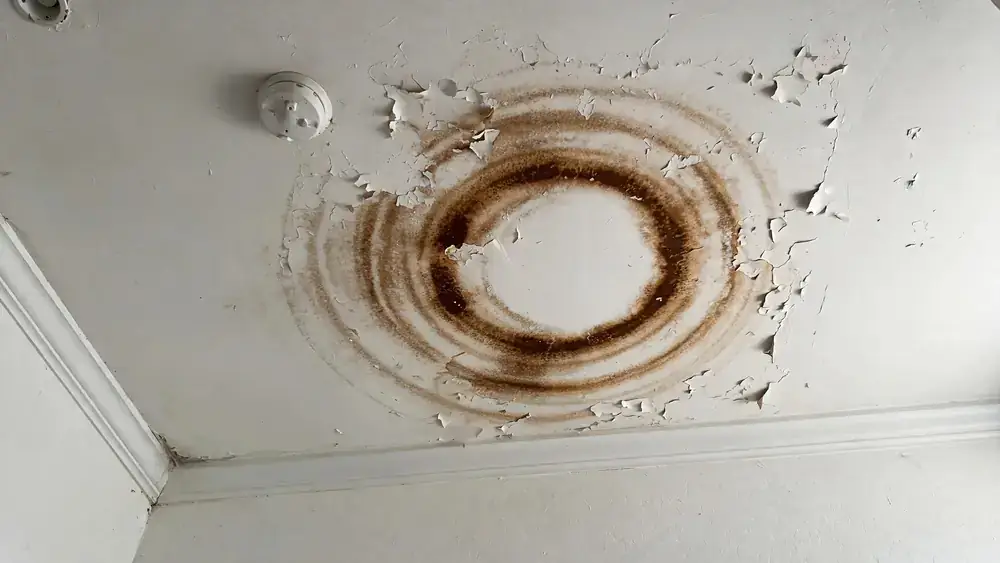
Toilets and tubs upstairs follow a similar logic. A cracked toilet tank, a failed fill valve or a loose supply line can soak a subfloor without showing anything at first. Tile hides it well. If a ceiling beneath a bathroom ever shows a faint ring, do not simply repaint it. Ask a plumber to run the fixtures one at a time and watch, including the overflow on the tub. Grout at the tub deck can also let water pass, and a slow drip through a subfloor can weaken it over the years.
Tracing a Cottonwood Creek ceiling stain
| Where the stain appears | What may be above it | How to check |
|---|---|---|
| Kitchen or family room ceiling | Upstairs bathroom | Run each fixture separately |
| Below a bedroom hall | Washer or air handler | Look at the pan and the hoses |
| Top of a vaulted wall | Roof valley or flashing | Ask a roofer to inspect outside |
| Around a fireplace chimney | Chimney flashing or cap | Check after wind-driven rain |
| Near a window head | Failed seal or brick weep | Look outside at the sealant line |
Vaulted ceilings and fireplaces in Cottonwood Creek
High ceilings and fireplaces show up often in listings here, and each changes how a leak behaves. In a vaulted room there is no attic to catch a roof leak. Water passes straight from the decking into a narrow space with insulation, then shows at a seam, a ceiling fan box or the top of a wall. By the time you see it, the insulation may be wet along a long strip. It is also harder to reach, and a contractor may need scaffolding or a tall ladder to open and dry it properly.
Chimneys are a classic trouble spot in brick homes. Rain can get in at the crown, at the flashing where it meets the roof or through old mortar. A stain beside a fireplace after a sideways storm is a strong clue. Masonry can hold moisture and release it for days, so the mark may come and go. Have a chimney professional and a roofer look together if you can. The combination of pitched roofs and tall trees also makes valleys worth checking each autumn, because a pile of damp leaves wears out flashing faster.
Dealing with a two-story leak in Cottonwood Creek
- 1
Shut the water off
Close the fixture valve or the main. If you cannot find the source yet, close the main.
- 2
Check the room below
Keep people out from under a sagging ceiling, and switch off that circuit at the panel if safe.
- 3
Release trapped water carefully
Let a professional handle any bulge. Put a bucket and plastic down while you wait.
- 4
Photograph both floors
Record the upstairs source and every wet room below, with dates and times.
- 5
Arrange drying for both levels
Tell the contractor about both floors so that the ceiling cavity is included in the plan.
Drying the ceiling cavity in a Cottonwood Creek home
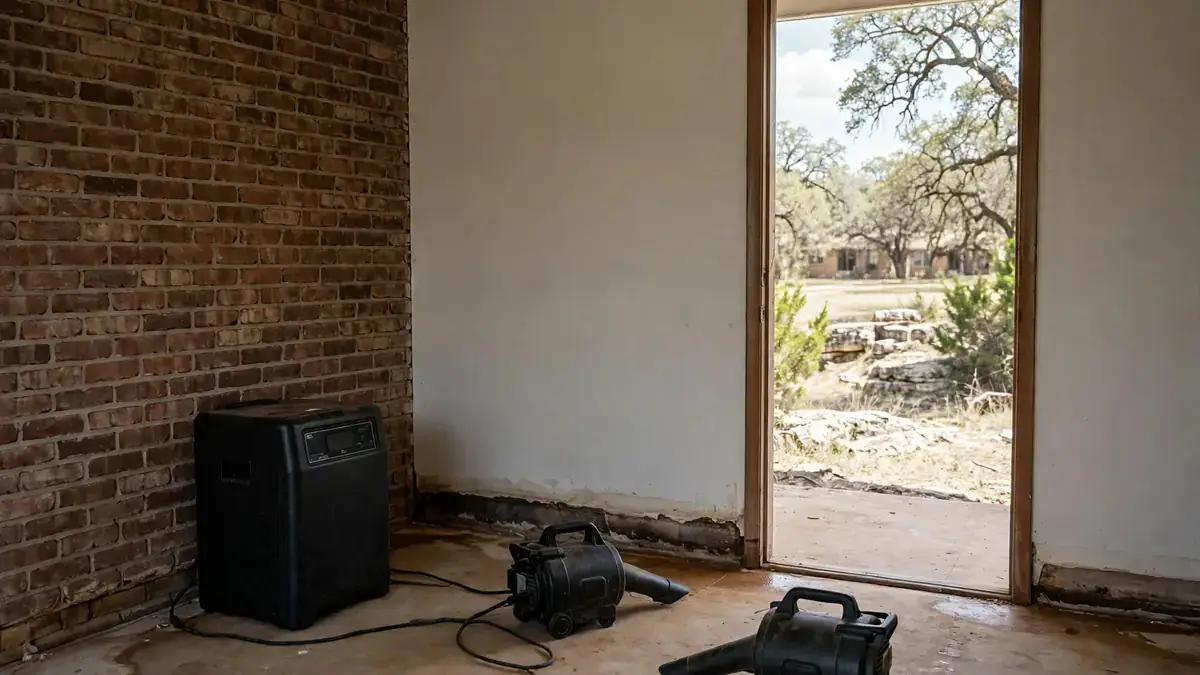
The space between floors is what makes a two-story loss tricky. Water sits on top of the downstairs ceiling, runs along joists and collects around lights. From the room beneath, the drywall can look almost normal. A contractor will usually use a moisture meter and may use a thermal camera to map it. Wet insulation has to come out, and a small section of ceiling may be opened so that air can move through. Skipping this step can leave damp framing sealed up behind fresh paint.
The IICRC's S500 standard is the usual reference for this type of work, and it is reasonable to ask whether a contractor follows it. Hardwood upstairs may need specialized mats to dry, and some floors can be saved if work starts soon. Expect equipment on both levels. The drying guide explains why it often takes several days, and the extraction and drying page explains the sequence. Ask for readings of the subfloor and framing before anything is closed up.
Plumbing from the 1970s to 1990s in Cottonwood Creek
If your home was built late in this period, ask about polybutylene. This gray plastic supply pipe was used widely in the late 1970s through the mid-1990s, and it has a well-known reputation for failing at fittings. Not every home has it, and many have been repiped. You can often spot it at the water heater or under sinks, where it may be gray with crimped fittings. If you find some, a plumber can explain what your options are, and your insurer may want to know.
Older homes in this area may have copper lines instead. Copper under a slab in clay soil can develop pinholes after decades, and listing data suggest many of these houses are nearing or past fifty years. A slab leak tends to be slower and less visible than a failed upstairs fitting, but the signs are similar: warm floors, a meter that never stops and sounds of water with everything turned off. Know the type of pipe in your home, because it points you to which risk deserves your attention first.
Two air conditioners over Cottonwood Creek ceilings
Big two-story homes commonly have two systems, often with one air handler in the attic above the bedrooms. In summer that unit drips water through a drain line that may run a long way to reach the outside. If algae or debris blocks it, the overflow pan is the only protection, and pans rust. Look at both the pan and the line at the start of the season. A float switch that shuts down the unit when water rises is a modest item that helps a great deal.
Stains that appear only during hot weather often point here. So does a musty smell from one set of vents. Do not ignore a system that stops cooling either, because a frozen coil can release a lot of water when it thaws. Keep filters changed, and ask your technician to clear the drain as part of the yearly service. The AC leak page has more on this. Remember that with vaulted rooms some duct runs may be hard to reach, so note where each access panel is.
Larger Cottonwood Creek lots and yard drainage
Bigger lots with mature trees are part of the appeal, and they offer more ground to absorb rain. Even so, sources point to oversized lots with grassy yards, and a large roof can send a lot of water to just a few downspouts. Each spot where a downspout empties needs a path away from the slab. Check for low spots that hold water for a day after a storm, particularly where a patio meets the house or where a neighbor's fence has changed the flow.
The neighborhood takes its name from Cottonwood Creek, so look at FEMA's map service for your address, even though one listing summary rates flood risk here as minor. Irrigation matters on a lawn this size as well. A broken sprinkler head on a slope may run unnoticed, and a line leak can keep soil soggy beside the foundation. Check each zone in daylight. If your water use jumps with no explanation, run the meter test. For water that does get indoors from outside, see storm and flood cleanup.
Student rentals and empty Cottonwood Creek houses
UT Dallas is close, and some houses near a campus are likely to be rented, either to students or to staff. That can raise a particular water risk: a home that sits empty through a break. No one is there to hear a toilet running or to notice a hose failure. If you own a rental here, set clear rules on who shuts off the water before a long absence, and leave the main valve accessible. Tell tenants where it is on day one and repeat it each lease.
The same advice goes for anyone who travels a lot. A leak sensor near the water heater and the washer, or an automatic shut-off valve, can close the gap. Ask a neighbor to check after a storm. Tenants should report drips at once, as they have no reason to know how serious a small stain can be. Owners should write down who to call. Also check what your policy says about a vacant home, since coverage can change when a house sits empty for a stretch.
Sewer and street contacts for Cottonwood Creek
Houses here are newer than those in central Richardson, but sewers still clog and tree roots still spread. The city maintains the main sewer, and a stoppage between a city-installed cleanout and the house is the owner's. With two floors, a backup tends to appear at the lowest fixture first, often a downstairs shower or toilet. Stop using water upstairs, since anything you send down will come out at that low point. Find your cleanout and see whether it is full. The sewer guide goes through the next steps.
Water coming up through a street or running from a meter box goes to the city's 24/7 line, 972-744-4111. Building Inspection is on 972-744-4180 for permit questions. Those two numbers cover most situations. Keep them with your home file, along with your plumber's details. Schools vary by section, and records for this area mention both Richardson ISD campuses and others, so do not assume a neighbor's paperwork is the same as yours, for schools or for anything else.
Mold in closed Cottonwood Creek spaces
Two-story homes have many hidden pockets: under stairs, behind a tub access panel, inside a floor cavity and within a knee wall. A slow leak can run in those spaces for a long while. A musty stairwell closet is a sign that deserves a look. The EPA's guidance is plain about the order of things: fix the moisture first and then clean up. Painting over mold will not solve it, and spraying it without removing damp material only delays the return.
Texas sets rules for bigger jobs. Work on 25 contiguous square feet or more generally needs licensed professionals, and the Texas mold guide explains how that works. If you find growth in a bedroom closet, move clothes out carefully and bag them for cleaning. Run a dehumidifier if the air is damp, but keep it away from the mold itself. Do not run the HVAC if there is growth near the return, until someone has looked at it.
Cottonwood Creek neighbors: how it differs from Canyon Creek
Because this neighborhood sits beside Canyon Creek, the two often get lumped together, and some Cottonwood Creek records even show Canyon Creek Elementary as the assigned school. The housing tells a different story. Canyon Creek began in the 1960s with many long ranch plans, while records here start in the 1970s and lean toward larger two-level homes. So a plumber's first questions may differ too. Tell anyone you call which subdivision is on your deed, the year built, and whether the wet room is upstairs or down.
Sales records in this area also show a wide range of sizes, from about 2,100 to over 4,700 square feet. A larger home usually means more bathrooms, and some of those may be seldom used. A guest bath that sits idle can dry out its traps, hide a slow toilet leak or mask a failing supply stop. Run the water in every spare bathroom once a month, and look under the sink while you are there. It takes two minutes, and it catches problems that a busy household never sees.
Staircases and mixed floors in Cottonwood Creek homes
Water follows the stairs. In a two-story plan, a leak on the landing or in a hall bath can run down carpeted treads and soak the pad at each step, then reach the wall stringer. Stairs are slow to dry and easy to overlook, because the risers hide the wood behind them. If an upstairs flood reached the landing, ask the contractor to check every tread and the closet beneath, which is often used for storage and may hold boxes that are quietly wicking water.
Many homes also mix carpet, wood and tile across one level. Each material dries at its own speed and needs its own plan. Tile can look finished while the grout and slab or subfloor below stay wet, and solid wood may need days of careful drying to avoid cupping. Ask for a room-by-room list showing what will be dried in place and what will be removed. That list is also handy for your insurance adjuster, as it records the reason behind each decision.
FAQ
Questions from Cottonwood Creek homeowners
Is Cottonwood Creek the same as Cottonwood Heights?
No. Cottonwood Creek Estates is in northwest Richardson near UT Dallas, and Cottonwood Heights is in the southwest of the city.
Why is water coming through my Cottonwood Creek kitchen ceiling?
A bathroom, laundry or air handler above is the usual suspect. Shut the water off and check upstairs.
How can I tell if my Cottonwood Creek home has polybutylene?
Look for gray plastic pipe at the water heater or under sinks, then ask a plumber to confirm.
Do I have to open the ceiling after a Cottonwood Creek upstairs leak?
Not always. Readings decide, but wet insulation or framing above the drywall usually means a small opening is needed.
Will water damage to two floors in Cottonwood Creek take longer to dry?
Usually, yes. The cavity between floors dries slowly, and each level needs its own equipment.
Sources and citations
- [1]Dustin Pitts: Cottonwood Creek Estates
- [2]Neighborhoods.com: Cottonwood Creek Estates
- [3]City of Richardson: 24/7 Response Center
- [4]Redfin: Cottonwood Creek Estates
- [5]Homes.com: Cottonwood Creek neighborhood
- [6]City of Richardson: Water utility operations FAQ
- [7]City of Richardson: Residential permit types
- [8]FEMA Flood Map Service Center
- [9]IICRC: S500 water damage restoration standard
- [10]EPA: A brief guide to mold, moisture and your home