Key facts: Cottonwood Heights
Two kinds of house in Cottonwood Heights
The first thing to know about water damage here is which house you own. A Richardson broker's profile places Cottonwood Heights in the southwest part of the city and says it was established in 1955, with most homes built between then and 1965. It describes smaller tract homes by Fox & Jacobs on the west side, and prairie-style and Cape Cod designs among the higher positioned homes. That description comes from a promotional blog, and it should be read as a broad sketch, but the contrast is a useful one.
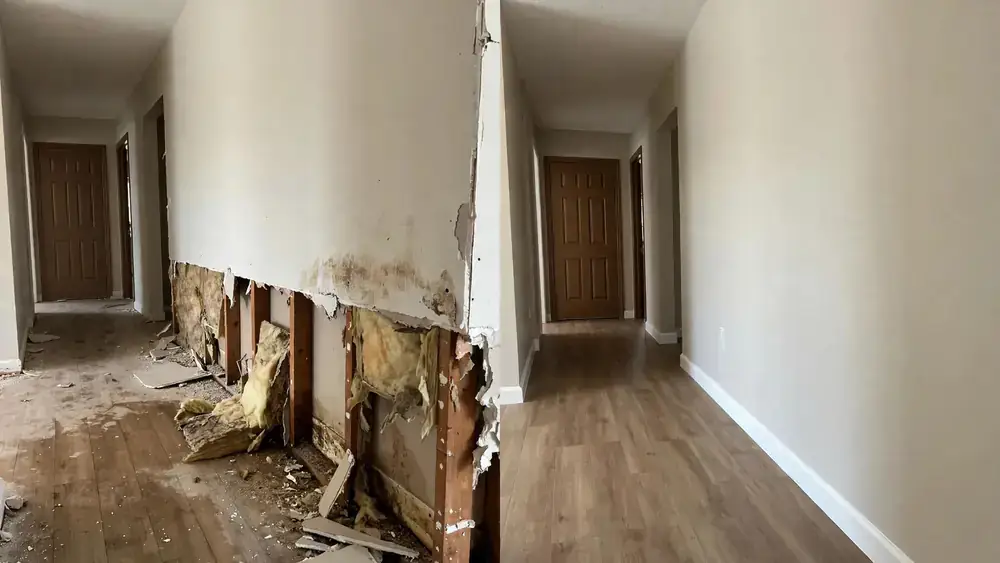
Tract homes were built quickly from repeated plans, often with the plumbing located in a tight wet wall shared by a bathroom and a kitchen or laundry. A leak in a small plan reaches most of the house within a short time. A larger custom home tends to have longer runs, more bathrooms and more roof lines, and water may spread further without anybody noticing. A single set of advice cannot suit both. This page tries to separate them, so read with your own floor plan in mind.
Cottonwood Heights tract homes and larger homes compared
| Issue | Smaller west-side tract home | Larger home |
|---|---|---|
| Plumbing layout | Fixtures grouped in a short wet wall | Longer runs, more bathrooms |
| How far water travels | Reaches most rooms quickly | May go unnoticed in distant rooms |
| Roof | Simple gable | More valleys, dormers on Cape Cod styles |
| Later changes | Enclosed garage, small rear addition | Multiple remodels and wings |
| Drying approach | Few machines, tight rooms | Zones planned from a moisture map |
Galvanized pipe in 1950s Cottonwood Heights homes
Houses from the mid-1950s were built in a period when galvanized steel was commonly used for water supply lines, although copper was also coming into use. The steel corrodes from the inside and rust slowly closes the pipe. You may see the signs in a shower that weakens from year to year, or in brown water at a tap after the house has sat idle. When galvanized finally lets go, it usually does so at a threaded joint, behind a wall or below a sink.
Try the magnet test on any pipe that you can reach. Magnets stick to galvanized steel but not copper. If you find galvanized, ask a plumber to explain how much is left and whether it would be sensible to replace it in stages. Disturbing a rusty line can also release scale and clog aerators and valves, so expect a little trouble after any repair. Repiping is much easier to live through if planned with a remodel. See the slab leak page if the lines in your home run under the floor.

Cape Cod roofs in Cottonwood Heights
A Cape Cod design brings something most Richardson ranches lack: dormers and rooms tucked under a steep roof. Dormers mean more valleys and more flashing, and every cheek wall has a seam. Water can enter at any of those points and travel down inside a sloped ceiling, turning up a floor below as a stain with no obvious source. If you own a home with upstairs rooms under the roof, take a look at the knee wall spaces. Many have small access doors, and a flashlight will show dark marks on the decking long before any stain reaches the room.
Prairie-style homes, by contrast, may have low, broad roofs and deep eaves. Those keep sun off walls and rain off windows, but a low slope sheds water slowly, and leaves can sit on it for months. Have a roofer look at both types after any big hail or wind event, and keep a copy of the report. Insurers often want to know the age and condition of a roof. Do not wait for a stain, because an insulated ceiling can hide a slow leak until the drywall itself begins to fail.
Cottonwood Park and storm water near Belt Line
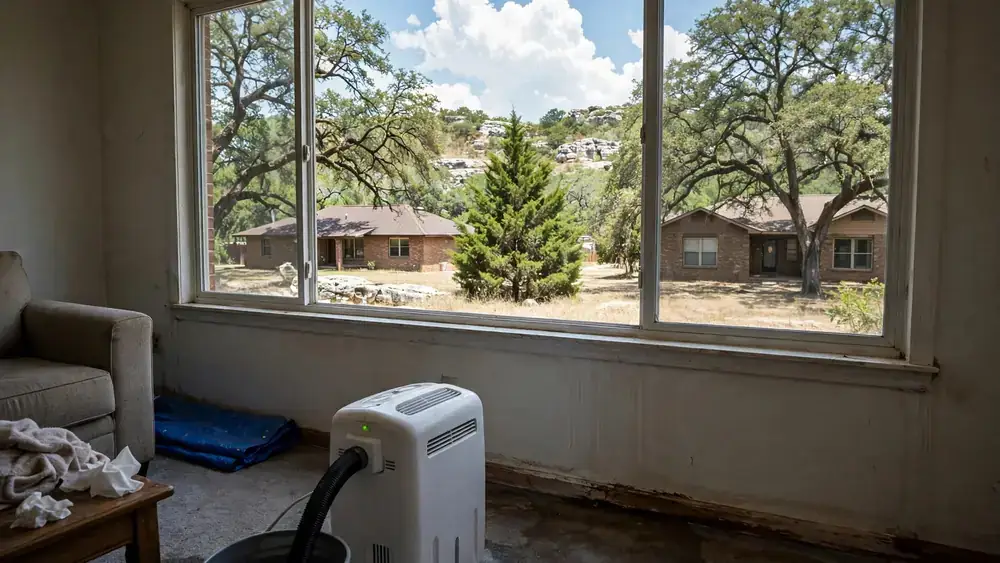
Cottonwood Park lies along West Belt Line Road near Coit, with a paved loop, two ponds, a pool and sports courts. It is a loved local landmark. Those ponds and the open grass offer some relief from pavement, but the nearby streets are largely roofs, driveways and concrete. In a hard storm, curbs act as channels, and low driveways can take the overflow. Mature tree leaves pile up over inlets too, so a lightly blocked grate can back water up to the sidewalk. Clear one only when it is safe, and report a blocked inlet to the city.
The area also takes its name from Cottonwood Creek, whose trail runs south from near Spring Valley Road. Check your address on FEMA's map service, then ask neighbors how the block has behaved. Low-lying garages and rear rooms deserve particular attention. If you see water coming in through a door, take photos and move valuables up. Then read the storm and flood cleanup page, since silty water is treated with more caution than clean supply water and may also fall under a different part of your insurance.
Handling a wet-wall leak in Cottonwood Heights
- 1
Close the water
Close the fixture stop if it works, or the main if it does not. Open a low faucet to relieve pressure.
- 2
Find the affected rooms
Check the other side of the wall, including closets and any room behind the bath.
- 3
Pull things back
Move rugs and furniture, and lift curtains and bedding off wet floors.
- 4
Document it
Photograph the fixture, the wall and the floor before any repair is made.
- 5
Call a plumber, then drying help
Have the leak fixed first, and then let an independent contractor measure and dry the wall.
Foundations and slab movement in Cottonwood Heights
A neighborhood with mature tree-lined streets, which is how the profile describes this one, usually has large root systems close to the slab. In a dry August, those roots draw water from clay. Then a wet autumn sends the soil back the other way. After seventy years that cycle may show up as a sticking door or a diagonal crack over a window. Those signs do not by themselves prove a plumbing problem, but a slab that moves can stress pipes that run through it. A meter test is a quick way to rule out a leak.
Watering the foundation evenly in a drought is commonly advised around here, but it should be done with care. Soaker hoses left running or sprinklers aimed at the brick can add to the problem, and can keep the bottom plate of a wall damp. Keep beds graded away from the house. If you do find a leak, have it fixed before any foundation work goes ahead, because a slab leak can change soil moisture on one side and mislead whoever is assessing the movement. The slab leak guide lists the usual signs.
Asbestos and lead in Cottonwood Heights demolition
Houses of this period were finished with materials that need a little care. Nine-inch floor tiles, black mastic, some pipe wrap and joint compound may contain asbestos, and lead paint was still in use when these homes were built. A water loss often means that someone wants to cut drywall and rip up flooring in a hurry, which is precisely when dust is most likely to spread. Ask about sampling first. Most results come back fairly fast, and a short pause protects your family and everyone doing the work.
Keep the wet area contained in the meantime. Close the room, and avoid running a fan that blows across broken material. If tests show asbestos, licensed handling may be required, and the plan will change. Tell your insurance adjuster about it. Do not be surprised if a tract home with a straightforward leak takes longer than you expected for this reason alone. A contractor who skips the question may be quicker, but the risk stays with the household long after the crew has gone.
Older electrical panels and wet Cottonwood Heights floors
Water and old wiring are a poor pairing. Homes from this era were built with far fewer circuits than a modern house needs, and later owners have often added more. Older outlets may be ungrounded, and bathrooms may lack ground-fault protection. If water has reached outlets or a panel, leave the area and have an electrician inspect it. Do not stand on a wet floor to reach a breaker. Should the panel sit in a garage or closet exposed to the leak, stay away from it altogether.
After a loss, ask whether any wiring in the wet walls needs inspection before drywall goes back on. Drying equipment needs dedicated power, and an older panel may not handle several machines at the same time. A good contractor will ask about this at the start, and may stagger equipment or supply their own distribution. Mention any tripped breakers. If you plan to upgrade the panel soon anyway, this could be a sensible time to do it, with a permit from Building Inspection at 972-744-4180.
Choosing help for a Cottonwood Heights home
An older house rewards a careful contractor. Ask whether they have worked on homes of this age, how they test for asbestos and what meter readings they will share. Check that any tradesperson is licensed where Texas requires it, and that anyone rebuilding is registered with the city. The contractor guide gives more questions. Be cautious with anyone who tells you that a whole wall has to come out before taking a reading, and with anyone who says nothing needs removing without taking one.
If an insurance claim is involved, photos and logs protect you. Keep the first estimate, the daily readings and the final report. Independent contractors do this work, so ask each one about their own scope and insurance. Get the plan in writing, including what will be removed, how it will be dried and who rebuilds it. Remember that a restoration contractor and a plumber are two different trades. Fixing the leak comes first, and each trade should know what the other has done.
Sewer lines under older Cottonwood Heights lots
If your home is close to seventy years old, its sewer connection probably has its age too. The city maintains the main sewer, and a stoppage between a city-installed cleanout and the house is the owner's. Older lots do not always have an obvious cleanout, so it is worth searching near the property line and along rear fences. Roots are the usual suspect on tree-lined streets, and they follow moisture into any small crack. Repeated slow drains are the warning, particularly when the washing machine empties.
When a backup does happen, stop running water and keep everyone out of the area. If you think the blockage is in the public line, use the city's number. Otherwise a plumber is the right call. A small tract home has few rooms to spare, so a bathroom backup may affect daily life right away. Arrange where the family will go if the home's only working bathroom is involved. The sewage backup cleanup page describes what happens next, and which materials usually come out.
Keeping a Cottonwood Heights home ready
A short routine covers most of the risk. In spring, clean the gutters and test the sump or yard drains if you have them. In summer, look at the air conditioner pan and clear the condensate line. In autumn, clear the leaves again and check that downspouts run clear. In winter, wrap exposed pipes and disconnect hoses before a hard freeze, because older homes often have outdoor bibs and attic lines that get little protection. Mark the dates on a calendar, and keep the list on the refrigerator so it stays visible.
Keep a folder with the age of the roof, the water heater and the HVAC, the location of each shut-off and the name of a plumber you trust. If you own a smaller home, photograph the walls while they are open during any repair. If you own a larger home, label each zone of the plumbing and each attic access. Either way, that record turns a stressful evening into a short list of calls. It also helps future owners, which matters in a neighborhood where houses are often passed along after long ownership.
Telling Cottonwood Heights apart from nearby subdivisions
Southwest Richardson is a patchwork of subdivision names, and sources warn that many 1955 listings shown for this area are actually in the neighboring Richardson Heights sections. That confusion matters more than you might think. Your legal description is what appears on an insurance policy, a permit and a county record, so copy it from your deed or tax statement. When you call for help, the street name and a cross street will be more useful than a neighborhood label.
Age is also a better guide than the name. A house from 1955 and one from 1965 can differ in pipe material, wiring and insulation, even a few streets apart. If you are not sure when your home was built, the county appraisal record will show it. Give that year to any plumber or contractor at the start, since it shapes what they look for, from galvanized lines to floor tile that may need testing.
Spring Valley edge streets in Cottonwood Heights
The southern edge of the area runs toward Spring Valley Road, where the Cottonwood Creek Trail begins its run south. Homes closer to that end sit nearer the creek corridor, and homes along Belt Line sit nearer busier commercial frontage. Neither fact tells you how a given lot drains, and no source here reports a flood on any street. Still, knowing which way your block falls is useful. Watch the gutter line during a steady rain, and see which way the water runs and where it pools.
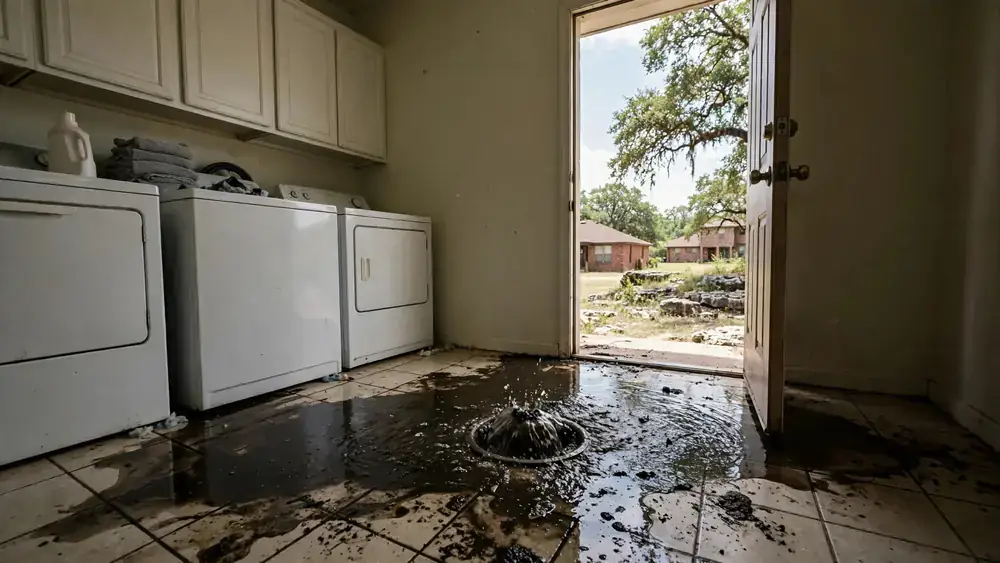
Owners of smaller tract homes should pay special attention to the back door. These houses often have a rear entry set close to grade, with a small concrete stoop or patio that has shifted over the decades. If that slab now tilts toward the wall, a heavy rain can run under the door and into a kitchen or utility room. A threshold seal, a new stoop or a shallow drain may fix this for good, and it is a much smaller job than replacing a wet floor.
FAQ
Questions from Cottonwood Heights homeowners
Is my Cottonwood Heights house a Fox & Jacobs home?
Possibly, if it is on the west side, but the source is a broker's blog. County records or long-time neighbors may help you confirm it.
How do I tell galvanized pipe from copper in Cottonwood Heights?
Hold a magnet to an exposed pipe. It sticks to galvanized steel and not to copper.
Why is there a stain under my Cottonwood Heights dormer?
Dormer valleys and flashing are common entry points, and water can travel down a sloped ceiling. Ask a roofer to check above the stain.
Are Cottonwood Heights and Richardson Heights the same?
They are different areas that sit close together, and listings sometimes blur them. Check your legal description if you need certainty.
Should I test old floor tiles in my Cottonwood Heights home?
Yes, if they are original. Ask for sampling before anybody disturbs them.
Sources and citations
- [1]ActiveRain: Cottonwood Heights, Richardson neighborhood profile
- [2]City of Richardson: 24/7 Response Center
- [3]City of Richardson: Historical setting
- [4]North Dallas Nature: Cottonwood Park
- [5]TrailLink: Cottonwood Trail
- [6]Orchard listing: 106 Dublin Drive, Richardson 75080
- [7]City of Richardson: Water utility operations FAQ
- [8]City of Richardson: Residential permit types
- [9]FEMA Flood Map Service Center
- [10]EPA: A brief guide to mold, moisture and your home