Key facts: Clear Springs Place
Why pipe material comes first in Clear Springs Place
Listings on Silver Springs Lane show one house built in 1986 and another in 1990, and a neighborhood profile places nearly all the housing between 1970 and 1999. Those dates sit inside the years when gray polybutylene supply pipe was widely fitted across the country, roughly the late 1970s to the mid 1990s. Nobody can tell you from a listing what is inside your walls. Some homes of this age have copper, some have plastic, and many have had repairs that mix the two.
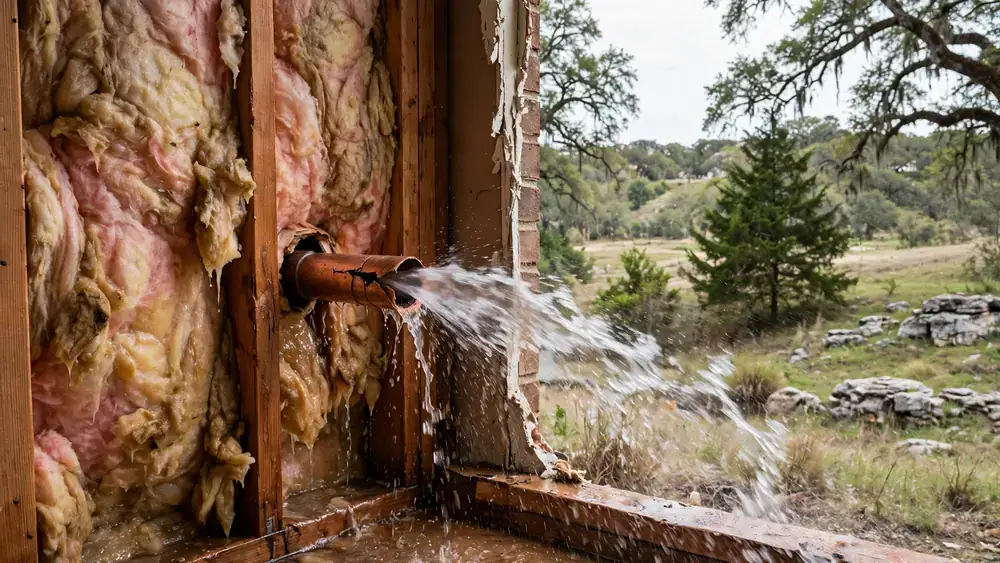
The reason it matters is the way polybutylene tends to fail. It can give way with little warning at a fitting or along a length of pipe, and a pressurized line keeps running until someone closes a valve. A house left empty during a workday can take on a lot of water that way. Look at the line entering your water heater and any exposed stub under a sink. If you see flexible gray pipe with crimp rings, ask a plumber for an opinion before a burst pipe makes the decision for you.
A small Clear Springs Place street pattern
Clear Springs Place is tiny by Richardson standards. One overview counts about 147 residents in 54 households, and says roughly three in four households own their home. The profile describes a mix of small to medium single-family homes and apartment complexes in the wider area. Silver Springs Lane and Clear Springs Court are the street names that appear most often in listings for the area, and one listing on Clear Springs Court mentions being close to Crowley Park.
A small pocket has one practical benefit. Neighbors have often lived through the same builder decisions, so a leak on one lot can be useful information for the next. If someone nearby has replaced their supply pipe or had an attic drain fail, ask what the plumber found. It will not prove anything about your house, but it does give you a good question to bring to your own inspection.

Attic air handlers in Clear Springs Place homes
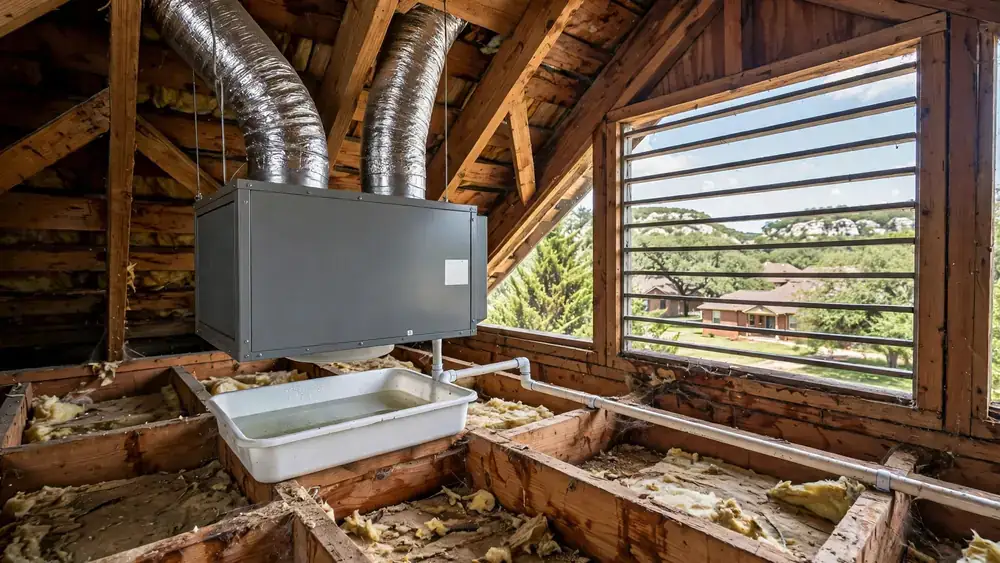
Many houses from the 1980s have an air handler in the attic, and the cooling coil pulls a steady flow of water from humid air all summer. That water leaves through a condensate line, and a backup pan is meant to catch it if the line clogs. When the pan rusts, or the line is blocked with algae, the water ends up on top of the ceiling. The first sign is often a tan ring on the drywall below, sometimes in a hallway or over a bedroom closet.
This is a quiet failure, so it can run for days before anyone notices. If you see a stain in a Clear Springs Place ceiling during cooling season, turn the system off at the thermostat and look at the pan if you can reach it safely. The page on AC leaks and ceiling damage explains what wet insulation and sagging drywall can mean. Do not poke a bulging ceiling from directly underneath, because the water behind it may come down all at once.
Clear Springs Place water sources and where they show
| Source | First clue | Where to look next |
|---|---|---|
| Plastic supply fitting behind drywall | Sudden pressure drop or a wet wall | Both faces of that wall, then the floor edge |
| Clogged attic condensate line | Tan ring on a ceiling in cooling season | Secondary pan, insulation, drywall top side |
| Water heater near end of life | Rust at the base of the tank | Pan, closet walls, adjoining carpet |
| Fence-line runoff in a heavy storm | Damp carpet along an outside wall | Weep holes, grade and downspout ends |
Crowley Park rain and Clear Springs Place yards
Crowley Park sits close by, with a paved loop of about 1.3 miles, a pond and a small creek. Having open green space nearby is pleasant, but do not assume it tells you anything about your own flood risk. That depends on the ground right around your slab. Look up your address on the FEMA map service, then think about how water really moved across your lot in the last big storm. A mapped zone is a helpful starting point but not a full picture.
On a fenced lot, runoff can get trapped along the side yard if a neighbor's grade or a concrete walk blocks its way out. Watch your side yards during a hard rain, ideally in a good raincoat with a flashlight. If water lingers against the brick or rises near the weep holes, a small fix such as a downspout extension or a regraded strip of soil may be all you need. Read about storm and flood cleanup if water has already come inside.
Clear Springs Place slabs and clay movement
North Texas clay swells when wet and shrinks when dry, and homes in Clear Springs Place sit on that same soil as the rest of the city. A slab that moves a little over the years can put stress on the lines that pass through it. A house built around 1990 has had decades of those cycles, even if it feels new compared with the 1960s ranches further south. Slab foundations are common for North Texas homes of this period, but confirm yours rather than trusting a general statement.
Signs that deserve a call to a plumber include a warm patch on the floor, a meter that spins with everything off, or a water bill that climbs without explanation. A slab leak can run under flooring for a long while before it shows. In a dry spell, a slow soaker hose around the perimeter is a common way to keep soil moisture steady, though practice varies, so ask a foundation professional what suits your lot.
First moves after a pipe fails in Clear Springs Place
- 1
Close the house valve
Find it before you need it. Many homes have one near the garage or where the line enters.
- 2
Kill power to wet areas
Switch off breakers for flooded rooms if you can reach the panel while standing somewhere dry.
- 3
Photograph everything
Capture the failed part, the wet floor and any furniture, before moving items out of the way.
- 4
Keep the failed fitting
A plumber or insurer may want to see it, so bag it and label the date.
- 5
Call for drying help
Ask for moisture readings in the wall, the ceiling below and under the flooring edge.
Clear Springs Place water heaters and upstairs laundry risk
A home from the late 1980s has probably gone through more than one water heater, and the location of the current one matters. Tanks in garages tend to make a mess the owner can squeegee out of the door. Tanks in an interior closet or an attic are a different matter, because a failed tank can run water through drywall and down to the rooms below. Find the label on your unit, note the install date, and write it somewhere you will see it. Ask about a pan and a drain line at the next replacement.
Washing machine hoses are another low-effort check. If your laundry room shares a wall with a bedroom or sits above a finished room, braided hoses are a sensible upgrade, and the shut-off valves above the machine should turn freely. Do not force a stiff valve, since old ones can start leaking at the stem. Closing those valves before a long trip is a simple habit, and it takes only seconds on your way out of the door.
Sewer stoppages on Clear Springs Place lots
Newer than a 1960s street does not mean free of drain trouble. Roots can still find joints, and grease or wipes can block a line in a house of any age. The city says it maintains the main sewer, while a stoppage between a city-installed cleanout and the house is the owner's responsibility. So it helps to know where your cleanout sits. Walk the front and back of the lot on a calm day and look for a capped pipe near the property line.
If you see water surfacing in the street, or you suspect a problem in the main, the city line at 972-744-4111 takes reports of water leaks and sewer problems. If the toilet is backing up, stop using water in the house and keep everyone out of the affected area. Sewage is a different category of water from a clean supply leak, and porous items it reaches are often not worth trying to rescue. See the sewage backup guide for how those decisions tend to go.
Mold timing in a sealed Clear Springs Place house
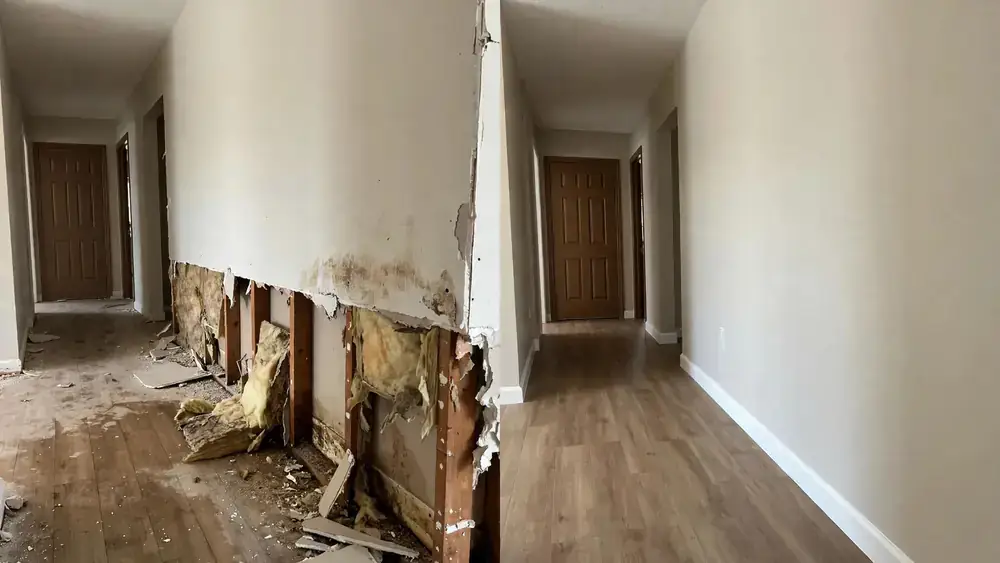
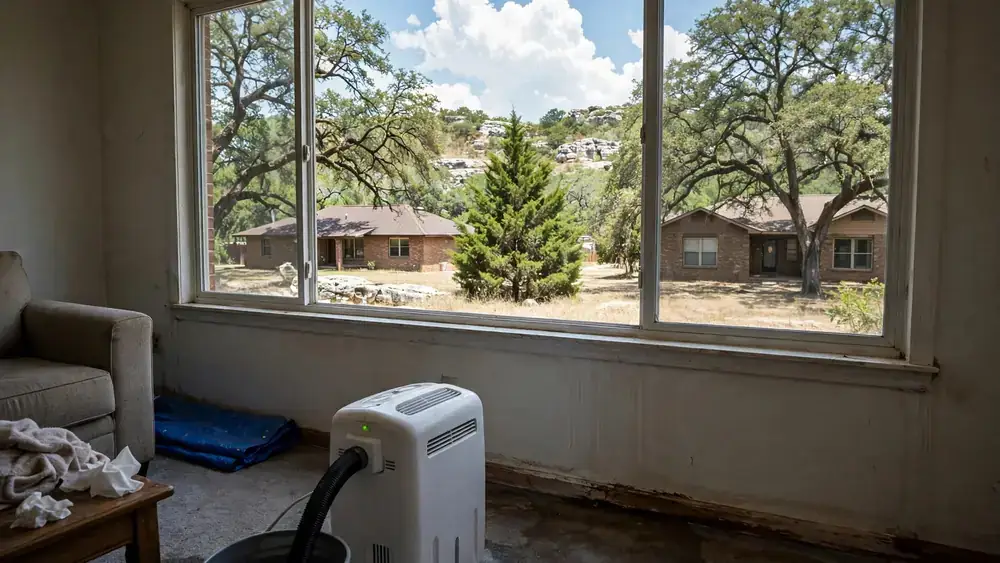
Houses from this era tend to be tighter than older ones, with insulated walls and cooling that runs for months. That is good for comfort, but it also means a wet wall cavity may not dry on its own. The EPA advises drying wet materials within 24 to 48 hours where possible to keep mold from growing. Running the AC harder will not reach water trapped behind drywall or under a vinyl floor. Equipment placed with a plan, plus readings to show progress, is what normally closes that gap.
If mold is already visible, do not scrub or spray before you have thought about the source of the water. Mold that returns after a cleanup usually means the moisture is still there. Texas has rules for larger mold projects, and the mold guide covers them in plain language. If someone in the house has asthma or a weakened immune system, ask a doctor before anyone stays in a room with visible growth.
Insurance notes for Clear Springs Place owners
Texas policies vary, and the pipe question can come up here as well. The Texas Department of Insurance explains that water and mold coverage depends on the policy, and on how the damage happened. A sudden break is often treated differently from a slow leak that went on for weeks. If your home has an older plastic supply system, read your policy carefully or ask your agent how it is treated. Doing that on a calm day beats learning the answer during a claim.
Keep your paper trail simple. Save photos, dates, the plumber's written notes and any drying logs in a single folder. Tell your insurer promptly, and be careful about signing anything you have not read. The Texas insurance guide walks through what to ask. Independent contractors can explain their part of the work and what records they keep, but only your insurer can say what your policy pays for.
Clear Springs Place records worth keeping
Because this pocket is small and many houses have changed hands over the decades, you may not know what earlier owners did. Build a short file. Note the year built, the kind of supply pipe, the valve location, the cleanout location and the age of the water heater and the AC. Add a photo of each label. If a wall is opened for any reason, photograph what is behind it before it closes up again. Those few pictures can tell the next plumber a great deal.
If you are planning a repipe or a bathroom remodel, check what permits apply. Building Inspection can be reached at 972-744-4180, and contractors working in the city should be able to tell you how they handle registration and permits. The contractor guide has a list of questions worth asking before you sign. Asking early is always easier than sorting things out after the drywall is back on the wall.
Clear Springs Place floor plans and the half bath
Silver Springs Lane listings give a useful sense of scale. One home is shown with three bedrooms, two full baths and a partial bath, and another at about 1,722 square feet. In a plan like that, the powder room often sits near the entry or the kitchen, and it gets far less use than the other two baths. That makes it an easy place for a slow problem to hide. A toilet supply that weeps, or a fill valve that runs, may go unnoticed for weeks in a room that people only pass through.
On a house of that size, a wet area also reaches a large share of the home quickly. A leak in a shared hallway wall can touch a bedroom, the living area and a closet all at once. Open the powder room every week or so, flush the toilet and glance at the floor around its base. Check the cabinet under the sink too. If you find a stain, dry it and look again a few days later. A mark that comes back tells you the leak is active, and that gives a plumber a clear place to begin.
Giving the right Clear Springs Place address
The name causes real confusion, which matters when someone is trying to find you. Listings spell it Clear Springs Place, Clear Spring Place and Clear Spgs Place. Clear Springs Court is a street in this pocket, while Clear Springs Parkway is a separate road and not part of it. When you phone a plumber, a contractor or your insurer, give the full street address and ZIP 75082 rather than the neighborhood name alone. Mention Silver Springs Lane or Clear Springs Court so nobody heads to the wrong street.
The same care applies to paperwork. Your insurance policy, deed and appraisal records may each use a slightly different form of the subdivision name. That is normally harmless, but make sure the property address on any estimate or drying log matches your policy exactly. One overview counts only about 54 households here, so general data on the area can be thin. Records from your own house will always be more useful than a neighborhood average, especially if a claim reviewer asks when the home was built or what has been changed.
Planning a repipe in an occupied Clear Springs Place home
If a plumber confirms an older plastic system, you do not have to choose between doing nothing and tearing the house apart. Ask for options. Some owners replace the whole system at once, while others begin with the sections that are easiest to reach and plan the rest around a remodel. Ask how many walls and ceilings would be opened, whether the work can be routed through the attic and how long the water would be off each day. Have those talks before a failure, when you have time to compare answers.
A planned job also lets you decide about the rooms around it. If a hallway ceiling is opening anyway, that is a good moment to look at the AC drain above it. If a bathroom wall is coming off, ask for a new shut-off at each fixture. Roughly one household in four rents in this pocket, according to one overview, so owners who rent out a home should give tenants written notice of any water shut-off days. Keep the invoice, because a future buyer or insurer may well ask about the pipe.
Mixed systems deserve a note of their own. Silver Springs Lane homes are now more than 35 years old, so an earlier owner may have patched one section in copper or newer plastic and left the rest alone. A repair like that fixes one spot without telling you anything about the remainder. Ask your plumber to mark on a simple floor sketch which runs have been changed and which have not, then keep that sketch with your house papers.
FAQ
Clear Springs Place water damage questions
Is Clear Springs Place in 75081 or 75082?
Listings on Silver Springs Lane and Clear Springs Court show ZIP 75082. Check your own mailing address to be sure.
How can I tell whether my Clear Springs Place home has polybutylene pipe?
Look for flexible gray pipe at the water heater or under sinks. A plumber can confirm it, and repairs may have mixed materials.
Does living near Crowley Park mean my lot floods?
Not by itself. Check the FEMA map for your address and watch how water moves across your own lot.
Why did a brown ring appear on my ceiling in July?
In summer an attic condensate line or pan is a likely suspect, although a roof leak is also possible. Turn the AC off and have it checked.
Who clears a sewer stoppage on Silver Springs Lane?
The city maintains the main. A stoppage between a city-installed cleanout and the house falls to the owner.
Can a Clear Springs Place wall dry without being opened?
Sometimes, if it is caught quickly and readings confirm it. Insulated cavities often need a small opening to dry properly.
Sources and citations
- [1]NeighborhoodScout: Clear Springs Place profile
- [2]Listing: 3035 Silver Springs Lane, Clear Spgs Place
- [3]Listing: 3116 Silver Springs Lane
- [4]City of Richardson: Water utility operations FAQ
- [5]City of Richardson: 24/7 Response Center
- [6]Listing: 2684 Clear Springs Court
- [7]Hiking Project: Crowley Park Trail
- [8]Weichert: Clear Spring Place overview
- [9]EPA: A brief guide to mold, moisture and your home
- [10]Texas Department of Insurance: Water damage and mold coverage
- [11]FEMA Flood Map Service Center