
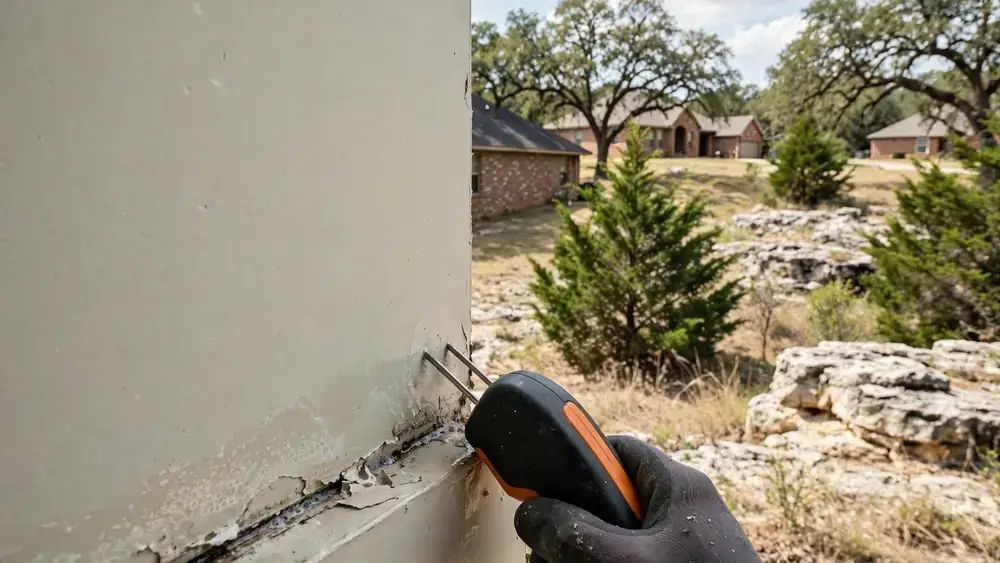
Key facts: Drying times
The short answer
A small clean-water loss caught quickly often dries in about three to five days with professional equipment. Bigger losses, or those involving concrete, hardwood or several rooms, can take a week or longer. Air-drying with household fans is slower, less reliable and hard to verify.
Those ranges are typical, not a promise. Do not confuse a dry surface with a dry building, and do not let anyone remove equipment on a schedule alone. The end of the job is a reading that matches the target.
Rough drying ranges by material
These are rough guides for planning. Conditions can change them in either direction.
| Material | Typical range | Notes |
|---|---|---|
| Carpet, clean water | A few days | If pad is sound and action was quick |
| Drywall, surface wet | 3 to 5 days | Longer if insulation is wet behind it |
| Wood framing | Up to a week or so | Must reach target before closing |
| Hardwood floor | 1 to 3 weeks | Slow, with mats and careful monitoring |
| Concrete slab | A week or more | Reads wet below the surface |
What makes drying slower in Richardson
Slab floors are the first reason. Concrete holds water deeply and gives it up slowly. Brick veneer can keep the cavity behind it damp. Then there is weather: spring in North Texas can be humid, and with about 37 inches of rain a year at DFW [3], storms often arrive when the air is already moist. Summer heat helps evaporation, but attics are hard to manage.
Time before drying starts is the other factor. A leak found on day one is a different job to a leak that ran during a week's vacation. Materials are more saturated, and water may have moved further into walls and adjacent rooms.
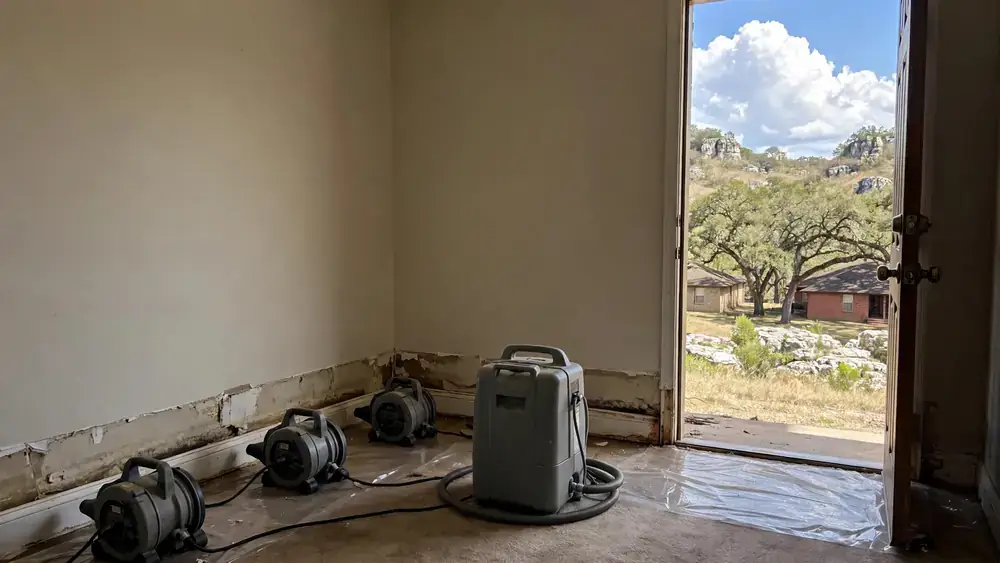
How you know it is really dry
- 1
Take a baseline
A meter reading of the same material in a dry area sets the target.
- 2
Mark the wet points
Readings should be taken at the same spots each day.
- 3
Watch the trend
Numbers should drop steadily. If they stall, the plan should change.
- 4
Check air conditions
Humidity and temperature in the room are part of the log.
- 5
Confirm the target
Readings match the dry baseline before the machines leave.
Why you should not stop early
If equipment is removed before the structure is dry, the room can feel fine for weeks. Later, paint bubbles, a floor cups or a smell appears. Mold is the larger concern, since the EPA says that materials wet for more than 24 to 48 hours can start to support it [1]. Keep indoor humidity under 60 percent, and ideally 30 to 50 percent, while the job is underway [1].
If drying stalls, the cause may be a hidden wet area or a leak that was never fully stopped. A good contractor will investigate rather than just add another day. Ask what changed, and what they are doing about it.
Plan your life around the machines for a few days. Keep a path to bathrooms clear, leave equipment plugged in, and ask whether any breakers are shared with other important loads. You may notice a warmer house and higher electrical use. Keep pets away from the hoses and cords. Close windows unless told otherwise. If you must go out, leave a key or code with someone trusted, as technicians need to take daily readings.
Rebuilding timeline
Repairs follow drying. Replacing drywall, floors and paint can add days or weeks, depending on materials and trades. Hardwood and tile floors need time to settle. Ask your contractor for a written sequence, including when each trade arrives and what has to be ready first. Hold off on new flooring until the slab or subfloor has passed the moisture test required by the flooring maker. Otherwise you may repeat the work.
A sample timeline for a clean-water leak
On day one, the water is extracted, the wet area is mapped and equipment is set up. Materials that cannot be saved may be removed. On day two, the first readings show how quickly things are dropping, and the setup may be changed. By day three or four, surfaces and thinner materials are often nearing their target, and some machines may be taken out. By day five, a simple job may be complete, while a slab or a floor may need more time.
Treat this as an outline and not a schedule. Holidays, deliveries and insurance approvals can stretch the wider project, even when the drying itself goes smoothly. Your contractor should be able to tell you where you are at each visit and what the numbers mean.
Why a house with one floor can still take longer
It seems logical that a larger, two-story home would take longer than a single-story ranch, but it is not always so. Slab-on-grade ranches keep water in concrete, and many older houses have layers of flooring, tight wall cavities and few places for air to enter. A second floor over wood framing may actually dry more quickly once ceilings have been opened. What counts is the materials and access, and not the square footage alone.
Older plaster and thick tile floors can slow things down too. Drying hardwood is a slow process, as it needs time to release moisture without cracking. Rushing with too much heat risks damage. A careful contractor will explain why they are going slowly, and show readings that back that up.
Can you speed up the process?
A few things help. Keep doors and windows as instructed. Do not turn off the equipment. Move what you can out of the way. Empty any water container if you are asked to do so, though most units drain themselves. Keep the thermostat at the suggested setting. If your AC is working and clean, it may help to keep the humidity lower.
Other things do not help. Opening windows on a humid day brings water into the house, and space heaters can warp wood and add a fire risk. Adding your own fans can upset the planned airflow. If you want to help, ask your contractor what would be useful. Often it is simply keeping pets and small children away from the machines, and letting technicians in on time.
What drying without professional equipment looks like
If only a little clean water was involved, and it was only on a hard floor, you may well be fine with towels, fans and a household dehumidifier. Give it a couple of days, then check. A basic pin meter gives you a rough idea of moisture in wood and drywall. Compare the wet area with a dry area of the same material.
If anything has soaked into walls, carpet pad, or under flooring, home drying becomes much less reliable. In that case it is worth getting someone to take a professional reading, even if you decide to handle the rest yourself. A lot of the trouble comes not from the size of the leak, but from not knowing how far it went.
FAQ
Drying time questions
Can walls dry on their own?
Slowly, sometimes. But moisture hidden behind them can linger for weeks, and that risks mold.
Why are the fans still running on day five?
Readings probably have not reached the target yet. Ask to see the log.
Can I paint once it feels dry?
Wait for readings. Paint over damp drywall tends to fail.