Key facts: Northrich
One small house, one big leak in Northrich
Size is the thing that sets Northrich apart from many of its neighbors. In 2019, Community Impact reported a median home size of 1,352 square feet, and a local real estate profile gives a range of about 985 to 3,146 square feet. In a single-story house of that size, nothing is very far from anything else. A kitchen, a hall bath, a laundry closet and a water heater may all share a few walls.
So when a line breaks at midnight, the water does not have far to go. By morning, it can run under the interior walls and reach almost every room, because a slab is a broad flat surface and only the thin bottom plates separate one space from another. The owners of a large house may lose one wing. Here, a single event can involve the bedrooms, the hall and the living room at once. It is also harder to live around the work, because there is rarely a spare room that is unaffected.
That is why time matters more on these streets. Shutting the water off quickly, and getting standing water out quickly, can be the difference between drying the walls and cutting into them. The water extraction page describes how contractors usually approach that first stage.
Find the Northrich shutoff before you need it
Most water damage gets worse by the minute, and the fix for that is knowing where to stop it. In many homes of this age, a main valve sits near where the line enters the house, often by the garage or an exterior wall. Some have none that works, and the only option is the meter box. A meter shutoff generally belongs to the city, so ask before you touch it, except in a true need to stop a flood.
Walk everyone in the household to the valve, turn it, and make sure it closes. Older valves can stick. If yours will not move, or if it weeps afterward, have a plumber replace it with a quarter-turn ball valve. That is a small job that pays off the first time something fails.
- Show every adult the valve
- Test it once a year
- Keep a meter key in the garage

Mixed ages across Northrich streets
The local profile describes homes built from the mid-1950s up to the late 2010s, with many classic ranches remodeled and some contemporary designs. Streets such as Cap Rock Drive, Lexington Lane, Lorrie Drive, Rockingham Lane and Monte Blaine Lane appear in its boundary description. The result is variety. A 1950s original may share a fence with a house rebuilt sixty years later. Listings also describe large lawns and mature trees, and lots in the profile range widely in size.
Age has predictable effects on water risk. An original home may still have aged supply lines, cast-iron drains and an older roof deck. A heavily remodeled one may have modern plumbing in some rooms and original pipe under others. A recent build has fewer aging parts, but it may have more complicated mechanical systems. Do not rely on the look of the kitchen to judge the plumbing. Ask for receipts, permits and any plumber's reports, and write down what you learn.
Northrich is sometimes split in listings into smaller additions. Northrich West appears as its own subdivision name, and other streets carry names of older Richardson Heights sections. For water damage, these distinctions rarely matter. They can matter for deed restrictions, which your title papers will show.
Northrich rooms and what water does there
| Room | Typical source | Where water goes next |
|---|---|---|
| Northrich kitchen | Dishwasher line or fridge icemaker | Under cabinets, into the dining room |
| Laundry closet off the hall | Washer hose or drain | Hall flooring, nearest bedroom |
| Hall bath back to back with the kitchen | Toilet supply or tub drain | Both sides of one wet wall |
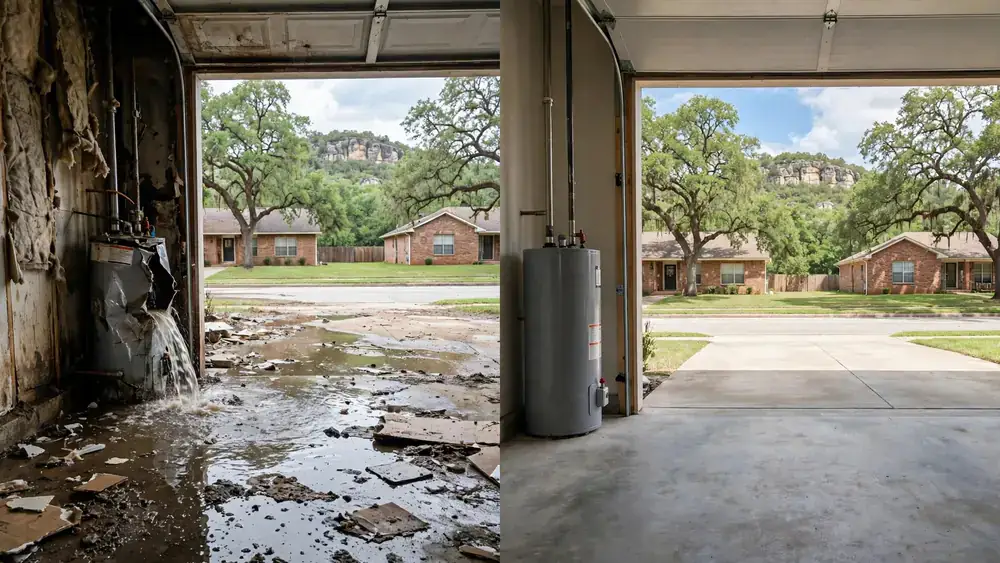
| Garage water heater in Northrich | Tank failure | Under the door into living space |
| Converted garage or den | Rain at a low threshold | Along the original exterior wall |
Back-to-back plumbing in Northrich ranches
Small houses were usually designed to keep plumbing short, so baths and kitchens often back onto one another. That saved pipe and was a sensible design. It also concentrates the risk in a single wall, and a leak there wets two rooms at the same moment. If a kitchen base cabinet feels damp and the bathroom next to it has a swollen baseboard, those are likely to be the same problem and not two separate ones.
That wet wall may also be full of older connections. Check under the sink with a flashlight for any stain, soft cabinet floor or rust. Look at the angle stops, the small valves on supply lines. If they have not been turned in years, they may leak when you try. Replace those and flexible connectors during any routine plumbing visit, and ask how old they are. Braided connectors do not last forever, and a date written on tape can help you keep track.
If you are planning an open-concept remodel, ask where the plumbing wall will go. Moving a kitchen across the slab usually means cutting into it, and a contractor can check the condition of the drains while the floor is open. That is one of the few moments when an old under-slab line is easy to see.
Open-plan remodels in Northrich after a leak
Remodeled ranches frequently have a single floor material running through all rooms. It looks wonderful, and it makes a water event more complicated. If a continuous plank floor gets wet in one room, an installer may need to remove more of it than the wet area alone, because there is no threshold at which a repair can stop. Finding a match for a discontinued floor can also be difficult. Keep a box of leftover planks and a note of the product name, if you have them.
An insurer usually pays attention to line-of-sight questions, and policies differ on how they treat matching. Do not assume that the whole floor will be replaced, and do not assume that it will not be. Ask your adjuster, and get any answer in writing. The Texas Department of Insurance publishes general guidance, and the insurance guide on this site gives the basics.
Tearing out a remodeled floor can also expose earlier layers. In a home that dates from the 1950s or 1960s, those might include older tile or adhesive that should be tested before it is disturbed. A careful contractor will pause and ask. It is far better to wait a few days for a lab result than to create a much bigger problem.
Living through drying in a Northrich home
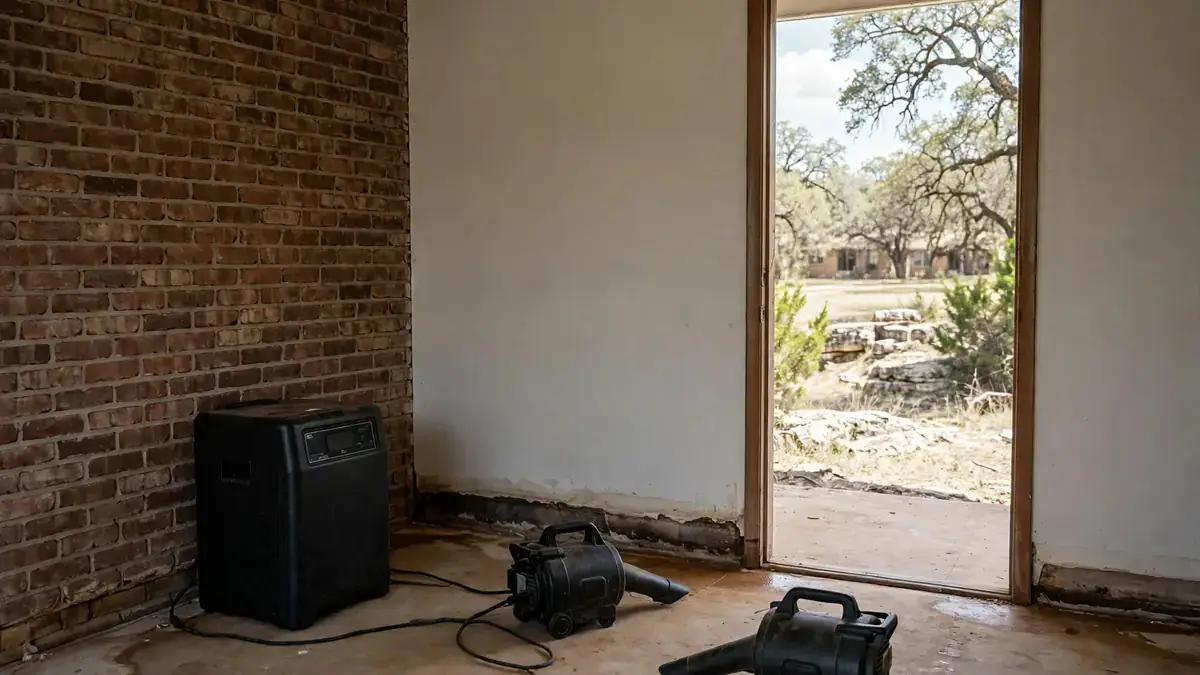
A drying setup is noisy. Air movers and dehumidifiers run day and night, and in a small house there is nowhere far from the sound. They also throw off heat. Before the work begins, ask how many machines you can expect, where they will go and how the air will flow. A family with young children, older relatives or someone who works from home may want to plan a few nights elsewhere. If so, ask your insurer whether your policy has additional living coverage.
Equipment placement can often be adjusted, but it needs to stay running to work well. Do not switch machines off to get some sleep without first speaking to the contractor. If power is limited, older electrical panels can trip when several machines run together, and that is a real consideration for 1950s houses. Tell the contractor about any known electrical limits. A contractor may need to spread out the load across circuits.
Most drying jobs run for several days, depending on what got wet and for how long. The drying guide explains why walls and layered floors tend to take longer. The IICRC S500 standard describes the general process that many contractors follow.
Air conditioning leaks in small Northrich attics
Homes with low attics and an air handler up there have a specific leak: a clogged condensate drain. The cooling coil produces water all summer. A backup can flood the primary pan, and if the secondary pan or safety switch is missing, water falls through the ceiling. In a compact home, the unit often sits above the hall, right in the middle of the house, so a stain there should get prompt attention.
Have the drain flushed as part of your annual service. A float switch that shuts the system down when the pan fills is a helpful safeguard. If you see water, switch the system off at the thermostat. Check the AC leak page for what usually comes next. A closet-mounted unit has its own version of this issue, with the water spreading along the hall floor instead of through the ceiling.
Older ductwork is a related concern. In humid weather, poorly insulated ducts can sweat, and ceiling spots can form below them without any plumbing leak. If a stain appears only in the hottest weeks of the year, mention that pattern to your HVAC technician.
Northrich yards, trees and drains
Large lawns and mature trees are part of the appeal of the neighborhood, and the profile mentions both. Tree roots and clay soil combine to stress older buried lines, though they do so slowly. A sewer lateral can pick up root intrusion over the years. Watch out for several slow drains at once, a gurgling toilet or a wet spot in the yard along the line of the pipe. Those signs call for a plumber and perhaps a camera.
The city says that it keeps up the main, and that the stretch from a city-installed cleanout to the house rests with the homeowner. If you do not know where the cleanout is, try looking near the front of the lot, near the street or alley side. Look also at the outside of the house, near the bathroom wall. For sewage inside the home, the sewage backup page lays out why it needs special handling.
Rain is the other yard issue. Make sure gutters discharge beyond your flower beds, and keep the soil a few inches below the top of the slab. Report street-level problems at 972-744-4111. A small trench or a splash block may be all it takes to protect a low door.
What to do in the first thirty minutes in Northrich
In a compact home, these first actions can protect several rooms.
- 1
Close the valve
Use your Northrich home's main shutoff, then open a low faucet to relieve pressure.
- 2
Kill power in wet rooms
Only if you can reach the panel while staying dry.
- 3
Lift what you can
Put furniture legs on foil or blocks, and move rugs and electronics.
- 4
Take pictures
Photograph every affected room before you tidy up.
- 5
Remove surface water
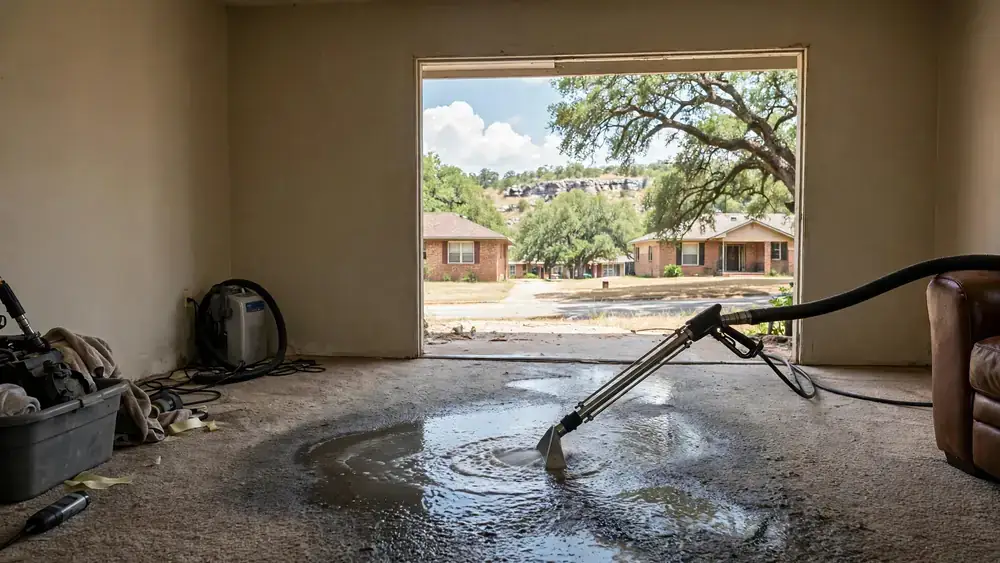
Use towels or a wet vacuum for clean water only.
- 6
Call your insurer
Ask about coverage, and about where you can stay if needed.
Northrich rental homes and landlords
Homes.com and other sites show a healthy number of rental homes in Northrich. If you rent a house here, tell your landlord right away and in writing. A landlord is normally responsible for the building, but you are responsible for your own belongings, and a renters policy is what covers them. A delay in reporting can complicate matters for everybody. Take photos on the day you first see the damage.
If you own a rental, make sure that your tenants know where the shutoff is, and leave them a number that gets answered. Vacant periods between tenants are a higher risk time. Consider turning off the water while the house is empty, as long as that does not affect the water heater or a sprinkler timer. Schedule a look under the sinks at each turnover, and walk the attic if you can do so safely.
Landlord policies differ from homeowner policies, so read yours. A short file with the home's plumbing history and the dates of any leaks will help when tenants change.
Mold risks in tight Northrich closets
Small homes tend to have small closets, packed full. When water reaches one, the clothes and boxes block airflow to the wall, and moisture stays trapped. After any leak, pull everything out of the closets on the affected side. The EPA recommends drying within 24 to 48 hours to limit mold growth. Hanging damp clothes elsewhere and emptying the closet floor are simple tasks you can do straight away.
If you can see or smell mold later on, the wall needs inspecting. Texas has licensing rules for mold work of a certain size, and the mold rules guide gives the general picture. Insurance for mold can be limited, so tell your insurer early. Do not paint or caulk over it until the moisture source is dealt with.
Schools, parks and a neighborhood that knows itself
Community Impact names Northrich Elementary, Richardson North Junior High and Pearce High School, along with Northrich Park, Heights Park, the Heights Family Aquatic Center and the Richardson Public Library, among local amenities. Attendance zones can change, and other sources list different schools, so check the district's site. Walk Score counts about 4,275 residents and calls the area somewhat walkable. Those details do not change how a pipe behaves. They do explain why people stay, and why long-term owners tend to know a good deal about their houses and each other's.
That local knowledge is useful after a leak. Neighbors who have replaced their drains can tell you who did the job. Ask around before you commit to anyone, and check their licensing. The company selection guide lists questions worth asking. A local park cleanup or a neighborhood social group can double as an informal plumbing referral network.
Only those who have seen the work can tell you whether a contractor protected the floors, cleaned up or explained what was happening. Those small things say a lot, and they are worth asking about when a neighbor offers a name.
Small lots and big lots in Northrich
The local profile lists lot sizes from 0.05 of an acre up to a full acre, which is an unusually wide spread for one neighborhood. It changes how rain behaves from one address to the next. On the smallest lots, the house, driveway and patio cover most of the ground, so there is little soil to absorb a storm, and a neighbor's downspout may empty only a few feet from your wall. Side yards can act like narrow channels, carrying water along the foundation toward the street. If yours is one of these, look at what happens along the fence during a hard rain, and keep that path free of stored items, mulch piles and raised planters.
Larger lots have the opposite issue. Long lawns and old trees mean more irrigation, longer buried lines and more ground for a hidden leak to soak. A sprinkler line that breaks far from the house can run for days without anyone noticing, and the first sign may be a spongy patch by the fence. Reading the meter with the controller off, as suggested above, will separate the yard from the house. A few minutes spent learning which situation your own lot is in will tell you where to look first after the next storm.
FAQ
Questions from Northrich homeowners
Is there a difference between Northrich East and Northrich West?
Listings show Northrich West as a subdivision, and none named Northrich East. Both are treated here as Northrich.
Why did one leak affect my whole Northrich house?
Compact single-story homes let water spread across the slab beneath thin wall plates, reaching several rooms quickly.
Does Northrich have an HOA?
Listing data suggests no mandatory dues for Northrich West, but that is not definitive. Check your deed.
Should I stay home while my Northrich house dries?
That depends on noise, heat and who lives with you. Ask your insurer about additional living coverage.
Can my older Northrich panel handle the drying equipment?
Tell the contractor about any known limits. They can often spread the load across circuits.
Sources and citations
- [1]Community Impact: Featured neighborhood in Richardson, Northrich
- [2]Richardson TX Real Estate: Northrich
- [3]Walk Score: Northrich
- [4]Neighborhoods.com: Northrich West
- [5]City of Richardson: Homeowner associations
- [6]City of Richardson: Water utility operations FAQ
- [7]IICRC S500 water damage standard
- [8]Texas Department of Insurance: water damage and mold coverage