Key facts: Arapaho Heights
- Community Impact reports Arapaho Heights was established in 1956 and has about 1,100 homes [1].
- The same report places it roughly within West Shore Drive, Arapaho Road, Coit Road and Belt Line Road [1].
- Richardson maintains the main sewer; a stoppage from a city cleanout to the house is the owner's [2].
The drain line is the Arapaho Heights weak spot
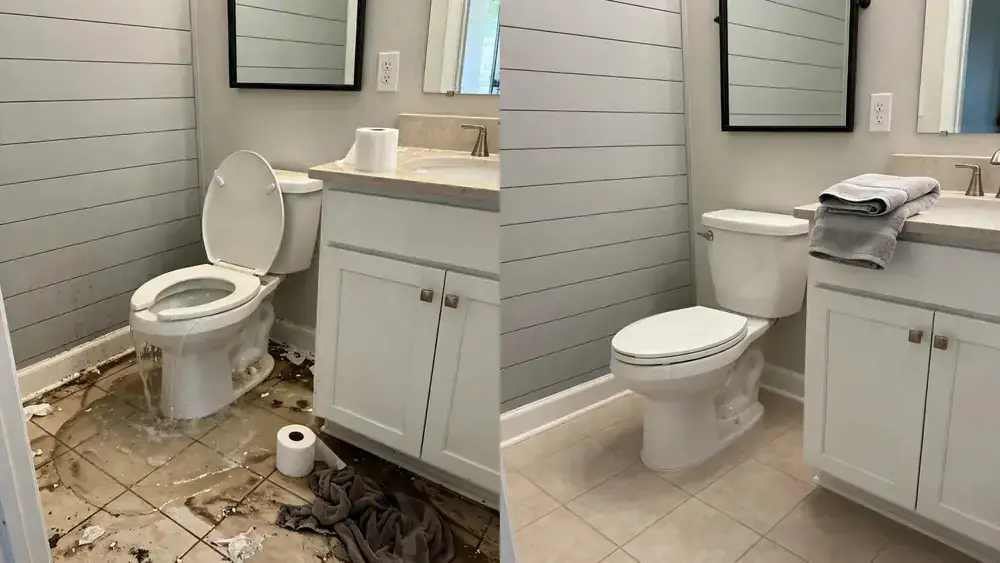
Ask what a seventy-year-old house has in common with a new one built on the next lot, and the answer is the ground under them. Community Impact reports that Arapaho Heights was established in 1956, in southwest Richardson. A neighborhood profile says many homes here date from between 1940 and 1969, and another describes 1950s and 1960s homes with some new construction in the mix. In a house from those years, the drain under the slab and out to the street may be the oldest working part of the building.
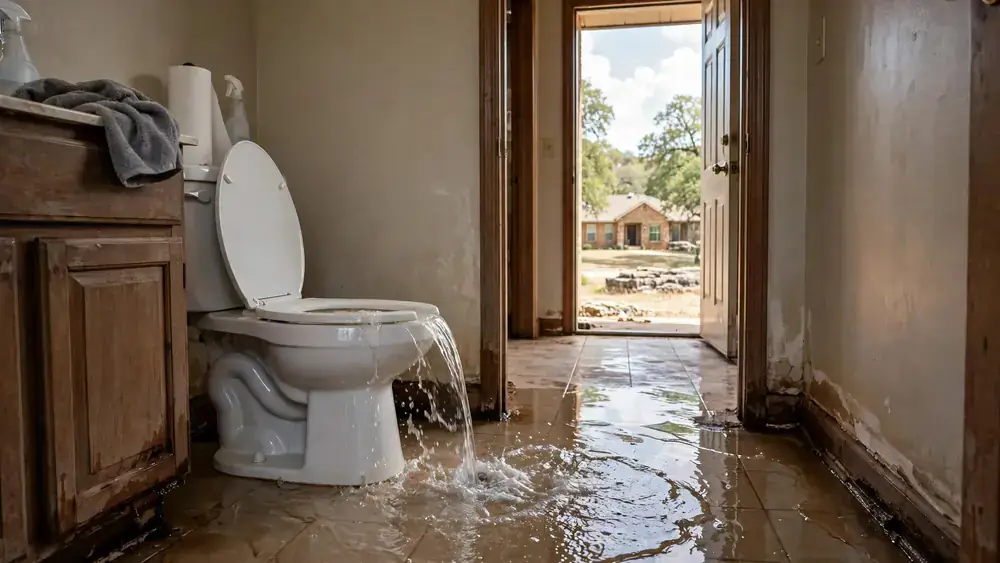
So this page begins with a backup rather than a burst pipe. When a tub gurgles, a floor drain weeps or a toilet rises as the washing machine empties, the cause is often somewhere you cannot see. An older line can narrow with scale, shift in clay or admit roots through a joint. None of that is certain for any one house, and many original drains are still working. But if you live in an original Arapaho Heights home, the drain deserves more of your attention than its age may suggest.
Cast iron and clay beneath Arapaho Heights slabs
Cast iron was a standard drain material when these homes went up, and it can last a long time. It does age, though. Rust builds on the inside, the bottom of the pipe can wear thin from decades of flow and a rough interior catches grease and paper. Clay soil adds movement from outside. In a dry summer the ground shrinks away, and when autumn rain returns it swells again. A joint or a thin section can open up after enough cycles of that, and sewage can leak beneath a floor without much obvious sign.
A camera inspection is the plain way to find out. A plumber feeds a small camera through the cleanout and records the line. Ask for the video and keep it, since it gives you a baseline, and a later inspection can then be compared with it. If the pipe looks fine, you have peace of mind. If it is rough, you can plan repairs instead of facing them on a holiday weekend with a wet bathroom floor. Some owners have the line lined or replaced during a renovation, when floors are already up.
When an Arapaho Heights drain backs up
- 1
Stop using water
Do not flush, run the washer or shower. Every gallon you send down may come back up.
- 2
Keep people out
Sewage carries germs. Keep children and pets away from the wet area and close the door.
- 3
Find the cleanout
Look along the property line or near the back of the lot, and do not force a stuck cap.
- 4
Call the city or a plumber
If the stoppage looks to be in the public main, call 972-744-4111. If it lies on your side, you will need a plumber.
- 5
Arrange cleanup
Tell the contractor that sewage was involved so it can be handled as contaminated water.
Who owns which Arapaho Heights sewer pipe
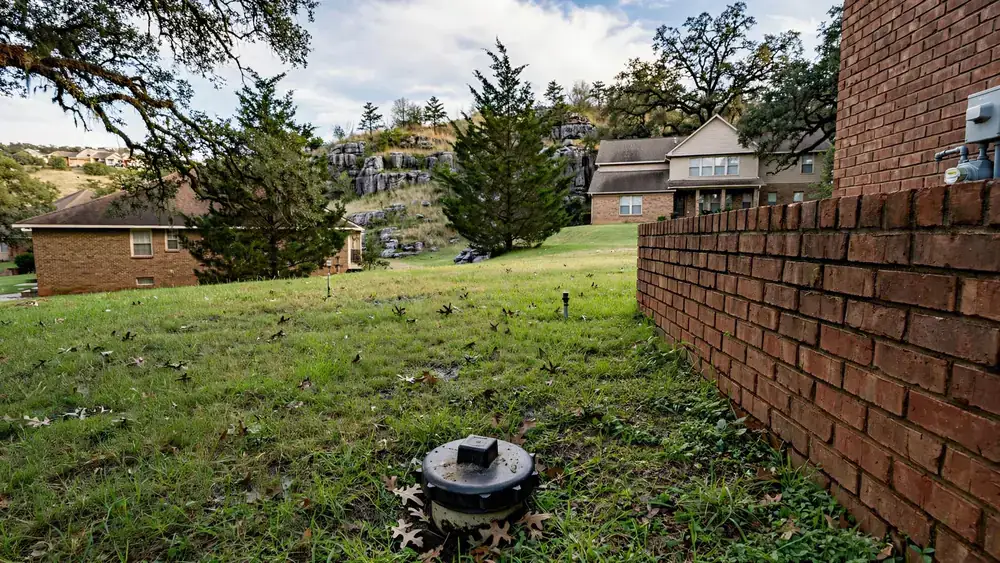
The city's water utility FAQ draws a clear line. Richardson maintains the main sewer, and a stoppage between a city-installed cleanout and the house belongs to the owner. In practice, that means the first question after a backup is where the blockage sits. If a city cleanout near your property line is dry, the trouble may be between that point and your home. If it is full, the problem could be further along, and a call to 972-744-4111 is the right move.
Not every older lot has a city-installed cleanout, or one that is easy to find. Decades of planting and fence work can bury a cap. Look for it before you need it, and ask a neighbor where theirs is if you cannot spot yours. The sewer stoppage guide goes through the decision in detail. Take a photo of the cap with something fixed in the frame, such as a fence post, so you can find it again after the grass grows back.
Cleaning up sewage in an Arapaho Heights home
Contaminated water changes the job. Carpet and pad reached by sewage are generally not worth keeping, and drywall it touched is usually cut out, because porous materials hold what cannot be cleaned away. Hard floors and framing can often stay if they are properly cleaned, disinfected and dried. Anyone doing this should wear protection, and the house should not simply be mopped and left with a fan on. See the sewage backup cleanup page for what a proper process looks like.
Timing also matters in a 1950s or 1960s house. Old vinyl floor tile, its black adhesive, and some pipe insulation may contain asbestos, and lead paint is possible on older trim. That does not stop work, but it does mean that materials may need testing before they are torn up. A contractor who raises this early is doing you a favor. Ask for the plan in writing, and photograph each room beforehand. Insurance policies often treat a backup under separate wording from a burst pipe, so read that section of your policy early.
Arapaho Heights homes by age and likely trouble
| Home type | Common weak point | Useful question |
|---|---|---|
| Original 1950s house | Cast-iron drain, older shut-off valves | Has the drain ever been scoped? |
| Original 1960s house | Water heater closet, aging supply lines | What pipe is in the walls? |
| Enlarged older home | Joint between old and new slab | Was the addition permitted? |
| New build on an old lot | Bathrooms over ceilings, yard grade | Where do the upstairs lines run? |
| Neighbor of a new build | Changed runoff across the lot line | Which way did water run before? |
New houses beside original Arapaho Heights homes
Sources describing this neighborhood point out some new construction among the older homes. Replacing a modest one-story with a larger house changes more than the street view. A bigger footprint means more roof, less lawn and a yard that may be regraded. If a new foundation sits higher, rain that once soaked into a side yard could now run toward the house next door. That is a matter of how a particular lot was built and is not automatically anybody's fault, but it does explain why a home that stayed dry for decades can suddenly see damp along one wall.
If you notice this on your side of the fence, take dated photos and video during rain. Talk to your neighbor first, since a simple shared fix may exist. Building Inspection, at 972-744-4180, can tell you what applies to permitted work. New houses have their own patterns too. A two-story plan puts bathrooms and laundry rooms above finished ceilings, so a failed connection arrives from above. If you own a newer home here, a pan beneath the upstairs washer and leak sensors can stop a small drip from reaching the room beneath.
Old shut-offs and supply lines in Arapaho Heights
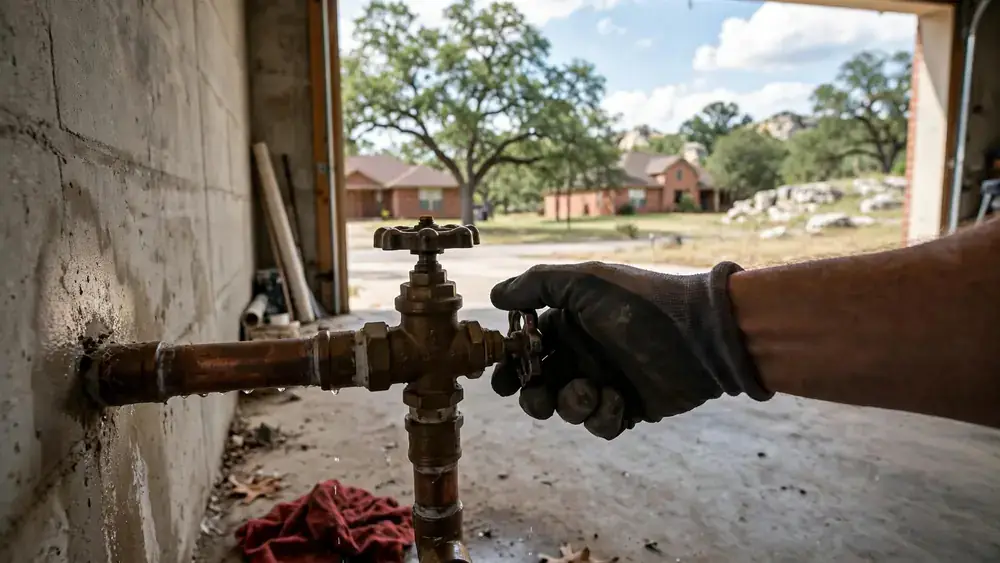
Drains are the headline, but the supply side has its own age problem. Homes built before about 1960 may still contain sections of galvanized pipe, which rusts inward and leaves weak flow and brown water. A magnet will stick to galvanized steel and not to copper, so you can test any pipe you can reach. Stiff gate valves are another hazard. Some have not been turned in decades, and a first attempt can make them leak at the stem or snap off.
Try the main valve while everything is calm and a plumber can be called if needed. If it is stiff, replacing it with a quarter-turn ball valve is a sensible, small upgrade. Do the same for fixture stops under sinks and behind toilets. Older flexible connectors are also worth a look. Should a pipe let go, the burst pipe page sets out the order of what to do. Older pipework can also be disturbed by a repair nearby, so ask a plumber to look along the line and not just at the failed joint.
Arapaho Heights trees, gutters and side yards
Mature trees are a large part of the charm of a 1950s neighborhood, and they bring two water issues. First, roots go looking for moisture, and a small gap in a clay or iron sewer line can draw them in. If you have to clear the same line every year or two, roots may be the reason. Second, leaves. A tall tree can fill a gutter in a few windy days, and a blocked gutter dumps water at the foundation, usually in the first big storm of the season.
Older houses often have narrow side yards, where a fence, a window unit, or a gas meter can leave very little room for water to escape. Ground that once sloped away may have built up with decades of mulch and soil. Pull beds back so the brick ledge stays visible, and check that weep openings at the base of the brick are not buried. A downspout extension is a small item, and often the most useful one on the block. Then look at the air conditioner drain outside, to be sure it is flowing and not pooling against the wall.
Storm water near Heights Park and Arapaho Road
Community Impact lists Heights Park, the Heights Recreation Center and the Heights Family Aquatic Center among the neighborhood's amenities, along with hike and bike trails. Green space like this is a welcome break from pavement, but much of the surrounding area is roofs and streets. In a hard storm water moves quickly to the nearest inlet, and any fallen leaves or trash can hold it back. Keep the inlet in front of your home clear if you can do so safely, and never lift a grate.
Check your address on FEMA's map service, because that tells you about mapped flood risk. It will not show how water behaved at your own driveway, however, so ask long-time neighbors what they remember. If you have a low-sloped driveway or a garage that has been converted into a room, pay close attention, since the old garage slab may sit lower than the rest of the house. If water enters from outside, be clear with your insurer about how it got in, because the Texas Department of Insurance notes that flooding is generally handled by separate coverage.
Renovating an Arapaho Heights home with water in mind
Many original homes here have been lovingly updated, and each project is a chance to look at what is hidden. When a kitchen is open, check the drain stack and supply lines behind the cabinets. When a bathroom is stripped, ask the plumber to replace the old shower valve and look at the drain beneath. Good tile over bad plumbing is a poor trade. Get a contractor who is registered with the city, and make sure permits are in place before work begins. If you are not sure, the contractor guide lists questions to ask.
If you are rebuilding after a leak, do not let a schedule hurry the drying. New floors installed over a damp slab can cup or lift, and adhesives can fail. Ask for a final moisture reading and keep it with the job papers. Layers of old flooring can also hide what lies beneath, particularly in a house that has had four or five owners. Photograph what you find at each stage. In a house with this much history, your photos may be the only record of what is behind the walls.
Water heaters and utility closets in Arapaho Heights
Older plans often place a water heater in a hall closet, a utility room or the garage, wherever it fit at the time. In the decades since, tanks have grown larger and some have been shoehorned into the same spaces, with little room for a pan. A tank that fails in a closet beside a bedroom can soak carpet, walls and furniture before anybody wakes up. Read the date on the label, and if the tank is well into its second decade, begin planning its replacement.
Some older heating closets and return air spaces also sit beside plumbing walls, and small leaks can feed musty smells that spread through the ductwork. If a closet smells damp, pull out what is stored in it and look at the base of the walls. The EPA's advice on moisture applies here as well: fix the source first, and then clean and dry. Keep flammable items away from gas appliances, and do not stack boxes against the tank, since those boxes can hide a slow leak for months.
Neighbors, schools and the Arapaho Heights community
This is an established place with long memories. Community Impact counts Arapaho Classical Magnet, Richardson Heights Elementary, Richardson West Junior High and Richardson High among the schools serving the area, and the Greenwood Hills Community Club on North Waterview Drive opened in 1961 for this neighborhood and Greenwood Hills. Places like those are where people compare notes, and a neighbor who remembers which plumber scoped their line or how a street drained in a big storm can tell you more than any map.
That local knowledge is especially helpful for older houses with little paperwork. If you are new to the area, ask the people around you where the cleanouts are usually found and whether the block has had any sewer work. Keep notes, and write down the date of each call to the city. If something goes wrong while you are away, a neighbor with a key and the location of your main shut-off can make a real difference, and all it takes is a conversation.
Early warnings from an Arapaho Heights drain
Old drains usually give notice. A slow tub, a gurgle from a sink when a toilet flushes, a sewer smell in one room or a damp patch of lawn along the path of the line can all be early signs. Fruit flies or drain flies appearing in a bathroom without an obvious cause may also point to a problem under the floor. Write down when each sign appears, because a pattern helps a plumber far more than a vague memory does.
Be careful with what goes down the line in the meantime. Grease from a kitchen sink cools and sticks to the rough inside of old iron, and so-called flushable wipes do not break down the way paper does. Chemical drain openers can also be hard on aging pipe and dangerous for whoever opens that line next. If a drain keeps slowing down, a plumber with a cable and a camera will tell you more than another bottle from the store.
Moisture you cannot see in an Arapaho Heights slab
A leak from a drain under a slab behaves differently from a pressurized supply leak. It only runs when the fixture is used, so the water meter test that catches a supply leak may show nothing at all. The clues are instead intermittent: a baseboard that swells near a bathroom, tile that loosens, a smell that comes and goes, or wood flooring that begins to cup along one line. If you see those signs in a room next to a wet wall, mention them to the plumber and ask about a drain test.
Once a leak is confirmed, ask how the repair will be reached. Some jobs are done by tunneling from outside and others through the floor, and a trench through the slab leaves dust and open soil in the house. Discuss how the area will be contained, and how the surrounding materials will be dried before the floor goes back. If water from a drain was involved, ask that it be treated as contaminated, even if the visible area is small.
FAQ
Questions from Arapaho Heights homeowners
Why do several Arapaho Heights drains back up at once?
When more than one fixture is affected, the blockage is often in the main line out of the house and not at a single fixture. Stop using water and check the cleanout.
Is the sewer line under my Arapaho Heights yard mine?
The city maintains the main. A stoppage between a city-installed cleanout and the house is the owner's.
Should I scope the drain before buying an Arapaho Heights home?
For a house of this age, many buyers ask for a camera inspection. Ask for the recording too.
My new neighbor's lot sends water toward my Arapaho Heights house. What now?
Take dated photos in the rain, talk to the neighbor, and ask Building Inspection at 972-744-4180 what applies.
Does homeowners insurance cover a sewer backup in Arapaho Heights?
It depends on the policy. Many treat backups under separate wording, so check with your agent.
Could old floor tile in my Arapaho Heights home hold asbestos?
It could, in a home of this age. Ask for testing before anybody removes it.
Sources and citations
- [1]Community Impact: Featured neighborhood, Arapaho Heights
- [2]City of Richardson: Water utility operations FAQ
- [3]City of Richardson: 24/7 Response Center
- [4]Community Impact: Greenwood Hills Community Club 60th anniversary
- [5]CultureMap: West Richardson neighborhoods
- [6]NeighborhoodScout: Arapaho Heights
- [7]City of Richardson: Residential permit types
- [8]FEMA Flood Map Service Center
- [9]Texas Department of Insurance: Water damage and mold coverage
- [10]EPA: A brief guide to mold, moisture and your home