
Key facts: Parkside Towns
Why Parkside Towns leaks start with a phone call to the office
Parkside Towns is a rental community, and that changes the order of everything. If you live here, the walls, the plumbing, the water heater and the flooring almost certainly belong to the property owner. The sofa, the rug, the clothes in the closet and the laptop on the floor belong to you. So the first calls after a leak are about stopping the water and telling management, and only then about who dries what.
Tell the office as soon as you find water, even if the amount looks small and even if it is after hours. Use whatever maintenance channel your lease names. A written message with a time on it, sent alongside your phone call, gives you a record. Photograph the wet area before you move anything, then move your belongings to a dry room. Your lease decides who may hire contractors, so read that part before you agree to any work on the building itself.
What is on record about Parkside Towns
Listing sites describe 135 units across 41 buildings, built in 2014, with two- and three-bedroom plans from roughly 1,194 to 1,494 square feet. A trade report from December 2013 said leasing and move-ins were getting under way at the northeast corner of Campbell and Coit, close to the Telecom Corridor. Listings place the community just east of Coit Road and off Lake Park Way. The reported features include garages, patios, plank flooring, a pool and a fitness center.
Those numbers come from marketing and listing pages, so treat them as a good outline, not a survey. Still, they tell you what matters for water. Forty-one buildings holding 135 homes means that most homes share at least one wall. Attached garages put a second kind of space directly beside the living area. And a community of this age is young by Richardson standards, which shifts the likely causes away from worn old pipes and toward appliances, connectors and construction details.
Where water tends to go in a Parkside Towns townhome
| Where it starts | Where it tends to go | Who to tell |
|---|---|---|
| Second-floor bathroom supply line | Through the ceiling to the room below | Management, then the neighbor if the wall is shared |
| Washer hose or drain box | Under plank flooring and into the hallway | Management, with photos of the hookup |
| Water heater pan, if it overflows | Down a wall or into the garage | Management and maintenance |
| Condensate line above a ceiling | A spreading stain on Parkside Towns drywall | Maintenance, with the HVAC switched off |
| Patio door during wind-driven rain | Along the baseboard and under flooring | Management, with the date of the storm |
Upstairs bathrooms and laundry in Parkside Towns homes
Two-story plans put bathrooms and, in many layouts, the laundry hookups above living space. That is convenient, and it also means gravity does the spreading. Listings mention in-unit laundry or hookups for at least some homes. A washer hose that bursts during a work day can release a lot of water before anyone is home, and the first sign may be a sagging ceiling in the kitchen or dining room below.
Never poke at a bulging ceiling from directly beneath it. Wet drywall is heavy, and the water sitting above it can come down all at once. Switch off the lights in that room if water is near a fixture, and keep people and pets out. Turn off the washer valves if you can reach them safely. If you leave for more than a weekend, it is reasonable to ask whether you may close those valves while you are away. It takes a few seconds, and it removes one of the likeliest sources of a long unattended leak.
Plank flooring in Parkside Towns can trap water
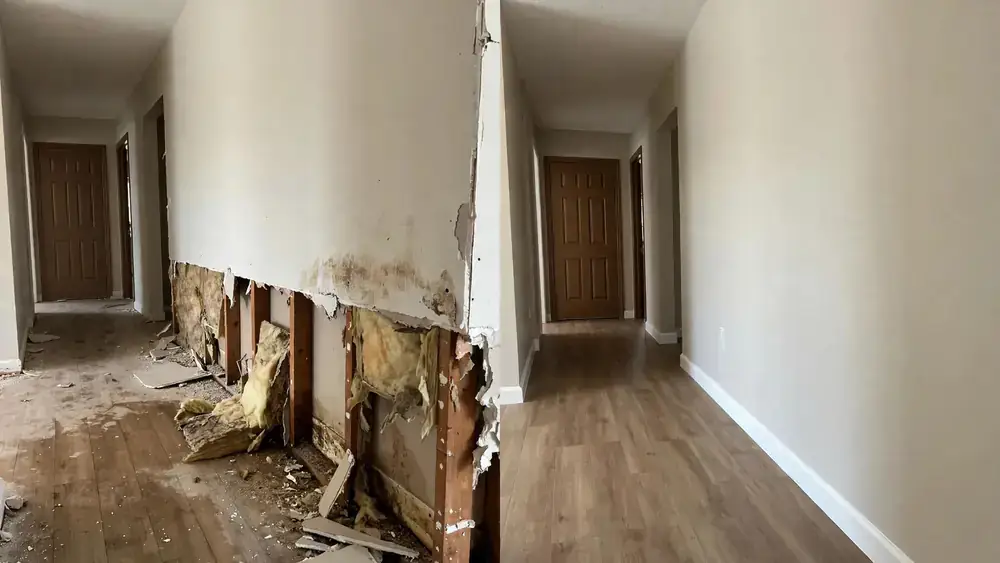
Listings describe plank flooring across the community, and marketing pages rarely say exactly what the planks are made of. That matters. Some plank products shrug off surface water but let it sit underneath on the slab or subfloor, where nothing can evaporate. Others swell at the edges within hours. A floor that looks fine on day one can begin to cup or lift at the seams a few days later.
A drying contractor will usually take moisture readings at the flooring and at the base of the walls before deciding what can stay. Sometimes a few planks must come up to let air reach what lies below. In a rental, that decision normally belongs to the owner and the insurer, so point out any lifting or hollow sound to management rather than pulling boards up yourself.
- Note soft or hollow spots
- Photograph lifted seams
- Keep furniture off wet areas
Direct-access garages at Parkside Towns
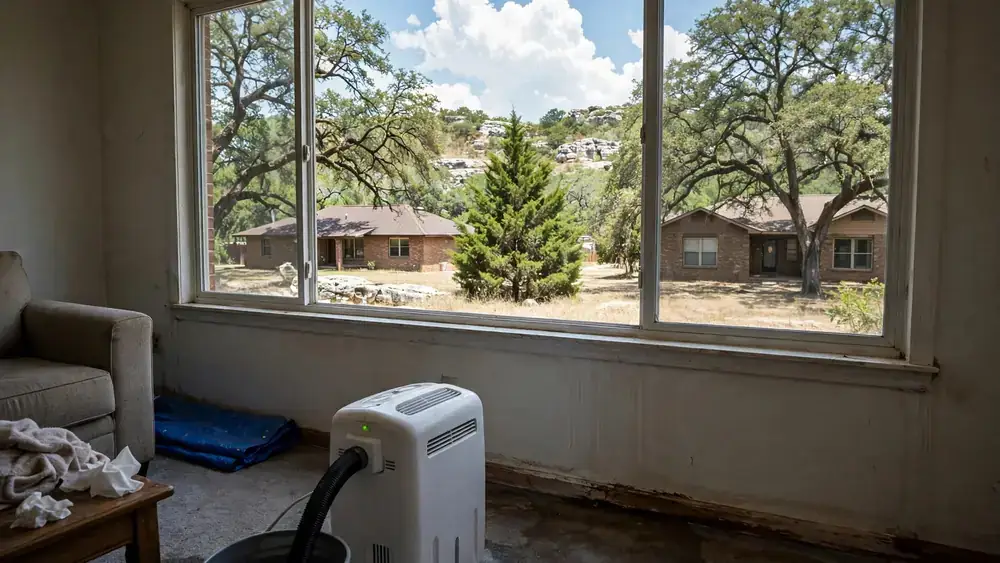
A two-car garage with a door straight into the home is one of the features most listings mention. In a water event, that garage works like a shallow basin next to your living space. Storm runoff that gets under the overhead door, or a leak from a wall shared with a neighbor, can collect on the slab and reach the interior door threshold. Boxes stored on the floor wick moisture from the bottom up, and cardboard can hold it against the wall for days.
Keep anything you care about on shelves or in plastic tubs, off the slab. After a storm, look at the bottom of the wall between garage and house. Wet drywall there is easy to miss because it sits behind stored items. If you find a line of dampness or a smell like wet cardboard, report it, since framing behind a garage wall can stay wet long after the slab has dried.
Renter belongings after a Parkside Towns leak
Your landlord's policy is written around the building, so it generally does not pay for your own things. That is the job of a renters policy, if you carry one. Call your insurer early, ask what the deductible is and ask how they want the loss documented. Listing each damaged item, with photos and approximate age, is much easier on the first day than it is three weeks later, once things have been moved around or thrown out.
Do not throw out soaked items until you have photographed them, and keep a sample of damaged carpet or fabric if your adjuster asks for one. Texas guidance draws a line between sudden accidental water damage and slow, ongoing leakage, and mold coverage is often limited, so wording in your own policy matters. This site's insurance guide walks through the general rules, but only your policy and your insurer can give you the final answer for your claim.
First hour after a leak at Parkside Towns
These steps assume you rent and that it is safe to stay inside.
- 1
Stop the source if you can
Close the fixture valve or the washer valves. Ask maintenance where your home's main shutoff is.
- 2
Report it in two ways
Call the Parkside Towns maintenance line in your lease, then send a dated message.
- 3
Protect people and power
Keep clear of sagging ceilings, and stay out of standing water near outlets.
- 4
Record the scene
Photograph the source, the wet floor, ceilings and your own belongings before moving them.
- 5
Knock next door
If the wet area touches a shared wall, let your neighbor know and ask them to check their side.
- 6
Move your belongings
Lift items to a dry room, and call your renters insurer.
Ceiling stains and air conditioning at Parkside Towns
Texas summers keep air conditioners running hard, and each system pulls a surprising amount of water out of the indoor air. That water leaves through a small condensate line. When the line clogs, the water has to go somewhere, and in a townhome it often becomes a brown ring on a ceiling or a damp patch by a closet. An AC leak is one of the more common complaints in younger buildings, because the plumbing is sound but the drains still need care.
Turn the system off at the thermostat if water is dripping, and tell maintenance what you see. A ring that dries and then returns usually points to something recurring. Take a dated photo each time so that the pattern is clear. Do not paint over it, even if you plan to move out soon. Stain blocker hides the evidence that a contractor needs and does nothing about the wet insulation or drywall above.
A community near Coit and Campbell during heavy rain
Townhome sites tend to have more roof and pavement than grass, so rain has fewer places to soak in and more of it travels across drives and through inlets. When an inlet clogs with leaves or a downspout outlet is buried, water can pond against a patio door or an overhead garage door. On a site like this, the grounds are normally the owner's responsibility, so if you see water backing up at a drain, tell the office and take a photo while it is happening.
No claim is made here about past flooding at this property, and the only reliable way to check a mapped flood zone is the FEMA Flood Map Service Center. Enter your full address there. Also remember that flood maps show creek and river risk, not every low spot on a driveway. If storm water does come inside, treat it as dirty water and wash your hands after contact. The storm and flood page explains why outdoor water calls for more careful handling.
Why a building of this age at Parkside Towns can still leak
A property from about 2014 is around twelve years old. Pipes in the walls are probably in fine shape, but many parts with shorter lives are reaching the end of their expected service. Water heaters are the obvious example. Flexible connectors, toilet fill valves, washer hoses, and the caulk around tubs and windows are others. None of these fail on a schedule, and many last far longer, but the odds begin to change around this age.
As a resident, you are often the first person to notice small changes. Rust-colored water at one faucet, a toilet that runs by itself, a little dampness in a sink cabinet or a hot water tank that ticks and rumbles are all worth a maintenance request. Small reports are easy to handle, and they create a written history. Should anything fail later, a dated note showing you raised it early can be useful to everyone involved.
Mold concerns in a closed-up Parkside Towns townhome
Modern townhomes are built fairly tight. That is good for comfort, but it means moisture from a leak does not escape on its own. The EPA advises drying wet materials within 24 to 48 hours where possible, because mold can begin growing on damp surfaces. If you travel and a leak runs while the air conditioning sits idle, a closed home can stay humid for days. A closet on a shared wall, the base of a garage wall and the area behind a washer are the usual hidden spots.
If you see or smell mold, report it in writing and avoid scrubbing or running a fan across it. In Texas, larger mold jobs fall under state licensing rules, and the mold guide explains the general thresholds. If anyone in your home has asthma or a health concern, mention that to management, and talk to your doctor about any symptoms.
How drying usually works in a Parkside Towns unit
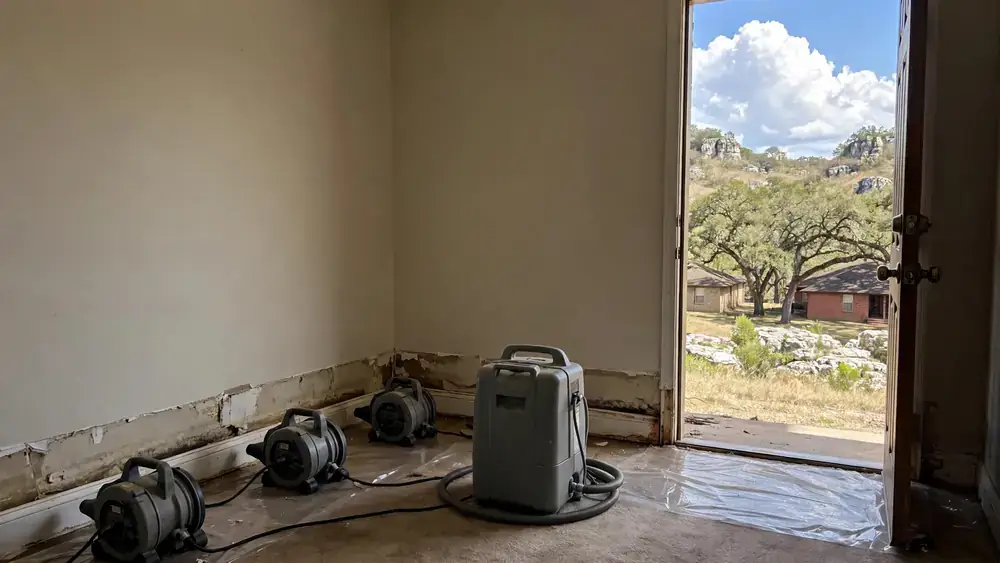
Drying a townhome begins with removing standing water, then comes moisture mapping, and only then do the fans and dehumidifiers go in. Stairs make this trickier than it is in a single-level home. Water that came through a floor can leave wet materials on two levels, and the equipment for each level needs its own power and drainage plan. You can expect some noise, and rooms will feel warm. Contractors commonly want the equipment to run without interruption, so ask before you switch anything off.
Most restoration contractors follow the IICRC S500 standard or something close to it. Ask for daily moisture readings to be shared with management, and keep a copy for yourself if you are allowed one. A simple one-room leak may dry in several days, while a larger loss takes longer. The drying time guide explains what drives that range, and the water extraction page describes the equipment.
Sewer and drain trouble in a Parkside Towns home
A slow tub and a gurgling toilet at the same time often point to a blockage further down the line, and in attached buildings a shared branch may be involved. Stop using water, and tell maintenance right away. If dirty water rises in a tub or floor drain, keep children and pets away and treat the area as contaminated. Sewage cleanup is a different job from a clean water leak, and porous materials it has touched often have to go. The sewage backup page describes the difference.
On private property, the on-site lines are normally for the owner to look after, and the city maintains the public main. If you see water bubbling up in the street or sewage surfacing in a public area, the City of Richardson takes those reports at 972-744-4111 around the clock. For anything inside your home, management is still your first contact.
Moving out or going away from Parkside Towns
Water problems often surface at the moments when nobody is watching. A week away is the classic case, and so is the gap between one resident leaving and the next arriving. Before a trip, ask whether the lease or the office has any guidance on leaving the home unattended. Set the thermostat so the air conditioning keeps running in summer, which helps with humidity. In a hard freeze, leave the heat on and follow any notice that management sends out. Ask a neighbor or friend to look in if you will be gone for long, and leave them the maintenance number. That simple arrangement can turn a three-day leak into a three-hour one.
If you are moving out and a past leak left marks behind, go through them with management during your walk-through. Bring your dated photos and messages. A clear record shows that you reported the problem when it happened, which is a fair thing to have on hand when the home is inspected. Prospective renters can also ask a sensible question before they sign: has this particular home had water damage, and what was done about it? A straight answer, plus a look under the sinks and around the water heater closet, tells you a lot about how a home has been kept.
Keep a short note on your phone with the things you would need in a hurry: the maintenance number, your building and unit, your renters policy number and the location of the water shutoff once maintenance has shown it to you. When something goes wrong, people rarely remember these details calmly, and a few lines written on an ordinary day will make the first ten minutes far less stressful for you and your neighbors.
FAQ
Questions from Parkside Towns residents
Who pays to dry out my rented Parkside Towns townhome?
The building is normally the owner's responsibility and your belongings are yours, but your lease and the cause of the leak can change that. Ask management and your insurer.
Can I hire my own contractor at Parkside Towns?
Check your lease and ask management first, since the structure is not yours. You can call about contents and for general advice.
My Parkside Towns neighbor's leak reached my side. What now?
Report it to management in writing and take photos. Both homes should be checked, as a shared wall often needs one drying plan.
Is Parkside Towns in a flood zone?
This site does not state that for any address. Enter yours at the FEMA Flood Map Service Center for the mapped result.
A ceiling stain at Parkside Towns has dried. Is it fixed?
Not necessarily. Stains can dry between leaks, so report it and ask for moisture readings above the stain.
What should I keep off the garage floor at Parkside Towns?
Paper records, clothing and anything in cardboard. Shelves or plastic tubs keep them above a thin layer of water.
Sources and citations
- [1]Apartment Finder: Parkside Towns
- [2]REBusinessOnline: Parkside Towns opens in Richardson
- [3]Texas Department of Insurance: water damage and mold coverage
- [4]Apartments.com: Parkside Towns
- [5]EPA: A brief guide to mold, moisture and your home
- [6]City of Richardson: 24/7 Response Center
- [7]IICRC S500 water damage standard