
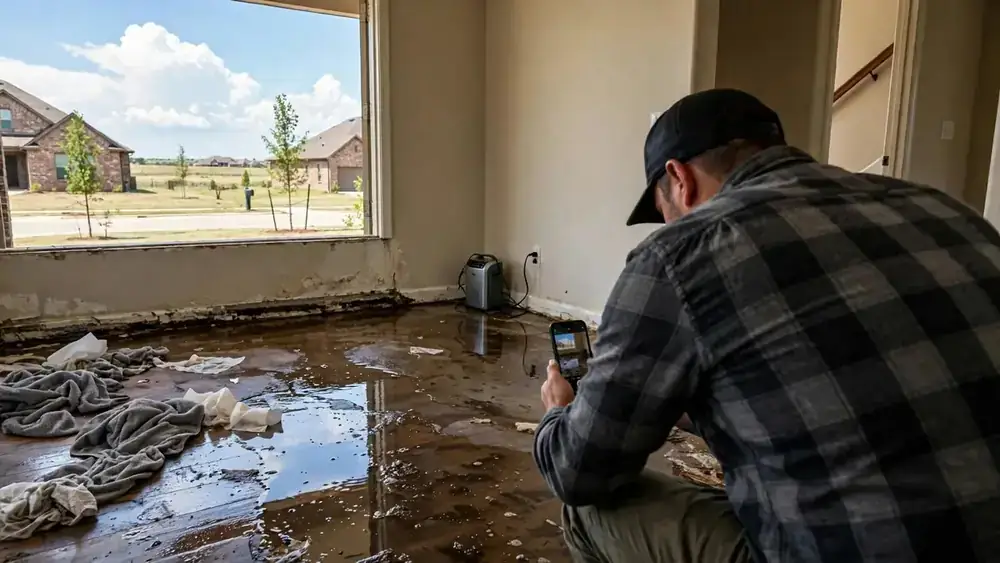
Key facts: Texas insurance
Common water losses and how they usually fall
Based on Texas Department of Insurance guidance [1]. Policies vary.
| What happened | Usually | Why |
|---|---|---|
| Burst pipe | Covered | Sudden and accidental |
| Toilet overflow | Covered | Sudden and accidental |
| Broken washer hose | Covered | Sudden and accidental |
| Slow leak under a sink for months | Not covered | Gradual damage |
| Rising storm water | Not covered by a home policy | Needs flood insurance |
| Mold from a covered leak | May be covered | Follows the cause, within any limits |
| Mold from a gradual leak or flood | Generally not | Follows the cause |
Sudden versus gradual: the key distinction
The Texas Department of Insurance explains that most home and renters policies cover sudden and accidental water damage, with a burst pipe, toilet overflow or broken washer hose as its examples, but usually not gradual leaks [1]. This is where disputes start. An adjuster looks for signs such as layered stains or rot that suggest long-term moisture.
Slab leaks are a gray area. They may have been running for a while before being discovered. Ask your agent how your policy treats them, and whether it pays to access the pipe. Dated photos, the plumber's report and your first notice to the insurer help to establish the timeline.
Flood is a separate policy
Standard home policies do not cover floods [1]. If rising water entered your Richardson house, you need flood insurance, generally through the National Flood Insurance Program or a private insurer. Most policies have a 30-day waiting period [1], so it pays to plan before spring storms. TDI notes that NFIP policies require a claim within 60 days [2]. Other policies have other deadlines, and some allow one year or more, so read your own.
How to handle the claim
- 1
Report quickly
Call your insurer or agent as soon as the source is stopped.
- 2
Protect the property
Stop further damage. Your insurer may deny a claim if you do not.
- 3
Record everything
Photos, video, a list of damaged items and the dates.
- 4
Keep the evidence
Hold on to failed parts, and do not throw out items until they are recorded.
- 5
Save the paperwork
Keep receipts, the plumber's report and the drying log.
- 6
Read before signing
Understand any contract before you sign it, and ask questions.
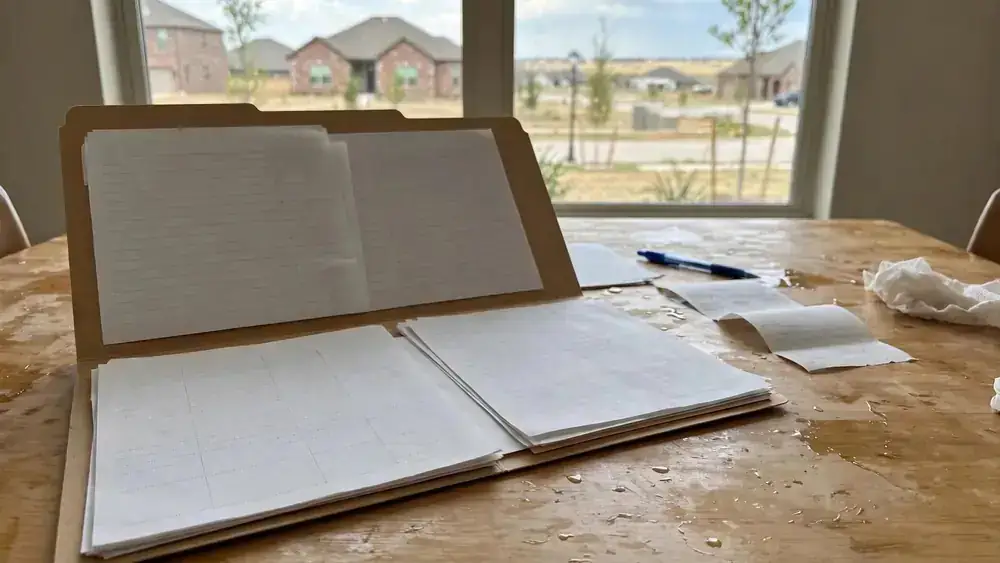
Working with your adjuster
Walk the property with the adjuster if you can. Point out rooms next to the source and anything that is hard to see. Share the moisture map and drying log. If you disagree about the scope of work, ask for the reason in writing and share it with your contractor, who can add to the record.
You choose who does the work. Your insurer may recommend firms, but you can usually use another. Be careful about anyone who offers to deal with everything if you sign over rights, and read any such form closely. TDI also offers help if you have a complaint about how a claim was handled.
Records worth keeping from day one
- The date and time you found the water
- Photos before, during and after
- A room-by-room list of damaged items
- The plumber's written cause of loss
- Moisture readings and a drying log
- Names and dates of everyone you spoke to
- Copies of every contract and change
Renters and condo owners
Renters insurance generally covers your belongings and not the building. If you rent in Richardson, tell your landlord, then your insurer. For condos and townhomes, your association's master policy may cover the structure up to a certain point, while your unit policy covers the rest. Ask for a copy of the relevant section. Water moving between units may involve several insurers, so keep your own records from the very start.
Where the deductible and your limits fit in
Every claim runs through your policy's deductible and limits, and in Texas many policies use a separate wind and hail deductible, often written as a percentage of the insured value. Check your declarations page before you need it. Mold may have its own sublimit. Personal property may be paid at replacement value or actual cash value, depending on your policy. Ask your agent which applies to you, and what you would need to show.
Some owners decide not to file for a very small loss. That is a personal decision, and your agent can explain how a claim could affect you. Get the facts first. Do not make that choice during the first hour, while you are still working out how far the water reached. Small leaks can turn out larger than they look.
Why the wording of your policy matters
Most Texas homeowners have a form that spells out covered causes of loss, exclusions and conditions. Words such as "sudden", "accidental", "continuous" and "repeated" matter a great deal. Read the water section, the mold section and the conditions that describe your duties after a loss. These usually include prompt notice, protecting the property and giving the insurer a chance to inspect.
If you do not understand a term, ask your agent or your insurer to explain it, and get the answer in writing where possible. TDI has plain-language consumer guides and a help line, and it takes complaints if you think a claim has been handled wrongly. Keep a note of each call, with the date and the person's name.
What happens if the claim is disputed
If your claim is denied or paid in part, ask for the reason in writing, citing the policy language. Your plumber's report, photos and moisture logs may support a different view, so share those. You can ask for a re-inspection. Many policies have an appraisal process for disputes about the size of a loss. You can also file a complaint with TDI, or talk to a lawyer or a licensed public adjuster.
Time limits apply to all of this. Some policies have a one-year filing deadline unless you can show good cause for the delay, according to TDI. So do not let a problem sit. A prompt report is one of the simplest things that you can do to protect your position, and it is entirely under your control.
Preparing before anything goes wrong
Take a video of each room in your home, opening closets and cabinets. Store it online. Keep a copy of your policy somewhere you can reach it from your phone. Note the number for your claims department. Review your coverage once a year, ask about sewer backup and flood cover, and think about what your home would need if a big leak happened tomorrow. A half hour of preparation makes a stressful week far easier.
FAQ
Insurance questions
Will my rates go up?
That depends on your insurer and claim history. Ask your agent before filing if you are unsure.
Should I wait for the adjuster before drying?
No. Protect the property and record what you do. Waiting can make damage worse.
Does insurance cover mold in Texas?
If mold comes from a covered event, it can be. Mold from gradual leaks or floods generally is not.