Key facts: Sewage Backup Cleanup
- Richardson maintains the main sewer line; a stoppage between a city cleanout and the house is the owner's to clear [1].
- The city takes sewer problem reports around the clock at 972-744-4111 [2].
- Sewage is Category 3 water under the IICRC S500 framework [3].
- Many Richardson ranches from the 1950s to early 1970s have cast-iron drain lines [4].
Why sewage is handled so differently
Sewage is Category 3 water [3]. It contains bacteria, viruses and other things you do not want on your skin or in the air. It also soaks into everything porous that it touches. Those two facts make a sewage job a removal-and-sanitizing job rather than a simple drying job. A small backup in a tiled bathroom is one thing; a backup across carpet and drywall is quite another.
Anyone with a weakened immune system, as well as small children and older relatives, should stay well away from the affected area until it has been cleaned. Pets should be kept out too. Do not use fans in the room before the area is treated, as they can spread contaminated droplets through the house.
First moves when sewage comes up
- 1
Stop all water use
No toilets, showers, washing machine or dishwasher. Every gallon you send down may come straight back up.
- 2
Keep clear
Close doors to the affected rooms and keep children and pets away.
- 3
Watch the power
Do not step into water near outlets or appliances.
- 4
Report or call
If several drains are affected, or your neighbors have the same problem, report it to the city 24/7 line at 972-744-4111.
- 5
Locate the yard cleanout
A city-installed cleanout near the property line helps show where the blockage is. Do not force it open if it is under pressure.
- 6
Photograph and call
Take photos, then speak to a plumber and a cleanup contractor.
Who owns the blockage in Richardson
The city FAQ says it maintains the main, and that a stoppage between a city-installed cleanout and the house falls to the owner [1]. Our [sewer guide](/guides/who-fixes-a-sewer-stoppage-in-richardson/) goes through how to tell which applies.
| Where the blockage is | Who deals with it | What to do |
|---|---|---|
| In the main line in the street or alley | City of Richardson | Call 972-744-4111 |
| Between the city cleanout and the house | The property owner | Call a licensed plumber |
| Inside the house, on one fixture | The property owner | Call a licensed plumber |
Why Richardson drains back up
Age is the first thing to consider. Many of the city's older ranches were built with cast-iron drains [4], which roughen and scale inside as they corrode, catching whatever comes down. Clay-soil movement can crack or misalign the buried lines, and the same mature trees that make older neighborhoods attractive send roots toward any weeping joint.
Everyday habits make it worse. Grease from kitchens, wipes labeled flushable and other debris catch on rough pipe. A heavy storm can also add to the load if water finds its way into the sewer system, and a backup that appears during a storm is worth mentioning to the city and your plumber.
Early warnings from your drains
These usually appear before anything comes up.
Several drains running slow
One slow sink is local. Several at once suggest the main line from the house.
Gurgling toilets
Air being pushed through water often means a partial blockage downstream.
Water in the tub after flushing
That is a classic sign: the lowest fixture is taking the backup.
Sewer smell indoors
A dried trap may explain it, but a damaged line could as well.
How a Category 3 cleanup works
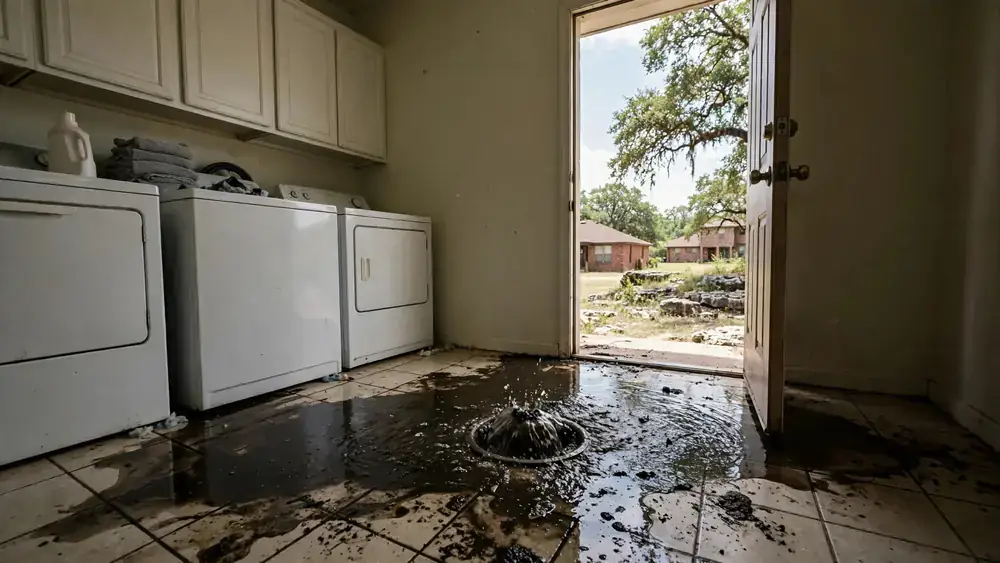
Cleanup starts with containment and protection. Crews wear suitable gear and may set plastic barriers and air filtration so contaminated particles do not spread. Liquid and solids are removed first. Next, porous materials that were touched are taken out and bagged: carpet, pad, the lower part of affected drywall and insulation.
Hard surfaces are then cleaned and treated with a disinfectant, and they may be cleaned more than once. Only after that does drying begin, using the same equipment as a clean-water job but with attention to not spreading contamination. Ask how the air will be handled, and how they will show that cleaning has been effective.
Afterward, some contractors offer testing to confirm the area is clean. If you have vulnerable people in the house, this is worth asking about. Rebuilding comes after the area is dried and verified.
What usually stays and what usually goes
| Material | Usual outcome |
|---|---|
| Carpet and pad | Removed and discarded |
| Drywall touched by the water | Cut out above the wet line |
| Wall insulation | Removed |
| Tile and sealed concrete | Cleaned, disinfected and dried |
| Solid wood trim | Sometimes kept, after cleaning |
| Particleboard cabinets | Usually removed if soaked |
| Upholstered furniture | Usually discarded if soaked |
Bathroom overflows
A toilet overflow is not always a full sewage job
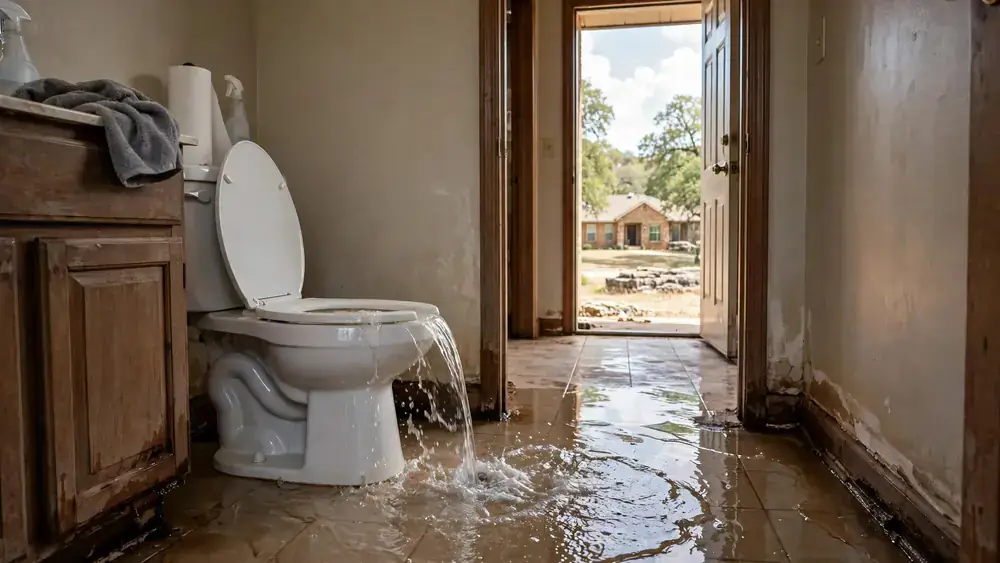
A toilet overflow on tile, caught right away, is often small enough to deal with quickly, and the source may be a simple clog. But water that has passed under a vanity, along a wall or into a ceiling below needs a closer look.
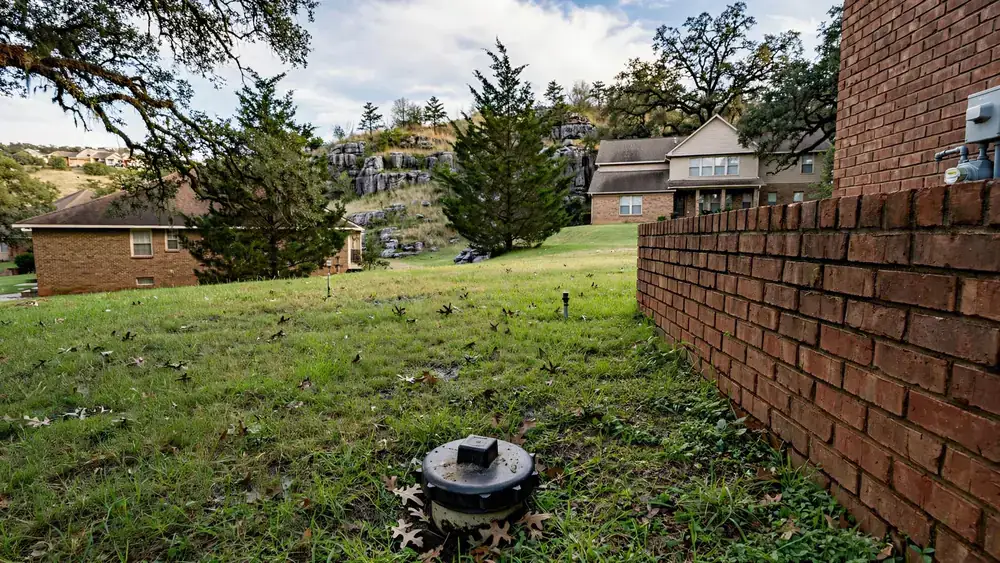
The sewer cleanout, usually outside near the property line, is an important reference point. Knowing where yours is lets a plumber or a city crew work out quickly which side of it the blockage sits on.
What not to do
- Do not use bleach as a quick fix for carpet
- Do not pour chemical drain cleaner into a backed-up line
- Do not run a household vacuum over any affected area
- Do not run fans before the area has been treated
- Do not leave contaminated materials in the house for days
- Do not keep flushing to see whether it has cleared
Cleaning up a small backup yourself
For a small spill on a hard floor, you may be able to clean up with care: rubber gloves, boots and eye protection, plenty of ventilation, and a disposable mop or towels. Wash the surface with detergent and water, disinfect it according to the product label and wash yourself afterward. Keep tools and clothes away from the rest of the household laundry.
Stop and call if it has reached carpet, walls or a lower floor, if the amount is more than you can comfortably clean, if anyone in the house is vulnerable, or if you are not sure how far it has spread.
Insurance and sewer backups in Texas
Standard policies do not always cover sewer or drain backups. Many insurers offer it as an added endorsement, so check your declarations page. Texas Department of Insurance guidance draws a distinction between sudden damage, gradual damage and floods [5], and the source of a backup can matter. If storm water is involved, a flood policy may come into play.
Report the loss quickly, record everything and keep the plumber's findings. The cause, written down by the person who cleared the line, can decide how the claim is treated. If the cause is in the city main, ask the city how to report that and what information it needs. Keep receipts.
Preventing the next backup
If roots or scale caused the blockage, a camera inspection will show the condition of the line. A clean line may only need periodic attention. A cracked or offset section may need repair. Your plumber may discuss options for lining or replacing, as well as permit requirements. A backwater valve can stop sewage flowing back from the main in some situations; ask whether your house is a suitable candidate.
At home, keep grease out of the kitchen sink, and throw wipes in the trash. Know where your cleanout is, and keep it free of plants and mulch. If you replace old fixtures, ask your plumber to look at the drain while the area is open.
Rental and commercial property in Richardson
Landlords and tenants should deal with a backup quickly and in writing. Tenants should tell the landlord or manager straight away, and owners should get the area cleaned before anyone returns to it. In multi-tenant buildings a blockage may affect several units, so all parties should talk early. In offices and shops near Central Expressway and along the Telecom Corridor, the same Category 3 approach applies, with added attention to keeping people out of the affected area.
Why backups appear where they do
Sewage follows gravity. When a line blocks, waste rises to the lowest open point in the system, which in a slab ranch is usually a tub, a shower or a floor-level toilet. That is why so many people first see the problem in a bathroom they were not using. In a two-story house, upstairs fixtures may seem fine while the ground floor fills, since the waste from above is what is coming up below.
Laundry drains are another common point. A washing machine empties quickly, and a partial blockage that coped with a sink may not cope with that surge. If the backup appears exactly when the washer drains, stop the cycle and do not run it again. That timing is a valuable clue for your plumber, as it suggests that the problem is in the main line and not in the fixture.
The health side, in plain words
Sewage can carry bacteria, viruses and parasites. The usual route into the body is hand to mouth, or through cuts and scrapes. So the simple rules matter: keep your hands away from your face, cover cuts, wash thoroughly with soap, and wash clothes separately. Take off boots at the door so that you are not carrying contamination through clean rooms. If anyone develops a fever or stomach illness after cleanup, tell a doctor what they were exposed to.
Children's toys that were touched should be washed and disinfected if they are hard plastic, and discarded if soft. Food left out in the area should go. Hard kitchenware may be washed and sanitized. If a backup has reached a kitchen, take extra care with cabinets and counters, and be sure that they have been cleaned before anyone prepares food there.
Containment and air in the rest of the house
One aim of a professional cleanup is to keep a problem in one room from becoming a problem in every room. Closing doors helps. Plastic barriers help more. Air scrubbers with HEPA filters can capture particles during tear-out, and negative air setups can stop air moving from the dirty area into clean ones. Ask whether your HVAC system should be off during this stage, and whether any return vents are close to the affected area.
Odor is not the same as contamination, but it is what people notice. It normally fades once the source materials are gone and the area is clean and dry. If a smell lingers after a job is finished, something may have been missed, such as wet material behind a baseboard or a dried trap. Tell the contractor, and do not cover it with fragrance.
Dishwashers, disposals and other kitchen causes
Kitchen drains are often blamed on fixtures, but the deeper cause is usually grease. Warm grease runs down the drain as a liquid, then sets on the cool walls of old pipe. Over years it narrows the line. Food waste put through a disposal adds to it. When a kitchen backs up into the dishwasher or a sink next to it, the problem usually lies in the kitchen branch and not the main line, and it comes with gray water and food debris instead of raw sewage.
That difference matters to the cleanup. Water from a kitchen drain is usually handled as Category 2, though it can get worse as it sits. Tell the contractor where it came from and how long it was there. A plumber can clear the branch, and keeping grease out of the drain is the simple long-term fix.
Older drains and repeat stoppages
If you have had the line cleared twice in a year, it is time to look inside. A camera will show whether you are dealing with roots at a joint, a belly where the line has sagged, an offset between two sections or scale that keeps catching debris. A belly holds water and waste, and clearing will not change the shape of the pipe. An offset may keep on catching paper however often it is cleaned.
Your plumber can talk through options, from spot repairs to lining or replacing. These often involve permits, and they may involve digging near trees, drives or a neighbor's fence. Ask for the video and the distance markers, so that you can get a second opinion if you want one. Clear evidence is your best protection against both unnecessary work and repeat cleanups.
After the cleanup: what a finished job looks like
A finished job should leave you with dry, clean surfaces and no sewage smell, and a record of what was removed and cleaned. Ask for final moisture readings and a description of the disinfecting steps. If samples were taken, get those results. Before rebuilding, look into the wall cavities yourself, if they are still open. They should be clean and dry, with no stained material left behind.
Then deal with the cause. Reopening a bathroom after a cleanup without fixing the blockage is how you end up with the same mess a few months later. Keep the plumber's report with the cleanup paperwork, and note the date. If you sell the house, or the problem returns, you will know exactly what was done, by whom and why.
What to tell the contractor on the call
Say where the sewage came up, how far it spread and how long it has been there. Mention flooring types, whether it reached any walls and whether the blockage has been cleared. If it has not, say so, as cleanup should not begin while the line can still back up. Mention anyone at home who is very young, elderly or unwell. If the house is older, say so, since asbestos or lead may affect how materials can be removed.
A contractor can then tell you what to expect and what to do while waiting. Ask how contaminated materials will leave the house, and how the route to the door will be protected. Hallways and other clean rooms should not get dirty because of the job. Ask too about the order of work, since drying equipment should not start up until the worst has been removed and the surfaces treated.
A short note on private lines and pumps
Most Richardson homes connect to the city sewer. If your property has an unusual arrangement, such as an old private line shared with a neighbor, tell your plumber at the outset. Grinder pumps and lift stations appear in a few commercial or low-lying settings. These have their own alarms, and a failed pump can produce a backup that has nothing to do with the main at all. When an alarm sounds, stop using water and call the party that maintains the pump.
Keeping the bathroom usable
If only part of the house is affected, ask the plumber which fixtures are safe to use after clearing. Until then, plan on using a neighbor or a nearby facility.
Gray areas: when is it sewage and when is it not?
Not every dirty drain is a Category 3 event. A sink backing up with soapy water or a washing machine overflow is usually treated as gray water at first, though it gets worse with time. Anything from a toilet, a main line or a floor drain should be treated as sewage until somebody has shown otherwise. Color and smell are poor guides, since clear water can still carry contamination.
When in doubt, take the cautious view. Keep people off the affected floor, and tell the contractor what you saw and when you saw it. They can then decide on the right level of protection and cleaning. If the water has been sitting for more than a day or two, expect it to be handled as the worse category, because warmth and time let bacteria multiply on any wet material it touched, whatever the source. Starting cleanup on the same day is the simplest way of keeping that from happening.
FAQ
Sewage backup questions in Richardson
Who is responsible for a sewer backup in Richardson?
The city maintains the main. A stoppage between the city cleanout and your house is yours to clear, according to the city FAQ.
Who do I call at night for a sewer problem?
If the problem may be in the main, the city 24/7 line is 972-744-4111. For a problem on your side, call a licensed plumber.
Is it safe to stay home after a sewage backup?
Keep away from the affected area. If it is large, or anyone is vulnerable, staying elsewhere until the area has been cleaned is the safer choice.
Can carpet be cleaned after sewage?
It is normally removed and discarded along with the pad, because it cannot be reliably sanitized.
How long does cleanup take?
A small tiled area may be done quickly; larger jobs take longer as materials are removed, disinfected and dried. Ask for a plan.
Does insurance cover a sewer backup?
Often only if you have a backup endorsement. Check your policy.
Why does my tub fill when I flush?
A tub filling after a flush suggests a blockage farther down the main line from the house. Stop using water and call a plumber.
Can I use bleach to clean sewage?
For a small hard-surface spill, a labeled disinfectant is used after washing. Bleach will not fix soaked carpet or drywall.
Sources and citations
- [1]City of Richardson: Water utility operations FAQ
- [2]City of Richardson: 24/7 Response Center
- [3]IICRC: S500 water damage restoration standard
- [4]Home inspection guide for Richardson
- [5]Texas Department of Insurance: Water damage and mold coverage
- [6]US EPA: A brief guide to mold, moisture and your home