Key facts: Sewer responsibility
The rule in one paragraph
The City of Richardson maintains the main sewer line. If a stoppage is between a city-installed cleanout and your house, it is yours to clear [1]. So the question "who pays for the plumber" often comes down to the side of the cleanout that the blockage is on. The city's 24/7 Response Center takes sewer problems at 972-744-4111 [2], and that is the right first call if you suspect the main.
How to work out which side it is on
If you are unsure or unwilling to open it, call the city and explain. It is better not to force anything.
- 1
Stop using water
Otherwise you are adding to the backup.
- 2
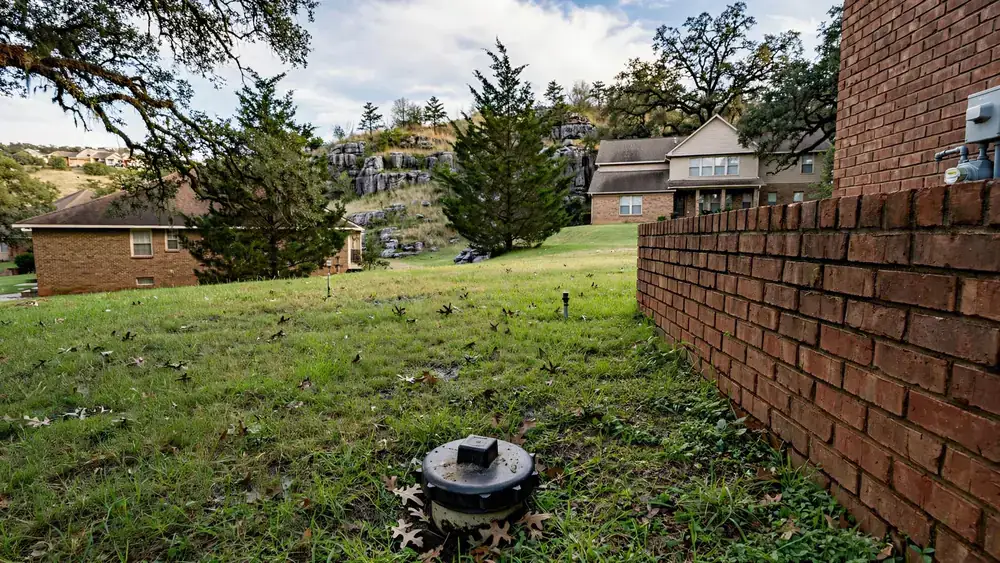
Find the cleanout
Look for a capped pipe near the property line, easement or alley.
- 3
Look, carefully
If it is safe to do so, and with gloves on, check whether the cap shows signs of backup. Stand aside when opening, as it may be under pressure.
- 4
Read the result
Sewage standing in the cleanout suggests the blockage is downstream, toward the main. A clear cleanout suggests it is between there and the house.
- 5
Ask the neighbors
If next door has the same problem, the main is more likely.
- 6
Call the right party
Call the city for a suspected main problem, or a licensed plumber for your own line.
Reading the situation
| What you see | Likely location | Call |
|---|---|---|
| One sink slow | That branch | Plumber |
| All drains slow, cleanout clear | Between the cleanout and the house | Plumber |
| Cleanout overflowing | Toward the main | City 24/7 line |
| Neighbors affected | Main | City 24/7 line |
| No city cleanout found | Unclear | City, to ask |
What if there is no cleanout?
Some older properties may have a cleanout hidden under plants or soil, or may not have a city-installed cleanout in the expected place. Try the back fence and alley as well as the front. If you cannot find it, call the city and ask how they would like you to proceed. Have a plumber note what they find, in writing. Installing a proper cleanout during a repair may make future problems much easier to deal with.
What the plumber will do
A licensed plumber [4] will usually clear the line with a cable or water jet, and may then run a camera. The video shows roots, cracks, offsets or scale, as well as the distance to the problem. Ask for a copy. It is useful for your insurer, and it tells you whether you are dealing with a one-off or a recurring problem.
In older Richardson streets the sewer line may run to the rear alley, so the plumber may need access through a back gate. Keep access clear for them. If the camera finds a problem at the main connection, ask how to pass this on to the city.
Meanwhile, inside the house
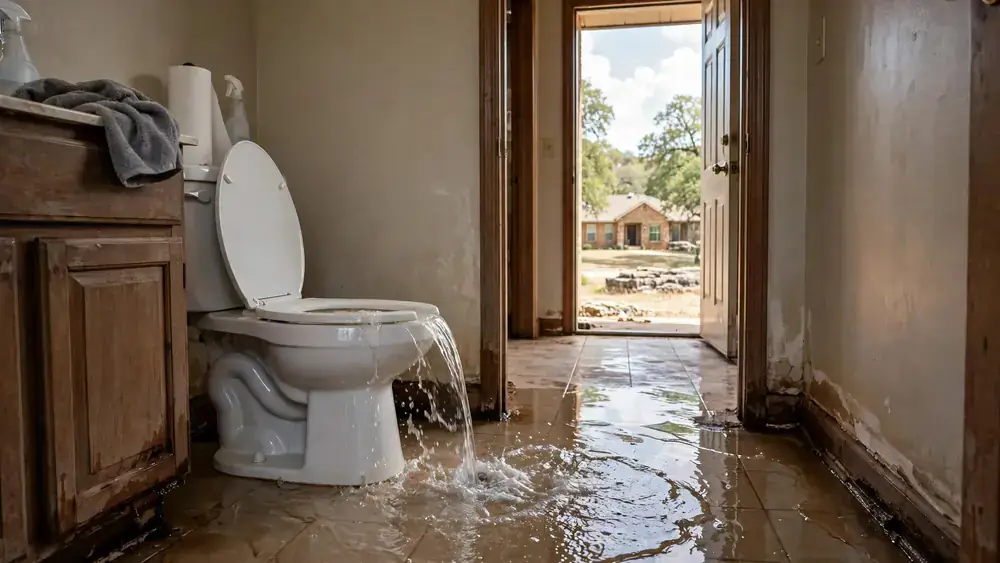
Sewage is Category 3 water [3] and it should be treated as contaminated. Keep children and pets away, stop water use and do not run fans until the area has been treated. For more than a small spill on a hard floor, read the sewage cleanup page. If the backup came from the main, record everything anyway, and ask the city how to raise your concerns.
Check your insurance as well, because backup cover is often a separate endorsement. Report quickly, and keep the plumber's invoice with the cause written on it. Do this even if you think the city is at fault, because your insurer may want to know. Renters should tell their landlord at once.
Habits that reduce stoppages
- Throw wipes in the trash, even if labeled flushable
- Keep grease out of the sink
- Know where your cleanout is and keep it clear
- Have roots checked if you have large trees near the line
- Consider a camera inspection when buying an older home
Why the cleanout is such a useful landmark
A sewer cleanout is simply an access point to the line. It lets a plumber or a crew insert equipment, and it gives everyone a place to look. In Richardson the city FAQ uses a city-installed cleanout as the dividing line for stoppages, which is a clear and practical rule. If you do not know where yours is, spend ten minutes looking for it this weekend, when nothing is wrong and the grass is dry.
Common places include the front yard near the street, the rear of the lot near the alley and alongside a side fence. Look for a round cap in the soil, often green, black or concrete-colored, or look at where other homes on your street have theirs. Old caps can get covered by lawn or mulch. A metal rod gently pushed into the soil may help you to find one. Do not dig near marked utility lines without calling 811 first.
What the city crew does when it comes out
If you report a possible main problem, a city crew may check nearby manholes to see whether the flow is normal, and clear the main if it is blocked. They may also check for a backup at your cleanout. If the main is flowing, they will generally tell you that the problem is on your side and that you need a plumber. Be ready to show them where the cleanout is, and keep dogs inside.
Take a note of the date, time and what you were told. If water or sewage reached your home because of a problem on the city side, ask how to report that properly. Your insurer may want the same information. Staying calm and keeping notes is much more useful than arguing at the curb at midnight.
Buying a home with an older sewer line
A sewer camera inspection is one of the most useful things that a buyer in Richardson can pay for. A normal home inspection usually does not cover the line under the yard. A short video can show roots, cracks, bellies and offsets, and your plumber can talk you through what is minor and what needs attention. Ask the sellers about any recent clearing, because a freshly cleaned line can look better than it is.
FAQ
Sewer responsibility questions
Does the city pay for my plumber?
Stoppages between the cleanout and house are the owner's responsibility. Ask the city about anything you believe was caused by the main.
Can I call the city at night?
Yes. The Response Center line, 972-744-4111, is listed as a 24/7 service.
Are roots my problem?
On your side of the cleanout, generally yes. A plumber can show you where they are.