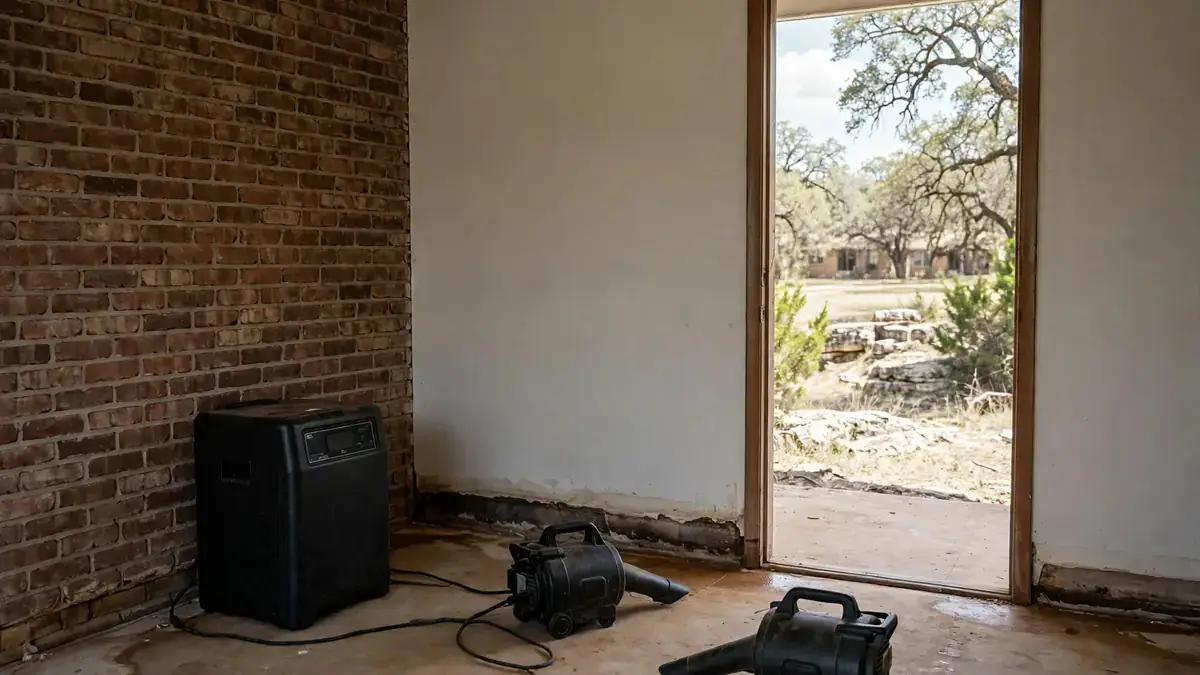
Key facts: Water Extraction and Drying
Why the first two days decide so much
Water does not sit still once it is inside. It moves sideways under baseboards, climbs drywall by wicking and sinks into the carpet pad, the gaps around tile and the seams of a floating floor. The longer it stays, the further it goes, and each extra foot of wet wall is another foot that may need cutting out later.
The number most people hear is the EPA figure: wet materials should be dried within 24 to 48 hours to help prevent mold growth [1]. That is a target for drying, not a promise that nothing grows before it, and it is a good reason to treat a Friday night leak as a Friday night job. Waiting for a weekday because the water seems to have stopped is one of the most common ways a small loss becomes a large one.
Richardson houses add a wrinkle. Many sit on concrete slabs, and concrete holds moisture for far longer than the surface suggests. A slab can feel dry to a bare hand while a meter still reads it as wet. New flooring laid over that slab can trap the moisture and fail months later, which is why the end of drying should be a number and not an impression.
What extraction actually involves
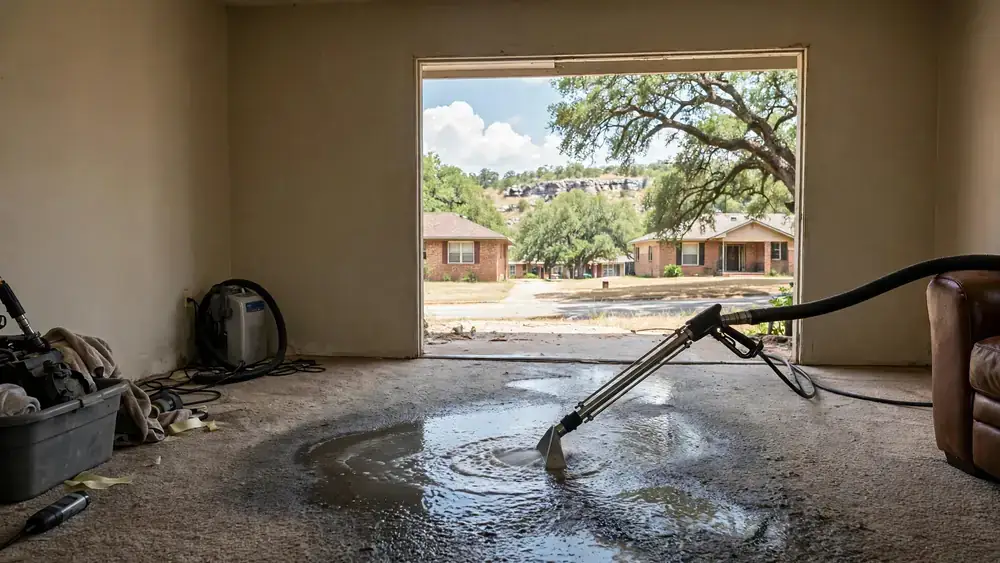
Extraction is the physical removal of liquid water, and it comes first because it is by far the fastest way to take water out of a building. Pulling liquid out with a pump or a truck-mounted or portable extractor removes in minutes what would take days to evaporate. Deep standing water may start with a submersible pump, followed by wand extractors on carpet and hard floors.
On carpet, a weighted extraction tool may be used to press water out of the pad. Whether the pad stays is a separate decision, and for anything beyond clean water the answer is usually no. On tile and sealed concrete, squeegees and wands do most of the work. On hardwood, specialist mats can pull water up through the boards in some cases, though cupping may already have started.
Good extraction also includes moving contents, because furniture standing on wet carpet stains and traps water beneath it. Ask how contents will be handled, where they will be kept and how they will be listed. A short inventory with photographs protects everybody when a claim is open.
Three categories of water and what each usually means
The S500 standard classifies water by how contaminated it is [2]. Clean water does not stay clean: it degrades as it sits and picks up what it touches.
| Category | Typical source | What it often means |
|---|---|---|
| Category 1, clean | Supply line, sink overflow, rain from a roof leak caught early | Most materials can often be dried in place |
| Category 2, gray | Washing machine or dishwasher discharge, some condensate | Pad usually goes; cleaning and sanitizing added |
| Category 3, contaminated | Sewage, floodwater, water left standing for a long time | Porous materials usually removed; protective gear required |
How structural drying works
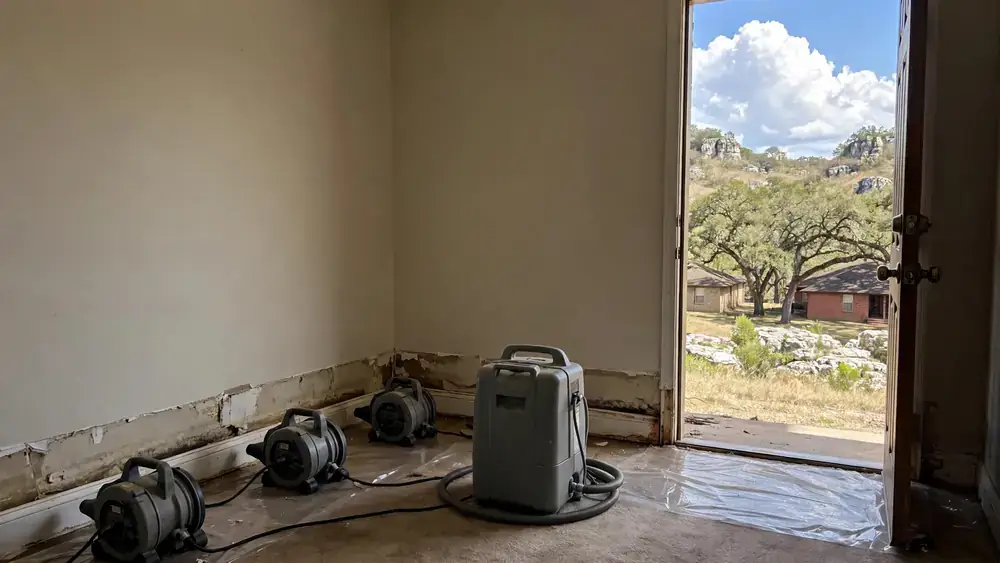
Once the liquid is gone, what remains is water inside materials. Drying moves that water in three stages: warm the air and materials so moisture evaporates, keep air moving across wet surfaces so it keeps leaving them, and remove the damp air by dehumidifying it or venting it outside. Skip any one stage and the room just stays humid.
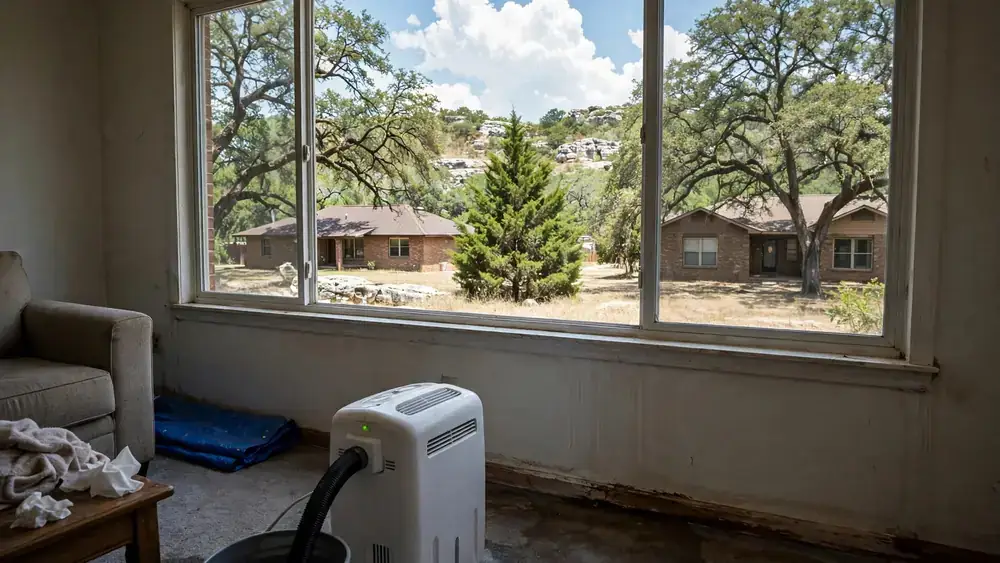
Air movers sit low and angled along the walls to sweep air across wet surfaces. Dehumidifiers pull water from that air and pump it to a drain. Numbers vary with the size of the loss, so a good contractor sets equipment by calculation and readings, not by habit. More machines are not automatically better, and too much airflow with too little dehumidification can push damp air into dry rooms.
Dense materials need extra help. Plaster, hardwood and concrete give up water slowly, so wall cavities may be ventilated through small holes hidden behind the baseboard, and floors may need mats. Air conditioning in the house may help or hinder depending on the season, so ask before changing the thermostat.
Keep doors and windows as the contractor sets them. In a North Texas summer, an open window lets humid air straight into a room being dehumidified, and in winter it can drop the temperature enough to slow evaporation badly.
How a drying job usually runs, day by day
- 1
Inspection and mapping
Find the source, confirm it has stopped, and map wet areas with moisture meters and thermal imaging where useful. Thermal cameras show temperature differences, not water, so a meter should confirm them.
- 2
Setting a dry standard
Take a reading from an unaffected area of the same material. That reading becomes the target for the wet areas.
- 3
Extraction and removal
Remove liquid water, then take out materials that cannot be dried, such as saturated pad or wall sections affected by contaminated water.
- 4
Equipment placement
Place air movers and dehumidifiers according to room size, materials and how much water they took on.
- 5
Daily monitoring
Record temperature, humidity and moisture levels at the same marked points every day, and adjust the equipment as they change.
- 6
Dry verification
Compare final readings to the target. Equipment should come out only when the numbers match, and you should get a copy of the log.
Moisture readings you should ask to see
Pin meters measure moisture between two probes pushed into a material. Pinless meters read through the surface without marks. Hygrometers measure the temperature and humidity of the air. A competent technician will use more than one, and should be happy to show you the screen.
A drying log is a simple record: date, location, material, reading, and the equipment running. It is also the single most useful document in a water claim, because it shows the insurer why the drying took as long as it did. Ask for it to be kept daily, and ask for a final copy before the last machine leaves.
Hidden moisture
Where water tends to hide in a slab-on-grade ranch
Local inspection notes describe many of Richardson's 1950s to early 1970s houses as slab-on-grade ranches with brick veneer over wood framing [4]. Water that reaches the bottom plate of a wall can travel along it, unseen, into the room next door. The gap behind brick veneer can also hold moisture out of sight.
Check the far side of any wet wall, closets that share it, cabinets on the same run, and the edges of rooms where flooring meets the wall. Kitchens are especially good at hiding water under the toe kick, so ask how the space behind cabinets will be checked.
What you can safely do before anyone arrives
- Close the leakClose the fixture valve or the main shut-off.
- Protect yourselfStay out of water near outlets, and only switch off breakers you can reach while dry.
- Record itTake wide photos, then close-ups, before anything is moved.
- Lift and blotRaise furniture on foil or wood blocks and mop up clean water if it is safe to do so.
- Leave contaminated water aloneDo not try to clean sewage or floodwater yourself without proper protection.
What to leave to a professional
A household wet vacuum and a fan help with a small clean spill. These jobs are different.
- Any water near live electrical panels or wiring
- Sewage or floodwater of any amount beyond a small spill
- Lifting glued floors, where older adhesive and tile may need testing for asbestos
- Opening walls in a house built before lead paint rules changed
- Mold growth over a large area
Why household fans are not enough
A box fan moves air, but it does not remove water from it. In a closed room, fans alone turn liquid in the floor into humidity in the air, and that humidity then settles into other things. Without dehumidification the room can feel better while the structure inside the walls stays wet.
That false sense of progress is why homeowners are often surprised to find odor or mold some weeks after a leak that seemed sorted. If water went beyond the surface, use a meter to find out. Many contractors will check it as part of the first visit, so ask what that visit includes.
Living in the house while it dries
Drying equipment is loud, runs day and night and adds heat. Most families stay in the house during a clean-water job if bathrooms and the kitchen remain usable, though a bedroom full of air movers is hard to sleep in. Sewage, major electrical problems, ceiling collapse or heavy containment are different and may mean leaving for a while.
Keep the machines running even if the noise is tiresome. Turning them off at night can extend the job by slowing the steady evaporation that the plan is counting on. If a breaker trips or a machine stops, tell the contractor and do not move the setup yourself.
Older Richardson houses: extra checks before demolition
Some of the houses built in Richardson's fastest growth decade predate modern rules on lead paint and asbestos in building products. Floor tile, mastic, textured ceilings and joint compound may need testing before they are disturbed. Ask about this before anybody starts tearing out, especially in a pre-1980 home.
If walls do need opening, flood cuts are normally made above the wet line so the remaining drywall stays straight and clean. Repairs may fall under Richardson's interior remodel permit rules, and the city requires permits to be posted before work starts. A contractor who says that a permit is never needed for anything deserves a follow-up question to Building Inspection.
Weather and how it changes a Richardson drying job
North Texas swings between humid spring storms and hot, dry summers. Rain at DFW averages about 37 inches a year [5], with May usually among the wetter months, and spring humidity can make drying noticeably slower than the same job in a dry August. In winter, cold outside air is dry but keeping temperatures up in wet rooms takes more attention. These seasonal details are why two jobs of the same size can run for different lengths of time.
When drying ends and repair begins
Repairs should wait for dry readings. Hanging new drywall over a wet stud or laying floors on a damp slab seals water in, and it is the classic cause of a second problem a few months later. Once the log shows the target has been met, the contractor can demolish the last damaged material, and repair trades can begin.
Some restoration contractors also rebuild; others only mitigate. Ask which applies so you know who is responsible for each stage, and make sure that one company's scope ends where the next one's begins. Any mold found along the way changes the plan, and in Texas larger projects bring in licensed mold companies and state notification [6].
Materials and how they usually respond to drying
| Material | Usually dryable? | What to watch |
|---|---|---|
| Concrete slab | Yes, slowly | Reads wet well after the surface looks dry |
| Drywall, clean water | Often, if treated early | Sagging, paper separation, wet insulation behind |
| Carpet | Often with clean water | Delamination and odor if left wet |
| Carpet pad | Sometimes | Usually removed for gray or contaminated water |
| Hardwood | Sometimes | Cupping; may need specialist mats and patience |
| Laminate and vinyl plank | Rarely | Water trapped below; often has to be lifted |
| Wood framing | Yes | Should be dried and checked before closing the wall |
A typical clean-water job in a Richardson kitchen
Picture a supply line letting go under a kitchen sink while a family is at work. By evening, water has crossed the vinyl floor, run under the cabinets and reached the carpet in the next room. Nothing looks dramatic, yet the job already includes a kitchen floor, a toe kick, a shared wall and the edge of a living room. That sort of spread is ordinary, and it is why a contractor walks every adjoining room with a meter before saying how big the job is.
In a case like that, the likely plan is to extract the carpet edge, float or lift the wet pad, check the cabinets from below, and decide whether the toe kicks must come off so air can reach the wall. If the vinyl has trapped water, part of it may need to go so that the slab can breathe. The cabinets themselves may be saved if they are solid wood. Particleboard boxes that have swollen rarely recover.
Your role in that first visit is to ask for the map. A simple floor plan showing wet and dry areas tells you what is being worked on and why, and it gives your insurer something to read besides a list of equipment.
How equipment is chosen and why rooms get so loud
A common question from owners is why a small room needs so many machines. Air movers are spaced around the walls of the wet area, because each one only moves air across a limited stretch of surface. Ceilings, wall offsets and closets all add to the count. Dehumidifiers are sized by the volume of the space and by how much water the materials took on, so a closed bedroom and an open-plan living area call for different setups.
The noise and heat are normal. So is a small rise in electricity use. What is not normal is a room left closed for days with no one checking it. Equipment should be visited, adjusted and gradually removed as readings fall. In the last stage, air movers usually come out first, because moving air matters less once the surface has dried and the remaining moisture has to work its way out from deep inside.
Contents: furniture, electronics, papers and keepsakes
Most contents can be saved if they are dealt with quickly. Wood furniture should be lifted off wet flooring and wiped dry, away from direct heat, which can split joints and lift veneer. Rugs should be moved to a clean, dry space, since their dyes can bleed into carpet. Electronics that got wet should stay unplugged until someone qualified has checked them.
Paper needs particular care. Wet books and documents can be frozen to pause damage until there is time to dry them properly. Photographs are best rinsed gently in clean water and laid face up on a clean surface, or kept wet and sent to a specialist if they are irreplaceable. Tell the contractor what matters most before work starts, so that those things come out of the room first.
If contents have to leave the house, get a list. A photographic inventory that shows each item, where it was and where it is going stops confusion later on, and it is exactly what an adjuster wants to see.
Three myths about drying
The first myth is that bleach dries or fixes a water problem. It does neither, and on porous materials it mostly adds moisture and fumes. The second is that a dehumidifier from a hardware store will do the job of commercial equipment. A household unit helps with humidity in a small space, but it was not built to pull water out of a saturated slab or wall assembly. The third is that heat alone will fix things. Heat helps evaporation, but without moving the moist air out, the water simply lands somewhere else in the house.
Another idea worth dropping is that a wall is fine because it feels dry to the touch. Drywall paper dries quickly, while the gypsum core, the insulation and the wood plate behind it can stay wet for a long time. That is the reason a meter is such a simple and useful tool, and the reason that any honest contractor will be pleased to use one in front of you.
Questions worth asking on the first visit
Ask what category of water this is and why. Ask what the dry target is and how it was set. Ask which materials the contractor plans to remove, and what would happen if they tried to dry them instead. Ask how often someone will return, who that person will be and what they will record. Ask what you should do with the thermostat, the doors and the machines while they are running.
You should also ask how hidden areas will be checked, including inside cabinets and behind baseboards, and whether any testing is needed before older materials are disturbed. These questions are not a challenge to anybody's competence. They are simply how you find out whether there is a plan, and a contractor who has one will find them easy to answer.
FAQ
Water extraction questions in Richardson
How long does structural drying take in a Richardson house?
Often three to five days for a clean-water loss, and longer for concrete, hardwood or plaster. Readings decide when it is complete, as our drying time guide explains.
Can I use my own wet vac?
For a small clean spill, yes. Keep the vacuum and its cord out of standing water and well away from outlets. It will not reach water inside walls or under floors.
Do I have to move out while drying runs?
Usually not for a clean-water job, though sleeping near the machines is difficult. Contaminated water or unsafe electrics can change that.
Should I turn the air conditioning off?
Ask the contractor. It depends on the weather, the humidity and whether the ductwork or air handler got wet.
Why did the contractor drill small holes in my wall?
Often to push dry air into the cavity so that the wall can be saved rather than cut out. Those holes are normally placed low so baseboards can hide them.
Will carpet be saved?
Clean-water carpet often can be if it is dealt with quickly. Pad is more often replaced, and sewage-affected carpet is usually discarded.
Do I need the moisture log for my insurer?
It is not always required, but it is strong evidence of what was done and why. Ask for a copy.
Who is responsible for repairs after drying?
That depends on the contractor. Ask at the start whether they rebuild or only mitigate, then get the scope in writing.