Key facts: Greenwood Hills
A sixty-year-old Greenwood Hills supply line
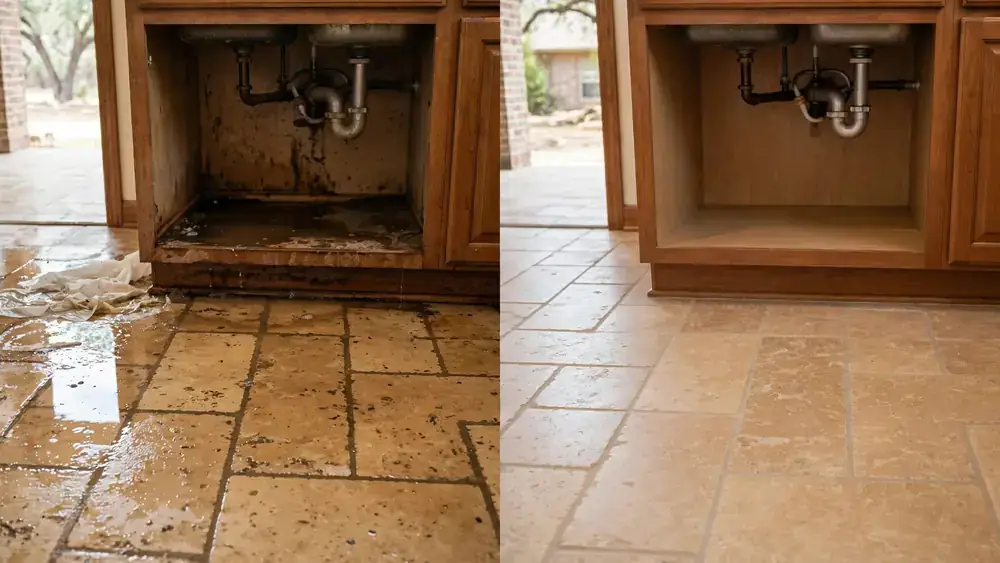
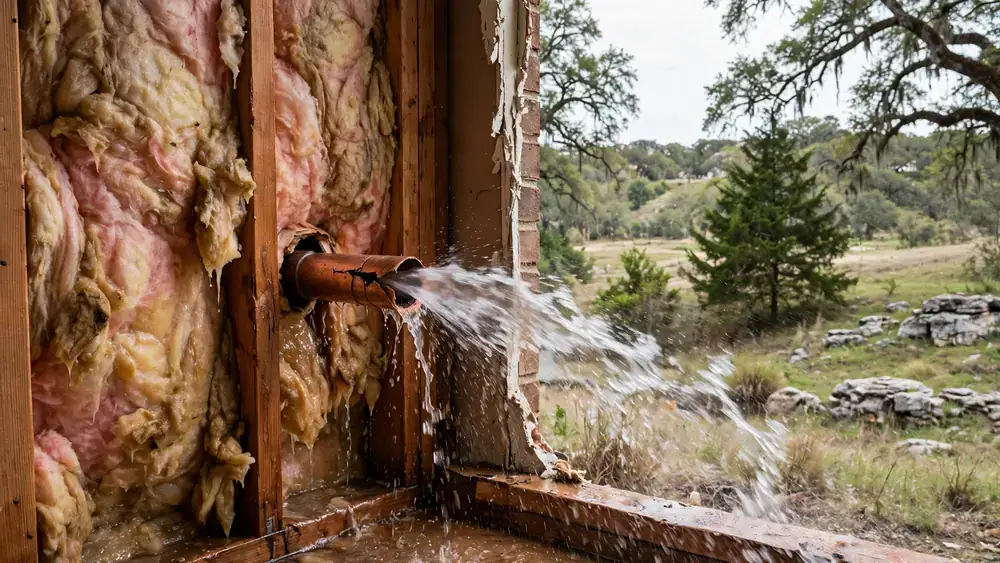
Picture a Saturday morning on Forreston Drive, Kingswood Avenue or Prestwick Lane. Water pressure has seemed a little lower lately, and then a closet wall darkens at the baseboard. Nothing dramatic has happened, and yet the supply line in that wall has been failing for weeks. This is general trade knowledge rather than a report about any one house, but it is the sort of leak that homes of this age tend to produce. Pinholes in old lines, tired fittings and hardened connectors are less dramatic than a burst, and often more damaging, as they run unnoticed.
Listings on those three streets commonly show build years of 1962 to 1964, and a neighborhood guide says the area was established in 1959. So a typical house here may have lived through more than sixty summers of ground movement. Some have been repiped and others have not. If you do not know which you have, a plumber can check the exposed sections and tell you what is likely behind the walls. It is a simple question, and it shapes every other decision on this page.
What Greenwood Hills houses are like
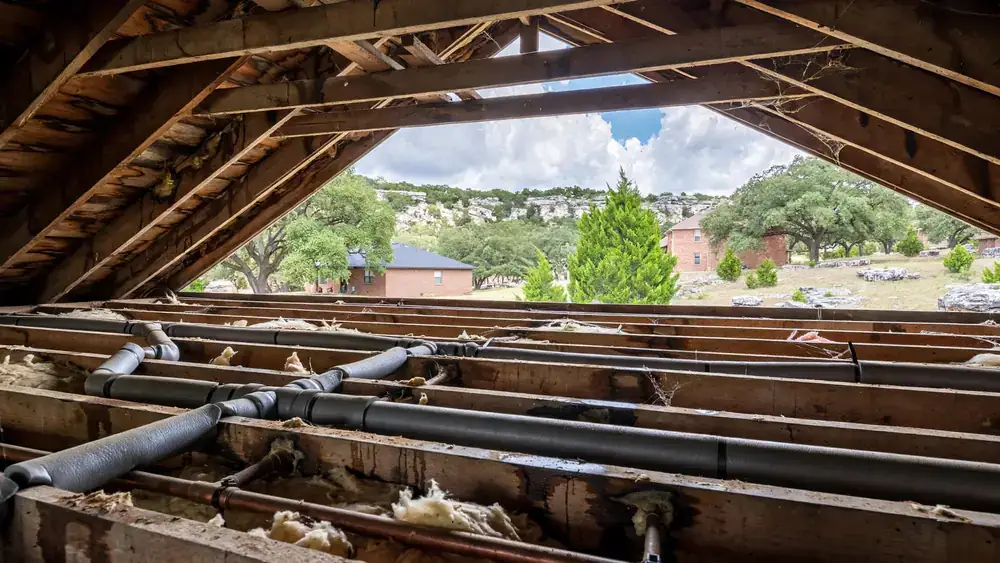
One neighborhood profile describes many homes as older and well established, built between 1940 and 1969, with three- and four-bedroom homes among the main stock and apartments as part of the mix. Listings on Prestwick, Forreston and Kingswood often show three or four bedrooms, two baths, about 1,700 square feet and lots near 7,800 square feet. That is a modest, practical house on a modest lot. It also means a leak has limited room to hide, because bedrooms, closets and the hall are close together.
Attached garages and later room additions are common on houses of this type, and you will often see a home that has grown beyond the original plan. Inground pools appear in some listings too. Each change added plumbing, a new roofline or a new slab edge. Because many homes have been refreshed for sale, new flooring and paint can sit on top of original pipes. A fresh interior tells you little about what is behind it. When you buy here, ask to see records, and when you have work done, keep them.
Greenwood Hills warning signs and what they may mean
| What you notice | What it may mean | Next step |
|---|---|---|
| Paint bubbling low on a closet wall | Pinhole leak in a supply line | Meter test, then a plumber |
| Low pressure at one shower | Corroded line or failed valve | Ask what pipe feeds that room |
| Damp edge in a converted garage | Runoff under the old door line | Check the outside grade |
| Water level falling in the pool | Evaporation or a line leak | Bucket test and pool technician |
| Soggy ground along a back fence | Irrigation or service line leak | Run zones and read the meter |
Enclosed garages and additions in Greenwood Hills
A home that has grown over the years has seams in it. Where a den was added at the back, a new slab was poured next to the old one and a new roof tied into the old roof. Those joints are normal, but they are where water tends to get in. After a storm, look at the ceiling near the join and the floor along the line between old and new. If a stain repeats after each heavy rain, a roofer should inspect the flashing at the tie-in rather than simply repainting.
An enclosed garage has another issue. Its slab was poured for a car, so it often sits lower than the main house and may slope toward the former door opening. New wall framing may rest on that slab with only limited protection, and water that crosses the driveway reaches it first. If the conversion is yours or came with the house, check its base after big storms. You may also want to find out whether a permit exists. Building Inspection, at 972-744-4180, can tell you what applies, and that is good to know before you file a claim or rebuild.
Backyard pools on Greenwood Hills lots
A pool in a small backyard sits close to the house, and pool plumbing runs through that narrow space. Listings on Prestwick Lane have mentioned inground pools, so this is worth a thought if you have one. If the water level falls faster than you would expect, a bucket test can help you compare evaporation with actual loss. Fill a bucket, set it on a step in the pool and mark both water levels. If the pool drops faster than the bucket, ask a pool technician to look at the lines and the shell.
Backwashing and draining matter as well. Water discharged onto the side yard can run straight to your slab or to a neighbor's. Aim discharge lines away from foundations, and keep the deck drains clear of leaves. Decks that have settled toward the house send rain toward the wall, and clay soil beneath a leaking line can swell and press on what is around it. Moisture along a wall next to the pool deserves a closer look, even if it is several feet from the equipment.
Cottonwood Creek on the Greenwood Hills west side
The neighborhood's western edge follows Cottonwood Creek, and the Creekside Community Garden takes its name from that setting. Living near a creek is pleasant, but a creek is also where the area's storm drains are heading, and it can rise quickly in an intense rain. If your lot backs toward the channel, walk the fence line after a storm and note how high debris sits. Never go near fast-moving water to clear something, and keep yard waste out of the channel, because it can catch at culverts and hold water back.
Check your address on FEMA's map service and ask your insurance agent whether a separate flood policy would make sense. Standard homeowners policies generally treat rising surface water differently from a broken pipe. This page does not suggest that any street here has flooded, and many homes are well away from the creek. But it is a sensible thing to know. If you see water over a road, turn around, and if you see a water main leak, the city's line is 972-744-4111. For help after outdoor water enters a home, read about storm and flood cleanup.
Finding your Greenwood Hills home's shut-offs
- 1
Locate the main valve
Look where the water line enters the house, often near the garage or an outside hose bib on the front wall.
- 2
Try it gently
Turn it slowly on a calm day. If it is stiff or weeps, have a plumber replace it.
- 3
Find the meter box
Know where the meter sits. Keep the box lid clear of mulch and grass.
- 4
Check each fixture stop
Look under sinks and behind toilets, and note any that will not turn.
- 5
Show the household
Make sure that everyone, including older kids, can close the main in a hurry.
Drying a modest Greenwood Hills floor plan
A compact home can dry well, but the closeness of its rooms means more disruption. Air movers and dehumidifiers may share a bedroom hallway, and noise will reach everywhere. Ask how long equipment is likely to run, and whether you can stay in the home while it does. Containment may be needed if demolition is required. A typical plan removes wet carpet pad, opens baseboards and checks walls on both sides of the leak. See water extraction and drying for how this goes.
Older houses may have several layers of floor. Vinyl from one decade under laminate from another can trap water where a meter at the surface cannot find it. In a house from the early 1960s, any older tile or adhesive should be tested for asbestos before it is pulled up. Good notes matter too. Ask for daily moisture readings. Those logs show your insurer that the drying was done, and they tell you when the job is actually finished rather than just when the equipment left.
Woodland Park, the community club and Greenwood Hills trees
Greenwood Hills is known for its shared spaces. Greenwood Hills Elementary and Woodland Park are inside the neighborhood, and the Greenwood Hills Community Club on North Waterview Drive opened in 1961 for this area and Arapaho Heights. A local guide also counts five churches, plus the Creekside Community Garden. Those places matter for a practical reason: this is a neighborhood where people tend to know each other, and a nearby neighbor can tell you what your house has been through. Sixty years of owners leave little on paper but plenty in memory.
The other shared feature is the tree canopy. Mature shade is lovely on a July afternoon, yet leaves clog gutters and valleys, and roots reach old sewer lines. If you have to clear a line more than once, ask for a camera inspection. Keep shrubs from growing into brick, because they hold moisture against the wall. Trim limbs off the roof too, since branches wear away shingles and scrape at flashing. When you plant anything new, leave room around the meter box and the cleanout.
Sewers and cleanouts on Greenwood Hills streets
A sixty-year-old house has a sixty-year-old connection to the street unless somebody has replaced it. The city maintains the main sewer, and a stoppage between a city-installed cleanout and the house is the owner's. When more than one drain slows at once, stop using water and find the cleanout. Older lots may have it near the rear fence, by the alley or beside the front walk. If you cannot tell which side of the line the problem is on, call the city's line at 972-744-4111 and ask them to check.
Should a backup reach the floor, treat it as contaminated. Carpet and pad it touched generally come out, and hard surfaces need cleaning and disinfecting, not just a wipe. The sewage cleanup page explains why. In a small home, a bathroom backup can reach a bedroom quickly, so keep the door closed and the children out. Ask your insurer early whether your policy includes backup coverage, since it is often a separate item.
Water heaters in Greenwood Hills garages and closets
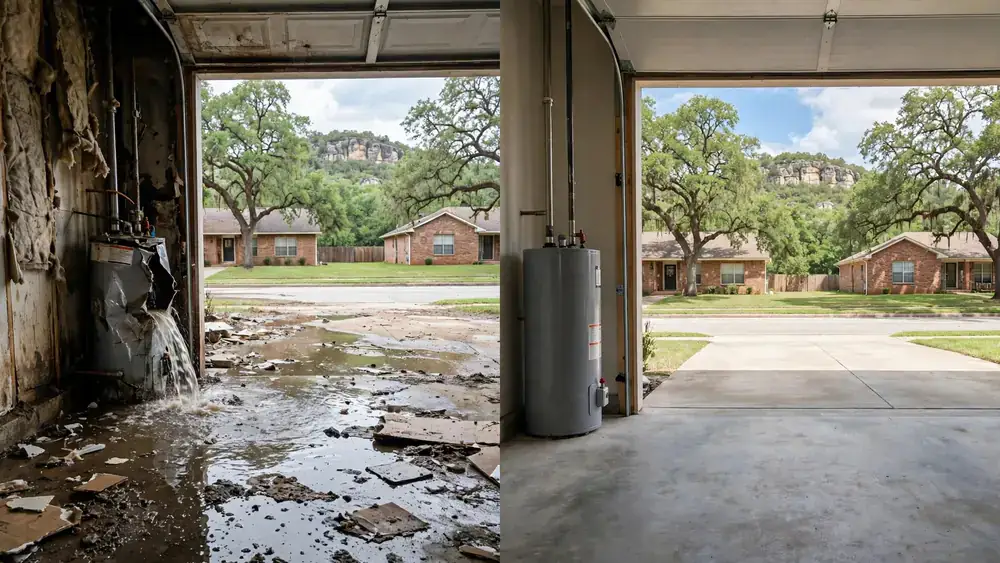
Where the water heater sits often decides how bad a failure gets. In a garage, a leaking tank may run across concrete and out under the door with only modest harm. In a hall closet the same leak reaches carpet and bedroom walls. If your house was altered over the years, the heater may have been moved from its first location, perhaps into the attic. Look at the label for its age and at the floor for rust marks. Ask a plumber whether a pan and drain would suit your setup at the next replacement.
Washing machines are close behind. In a modest plan, the laundry is often a closet off the kitchen or a corner of the garage. Reinforced hoses are a simple upgrade, and shutting the valves before a vacation removes a common risk entirely. Keep lint and soap out of the standpipe. An overflowing standpipe can wet a wall from the inside and look like a plumbing leak, while the real cause is a slow drain further down the line that needs clearing.
Mold and permits for Greenwood Hills repairs
A hidden leak, by its nature, gives mold time. Closets are especially prone, since clothing blocks airflow and walls stay damp. If you find growth, stop the water first, as any cleanup will fail otherwise. Texas requires licensed professionals for most jobs of 25 contiguous square feet or more, with exceptions described by TDLR, and the Texas mold guide explains what that means. Do not use a fan on visible mold before it has been dealt with, as that can spread spores around the house.
Rebuilding involves the city as well. Richardson asks contractors to be registered, and permits for plumbing, electrical and structural work need to be in place before work begins. Replacing a run of pipe, moving a fixture or rewiring wet circuits may each need one. It is easy to call Building Inspection and ask. A short conversation early on can avoid a failed inspection or a problem with a future sale, and it gives you a record of what was done to your house.
Walking distance from Greenwood Hills to Pearce and UT Dallas
A local guide notes that UT Dallas and two nearby campuses, a high school and a junior high, can be reached on foot from the neighborhood. For a homeowner, that closeness has a practical side. Some houses near a campus may be rented, and a rental can go a long time without anyone looking in the attic or under the sinks. If you rent out a home on one of these 45 streets, walk it yourself at least once a year, and show each new tenant the main valve on the first day.
Apartments near the neighborhood's edges raise a different question. In a shared building, a leak can come from a unit above or beside you, and it may belong to someone else to fix. Tell management straight away, photograph what you see and ask your renters insurance carrier how it treats damage to your belongings. Do not start cutting into walls yourself, because the structure belongs to the owner, and their insurer will want to see the damage first.
Greenwood Hills storms along Campbell, Floyd and Arapaho
Three busy roads frame this neighborhood, and the interior streets feed toward them and toward the creek. On a block that drains along the curb, a storm inlet clogged with leaves can push water across a low driveway, and a house with a rear or side garage may take that water at the door. After the first heavy rain each autumn, look at where water stands on your street. If an inlet holds water long after a storm, report it to the city and do not try lifting the grate.
Older brick walls need a look as well. Weep openings along the bottom course let trapped moisture out, and flower beds built up over sixty years can bury them. Pull soil back so that the slab edge shows. Check that the ground falls away from the wall for several feet, then look at any window near grade for failed sealant. Those small jobs suit a dry weekend, and they make the next big storm far less of a worry.
FAQ
Questions from Greenwood Hills homeowners
How do I tell if my Greenwood Hills home has been repiped?
Look at exposed pipe at the water heater and where the line enters the house, then ask a plumber to confirm. Old invoices help too.
Does living close to Cottonwood Creek put my Greenwood Hills home at risk?
It depends on the address and the elevation of the lot. Start with the FEMA map, then ask your agent.
My converted Greenwood Hills garage gets damp. Why?
Its slab may be lower than the house, and runoff may cross the old door line. Check the outside grade first.
Is a falling pool level in Greenwood Hills a leak?
It may be evaporation. A bucket test can help, and a pool technician can confirm.
Who do I call about a leaking meter box in Greenwood Hills?
Report water leaks to the city's 24/7 line, 972-744-4111.
Sources and citations
- [1]Marie Sells Dallas: Richardson neighborhoods, Greenwood Hills
- [2]City of Richardson: 24/7 Response Center
- [3]Community Impact: Greenwood Hills Community Club 60th anniversary
- [4]NeighborhoodScout: Greenwood Hills
- [5]Estately listing: 817 Kingswood Avenue, Richardson 75080
- [6]Estately listing: 925 Prestwick Lane, Richardson 75080
- [7]City of Richardson: Water utility operations FAQ
- [8]City of Richardson: Residential permit types
- [9]FEMA Flood Map Service Center
- [10]TDLR: Mold assessors and remediators FAQ