Key facts: Crowley Park
Crowley Park homes and the water just outside the back door
Crowley Park takes its name from the park at its center, which most listings describe as about 58 acres, with trails, open space and a large playground. Homes around it sit on streets such as Acacia, Aspen, Tulip and Primrose. One listing notes that the Springpark North subdivision is sometimes called Crowley Park, so you may see either name on your paperwork.
Listings in the area often mention a backyard pool, and Redfin has shown several pool homes for sale here at one time. That is what gives this neighborhood its own water pattern. Most Richardson homes have to manage rain, drains and supply lines. A home with a pool also has thousands of gallons held a few steps from the slab, with buried plumbing running between the equipment and the water.
Nothing about a pool is a problem in itself, and most of them behave for decades. But when something damp appears along a back wall, or a slab area suddenly stays wet in a dry month, the pool belongs on the list of suspects. Keep that in mind as you read on, because a contractor who knows about the pool can look in the right place first.
Crowley Park pool leaks that look like slab leaks
Pool plumbing generally runs underground from the skimmer and main drain to the pump, then back to the return jets. Those lines can crack as clay soil moves, and a leak there can saturate the ground beside the house without any sign inside. Soft ground, a sinking deck section, or a patch of grass that stays unusually green may be the first clue. If the auto-fill keeps adding water, it can hide the loss completely.
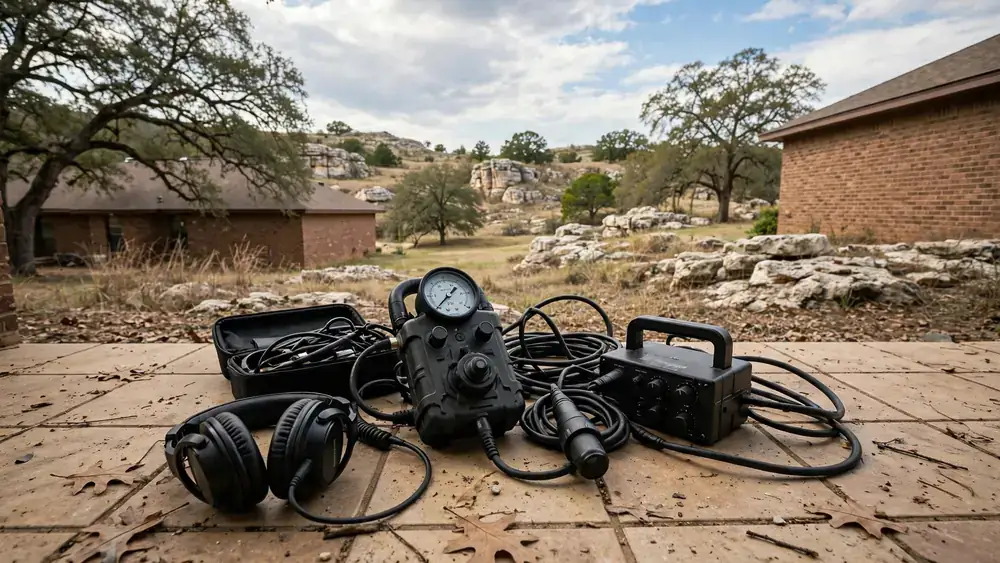
A simple test is to compare the pool's water loss with a bucket of water placed on a pool step. Mark both levels, leave the pump running on its normal schedule, and check a day later. If the pool drops noticeably faster than the bucket, a pool specialist should take a look. Separately, turn off every fixture and check whether the house meter is still moving. That points you toward either the home's slab plumbing or the pool, and the two trades are different.
Telling a Crowley Park pool leak from a house leak
| What you see in Crowley Park | It may point to | A sensible next step |
|---|---|---|
| House meter moves with all fixtures off | Domestic supply leak | Call a plumber for leak detection |
| Pool falls faster than a bucket test | Pool shell or plumbing | Call a pool leak specialist |
| Wet baseboard on the pool-side wall only | Deck drainage or pool line | Check grade and deck joints |
| Warm spot in a tile floor | Hot water line under the slab | Stop using hot water, call a plumber |
| Water at the wall after hard rain only | Grade, gutters or deck runoff | Watch the next storm and take photos |
| Damp garage wall near pool equipment path | Irrigation or buried pool line | Run each system separately and watch |
Pool decks, patios and the Crowley Park slab edge
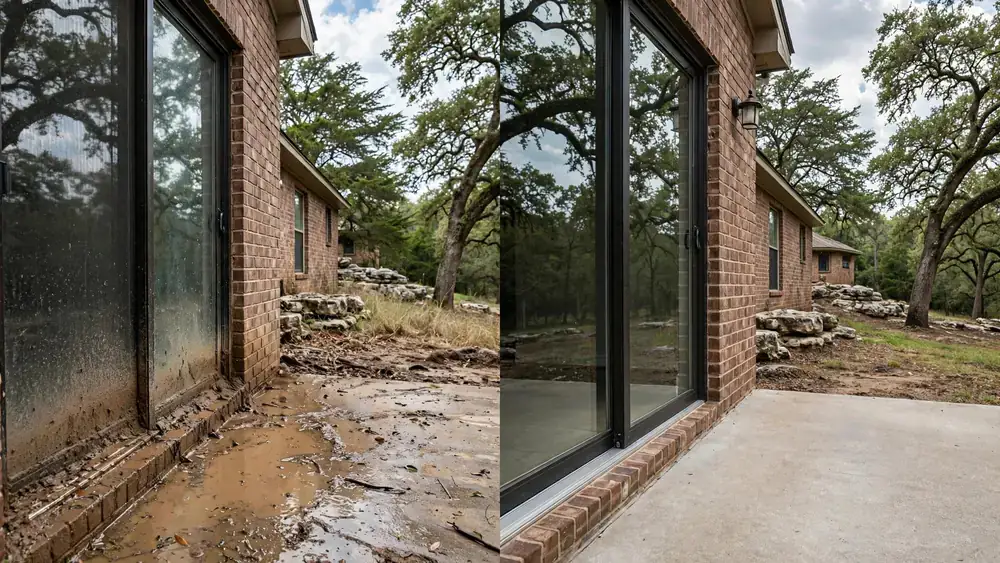
A pool deck is a big sheet of concrete, and it sends rainwater wherever it slopes. When it was poured, it was presumably meant to drain away from the house. Decades of clay movement can change that, so a deck that once shed water can settle until it tilts back toward the foundation. Water then collects along the wall, and it may find its way under a patio door threshold or through a weep hole in the brick.
Stand outside during a good rain and watch. Does water sheet toward the back door? Does a deck drain overflow? Is the joint between deck and foundation open or filled with old, cracked sealant? These things are easy to see in the rain and almost impossible to spot on a dry afternoon. Take a short video on your phone, as it can help a contractor understand the pattern later.
Splash-out and pool backwash deserve a thought as well. Water sent onto a side yard can run to the same low spot as your downspouts. If a side yard stays boggy, redirect that discharge somewhere suitable and do not let it sit against the house. Pool water also contains sanitizing chemicals, so check how your filter's backwash should be handled before you send it toward a storm inlet.
Crowley Park houses from the early 1980s
Sale records for streets such as Acacia, Aspen and Iris show homes built around 1981 to 1985. Treat those as examples and not as a survey, and look up your own home's year. A house from those years is now more than 40 years old, which means several things are likely to be reaching the end of their working life unless they have already been replaced: the water heater, the supply lines to fixtures, the shut-off valves, and possibly parts of the roof.
Plumbing materials from that era varied. Copper was common in many Texas homes, and some builders used other materials as they became available. Copper under a slab can develop pinhole leaks, particularly in places where it rubs against gravel or concrete as the ground shifts. If you have ever had one slab leak, ask a plumber to think about the system as a whole, not only the spot that failed.
Hot water lines are often the first to go, since they expand and contract with each use. A warm patch in a tile floor, a water heater that seems to run more than usual, or the faint sound of running water in a quiet house can be early signs. A guide to the signs of a slab leak walks through what to check, and most of it applies here too.
Larger Crowley Park homes and upstairs bathrooms
Not every home here dates from the 1980s. One listing in a later Spring Park North section shows a house built in 1998, with five or more bedrooms depending on the source. Bigger houses with bathrooms upstairs bring a different set of risks, because any leak on the second floor has gravity on its side. A failed toilet supply line or a shower pan that has stopped holding water can travel through the floor framing and appear in the ceiling of the room below.
Check upstairs bathrooms once in a while. Look for soft caulk around a tub, loose tile in a shower or a slight give in the floor beside a toilet. Below those rooms, watch for faint rings on the ceiling. If you find a stain, mark its edge lightly with a pencil and look again after a few days. A ring that grows means water is still arriving. A ceiling stain can also come from an attic air handler, so note whether the air conditioner was running when it appeared.
Larger homes may also have two water heaters or two air systems, and each one adds its own shut-off and drain line. Label each valve so that everyone in the household can find the right one quickly. That job takes an afternoon and will be useful for as long as you own the house.
A seasonal water check for Crowley Park yards
- 1
Late winter
Inspect exposed pool equipment and hose bibs for splits after any hard freeze.
- 2
Early spring
Run each irrigation zone in turn and look for broken heads pointing at the brick.
- 3
Before storm season
Clear gutters and confirm downspouts discharge well away from the slab.
- 4
Peak summer
Water the foundation edge evenly, and flush the air conditioner drain line.
- 5
Autumn
Clear leaves from gutters, the pool deck drain and any nearby street inlet.
Clay soil under Crowley Park foundations
North Texas clay swells when it is wet and shrinks when it dries. A home with a pool on one side, shade trees on another and a sunny driveway on a third can have very different soil moisture around its slab. Those differences are what make a foundation flex, and even small movement can stress a rigid pipe buried in concrete.
A consistent approach usually does more good than heavy watering. Keep moisture in the soil around the perimeter fairly even through a dry summer, without flooding it. Avoid piling soil or mulch high against the brick, as that can cover weep holes and let water reach the wall framing. If cracks appear above door frames or doors start to stick, mention that to your plumber and a foundation professional, since movement and leaks can feed each other.
Trees are part of the picture on the established streets near the park. Roots look for moisture, and any small leak in a drain or sewer line is an invitation. Ask a plumber about a camera inspection if drains have slowed in more than one room, particularly if you have large trees close to the line.
Storm runoff near the Crowley Park greenbelt
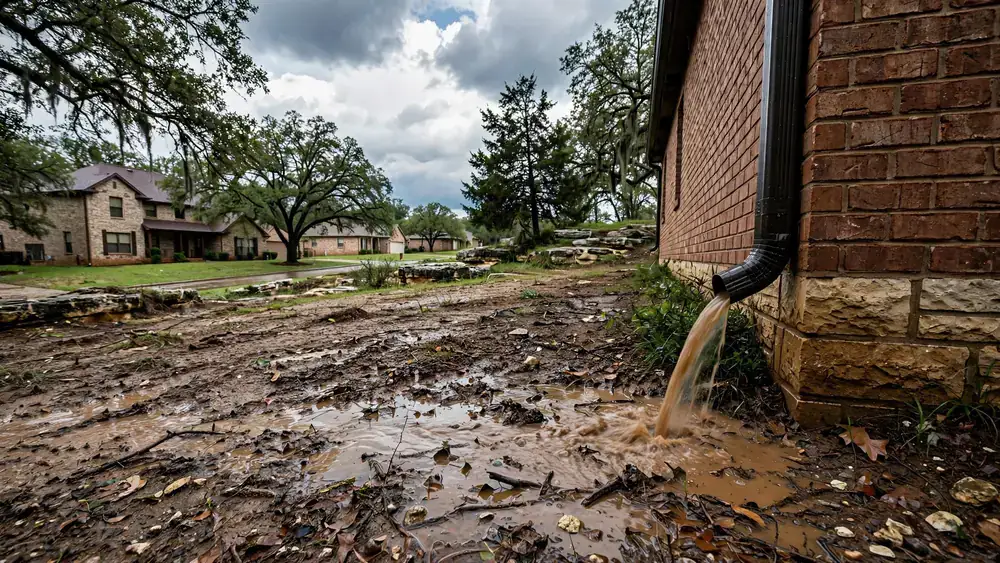
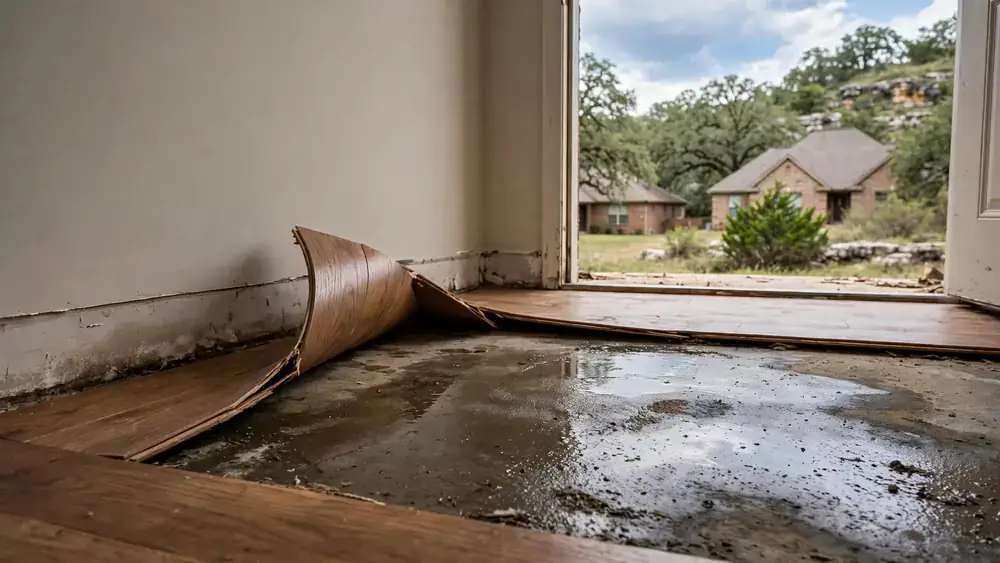
Living beside a big open park has plenty of advantages, and a large unpaved area soaks up more rain than a parking lot would. Even so, open space does not rule out drainage trouble. Heavy storms on clay soil tend to run off quickly, and water will follow the grade through yards and along fences. The lots that sit lower than their neighbors, or that back toward a drainage path, should pay close attention to where water went in the last big storm.
Check your address on [FEMA's map service](https://msc.fema.gov/portal/home) and read the result carefully. A home outside a mapped zone can still take in water, because local runoff does not read maps. A standard homeowners policy generally treats rising water differently from a burst pipe, so ask your agent how yours works. The storm and flood cleanup page explains how muddy outside water is handled once it gets in.
Small fixes make a difference here. Keep street inlets free of leaves and clippings if you can do so safely. Extend downspouts. Repair gaps at the bottom of fences only in ways that do not block a natural drainage path, as that can push water onto a neighbor. If water is running from a broken main rather than rain, ring the city at 972-744-4111.
Irrigation systems and Crowley Park brick walls
Many homes with mature yards have sprinkler systems, and they often go unnoticed until they break. A head that has been knocked round can spray brick veneer every morning for months. Brick is not waterproof, and it relies on the air gap and weep holes behind it to let water out. Regular soaking, particularly when combined with raised beds or soil above the weep holes, can push moisture into the bottom of the wall.
Walk the yard while each zone runs. Look for heads spraying walls, valve boxes with standing water, and wet patches that remain after the system stops. A leak in a pressurized main line runs even when the sprinklers are off, and that can look just like a slab leak on your water meter. Closing the irrigation supply valve is an easy way to rule it in or out.
A stain or swollen baseboard on an outside wall, in a room with no plumbing, is a strong hint that the source is outside. Look outside at that same spot before anyone starts opening walls.
Crowley Park garages and pool equipment storage
Water heaters are often found in or near the garage in homes of this era, and many are mounted on a raised platform. A tank that lets go in a garage may do less harm than one inside a hallway closet, though water can still run under a door into living space. Stored boxes, shelving and anything cardboard sitting on the garage floor will wick moisture upward.
If you keep pool chemicals there, a leak brings an extra hazard. Chemicals that get wet or mix with each other can react, and some give off dangerous fumes. Store them raised, sealed and apart, according to their labels. If water reaches a chemical store, ventilate the area, keep out of it, and tell any contractor before they begin work. They should know exactly what is in the room.
Look at the tank's age too. The label usually gives a manufacture date, sometimes in code, and a plumber can read it. Once a tank has rust at its base or a damp ring beneath it, plan a replacement rather than waiting for a failure. A pan and drain, where the layout allows it, is a sensible addition.
Crowley Park sewer lines and cleanouts
In a sewer backup the first question is whose line it is. The city says it maintains the main sewer, while a stoppage between a city-installed cleanout and the home is the owner's responsibility. Find your cleanout now, while nothing is wrong. It may be near the front of the lot or by the alley, and it may be buried under mulch or hidden behind shrubs.
When a backup happens, stop using water in the house. If you see sewage rising in a tub or shower, keep people and pets away, and report possible city-side problems on the 24/7 line at 972-744-4111. Sewage needs a different approach from clean water, so read about sewage cleanup before anyone starts mopping. Be careful about pool or irrigation trenches too. If a contractor has dug in your yard in recent years, tell the plumber, since a damaged line near that work is a real possibility.
Winter freezes and exposed Crowley Park plumbing
Hard freezes are not common here, but they do arrive, and a home with a pool has more exposed plumbing than most. Filter, pump and heater pipework usually sits outside on a pad with no insulation at all. Most pool owners keep the pump running through a freeze so that moving water protects the lines, and many modern systems have a freeze sensor for that purpose. A power cut can take that protection away, so ask your pool service what to do if the electricity goes off on a very cold night.
Inside the house, the pipes most at risk tend to be those in outside walls, in unheated garages and above ceilings near the eaves. Disconnect garden hoses, cover outdoor faucets and open the cabinet doors under sinks on outside walls when a hard freeze is forecast. If a tap gives only a trickle on a frozen morning, leave it open and shut the main if you suspect a split. Pipes often reveal the damage only when they thaw, so stay alert as temperatures rise.
A frozen line in an attic above a bedroom is the worst case, since nobody sees it until the ceiling comes down. If you have had a split pipe before, ask a plumber to look at the insulation along that route.
Keeping a house file for your Crowley Park home
Because a pool, irrigation, a house and sometimes an extra air system all use water in different ways, it helps to write down how each one works. Note the main shut-off, the irrigation valve, the pool auto-fill valve and the breaker for the pump. Add the age of the water heater, your cleanout location and the names of the plumber and pool company you trust. Keep a photo of each valve with the note, so a relative or house sitter can act quickly if you are away.
Compare your monthly water use as well. Your own bills are the simplest long-term leak detector you have, because a slow rise over a few months can reveal a problem long before a wall gets wet. Allow for a hot summer and for topping up the pool, and look into any increase you cannot explain.
FAQ
Crowley Park water damage questions
Could my Crowley Park pool be wetting my slab?
It is possible. Try a bucket test and read the house meter with fixtures off, then call the matching specialist.
Is Crowley Park the same as Springpark North?
Listings use both names for some of the same streets. Give your street address and either name when you call.
My Crowley Park water bill jumped. Where should I start?
Close the irrigation supply and turn the pool auto-fill off, then read the meter with all fixtures off. A moving dial suggests a leak on the house side.
Why is my Crowley Park patio wall wet only after rain?
Rain-only dampness often points to deck slope, gutters or weep holes rather than plumbing. Watch the wall during the next storm.
Is a Crowley Park lot near the park at flood risk?
Check your address on FEMA's map service, and remember that runoff can reach homes outside mapped zones.
Sources and citations
- [1]Redfin: Crowley Park pool homes
- [2]Redfin: Crowley Park neighborhood
- [3]City of Richardson: 24/7 Response Center
- [4]Homes.com: Crowley Park neighborhood
- [5]Listing: 2605 Tulip Dr, Springpark North
- [6]City of Richardson: Water utility operations FAQ
- [7]FEMA Flood Map Service Center
- [8]City of Richardson: Residential permit types
- [9]EPA: A brief guide to mold, moisture and your home